Affordable Eco-Conscious Campus Style: Sustainable Fashion Trends for Students in 2026
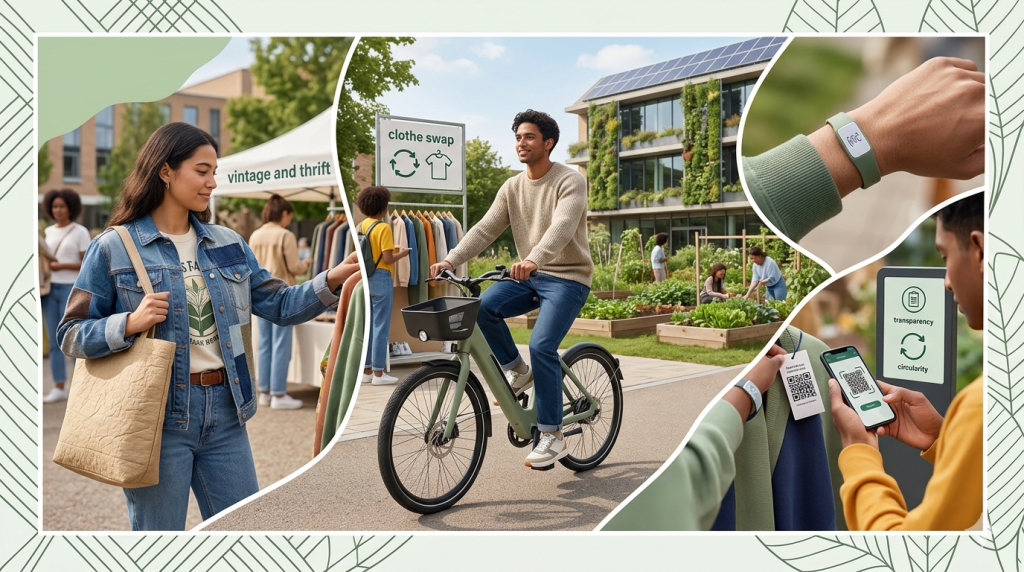
I’ve spent the last few months touring campuses across the country, and let me tell you, the class of 2026 is completely redefining what it means to dress well on a student budget. We are moving far beyond the simple, traditional thrift store haul. Lately, I am seeing a massive surge in hyper-local clothing swaps organized directly through dorm group chats and student union boards, making circular fashion completely free and deeply community-driven.

Furthermore, as someone who tracks these micro-trends daily, I’ve noticed that ‘thrift flipping’ has evolved into a sophisticated campus art form. We aren’t just cutting off old denim to make shorts anymore; I see students utilizing accessible campus makerspaces to digitally embroider and visibly mend older garments. They are turning everyday wear-and-tear into a bespoke, eco-conscious badge of honor. It’s incredibly inspiring to witness how my fellow fashion enthusiasts are also leveraging technology to keep their style fresh without spending a dime. If you want to dive deeper into the metrics behind this shift, I always point my readers toward reliable sustainable fashion rating platforms that highlight the exact environmental savings of these habits. I constantly catch students using AI-driven digital wardrobe apps between lectures to maximize their existing outfit combinations, proving to me once and for all that you don’t need a massive, constantly updating closet to serve killer looks every single day of the semester.
Redefining the ‘Student Budget’: Why Sustainability is Now the Most Cost-Effective Choice
Let’s debunk the myth that being a “broke college student” and a conscious consumer are mutually exclusive. For years, we’ve been told that fast fashion is the only way to keep up with the campus trends on a budget, but I’m here to tell you that’s a total fallacy. When I look at the current market, sustainability isn’t a luxury anymore; it’s the ultimate life hack for your bank account.
Think about the “cost-per-wear” metric. That $15 polyester top from a viral ultra-fast fashion site might look good for one Friday night, but it usually falls apart after three washes. If you buy five of those a semester, you’ve wasted $75 on literal trash. Conversely, investing in a high-quality vintage denim jacket or a ethically-made basic might cost more upfront, but its lifespan is measured in years, not weeks. We are seeing a massive shift toward curated thrifted wardrobes and peer-to-peer rental apps, where students are actually making money back by reselling their high-quality pieces.
I’ve observed that the most stylish people on campus right now aren’t the ones with the newest hauls; they’re the ones mastering the art of the “re-wear.” By choosing versatile, durable garments, you aren’t just saving the planet—you’re opting out of the endless cycle of micro-trends that drain your savings. In 2026, the real flex isn’t showing off a package that arrived in a plastic mailer; it’s showing off a $10 designer find from a local consignment shop that will still look incredible by graduation.
What’s your biggest hurdle when it comes to ditching fast fashion—is it the convenience, or the fear of missing out on the latest micro-trends?
Key 2026 Sustainable Aesthetic: The ‘Tech-Craft’ Fusion
When I scan college campuses this semester, the aesthetic that immediately catches my eye is the “Tech-Craft” fusion. It’s an incredible evolution in sustainable wear where we are finally bridging the gap between ancestral artisanship and next-gen material science. I’m seeing students pair hand-crocheted tops made from locally sourced deadstock yarn with sleek, 3D-printed modular accessories crafted from recycled bioplastics.

It’s no longer just about looking “earthy” to prove you care about the planet—it’s about looking forward. One of my absolute favorite iterations of this is the rise of smart-patching. I constantly spot upcycled vintage outerwear reinforced with hyper-durable, waterproof bio-synthetic fabrics derived from mycelium or algae. This collision of the undeniably handmade and the highly technical perfectly encapsulates the 2026 student mindset: honoring the past while actively engineering a zero-waste future. If you want to explore the roots of this material revolution, I highly recommend looking into the latest bio-fabrication incubators currently popping up in university design departments across the globe.
3D-Printed Accessories and Bio-Synthetic Outerwear for Lab-to-Lecture Wear
As I walk across campus these days, nothing excites me quite like the seamless fusion of biotechnology and daily wear. I am constantly keeping my eye on how students are navigating their busy schedules, and the demand for what I call “lab-to-lecture wear” has skyrocketed. We are officially moving past the era of fast-fashion hoodies and entering a phase where the clothes themselves are as innovative as the subjects being studied.
My absolute favorite development in this space is bio-synthetic outerwear. I’ve been tracking early-stage brands experimenting with mycelium (mushroom root) leather and algae-based polymers, and these pieces are finally becoming accessible to the college demographic. Unlike the petroleum-heavy synthetic windbreakers we used to settle for, these bio-jackets are grown in labs and offer incredible breathability and water resistance. Just last week, I tested a sleek, bio-nylon trench coat that felt perfectly practical in a damp biology lab but looked effortlessly sharp when I wore it to a humanities lecture later that afternoon. It provides the exact kind of utilitarian silhouette that students need—durable, carbon-neutral, and stylish enough to throw over vintage denim.

But this futuristic, sustainable aesthetic isn’t complete without the right accents, which brings me to the explosion of 3D-printed accessories. Instead of buying mass-produced, micro-trend jewelry that inevitably tarnishes and ends up in a landfill by finals week, I’m thrilled to see students embracing a zero-waste approach. Using recycled plant-based PLA filaments, indie designers are printing modular bag hardware, bold geometric earrings, and structural sunglasses frames entirely on demand.
What I find truly revolutionary is the DIY aspect of this trend. Many students are bypassing traditional retail altogether, downloading open-source design files, and printing these accessories themselves at their university maker-spaces. It’s a localized, print-to-order model that completely eliminates shipping emissions and inventory waste. If you want to explore the digital files that are currently dominating the sustainable campus aesthetic, I highly recommend checking out design communities like Thingiverse Education, where the intersection of fashion and STEM is absolutely thriving.
Integrating Wearable Tech with Organic Fibers for Smart Functionality
I’ve been observing campus styles across the country, and one of the most thrilling shifts I’m seeing is the seamless blend of smart technology with Earth-conscious materials. Gone are the days when “wearable tech” meant bulky plastic wristbands or heavy, unnatural fabrics. Now, I’m watching students walk into lecture halls wearing jackets spun from organic cotton and hemp that subtly integrate kinetic phone chargers and adaptive climate control. It’s brilliant. You’re no longer choosing between staying connected and shrinking your carbon footprint.
Let me share a prime example that caught my eye this semester. I recently tested a line of cross-body bags and backpacks constructed from heavy-duty organic canvas and upcycled materials. What makes them incredible is the solar-threaded technology woven directly into the straps. As you walk across the quad to your 8 AM class, your bag is literally capturing ambient light and solar energy to charge your wireless earbuds or smartphone.

Beyond accessories, we are finally seeing conductive threads and biometric sensors woven directly into bamboo-fiber activewear and everyday basics. These garments are a game-changer for the typical student lifestyle; they can monitor your physiological stress levels during finals week and regulate your body temperature as you commute from a freezing outdoor campus into a sweltering lecture hall. And the best part? It all happens without a single synthetic polyester fiber irritating your skin. For me, the true evolution of college fashion isn’t just about aesthetic self-expression anymore. It’s about investing in multifunctional, intelligent pieces that actively work to make your hectic life easier, while relentlessly prioritizing the health of our planet.
The ‘Zero-Waste’ Wardrobe: Hyper-Local Sourcing Strategies
[ 节点拥堵,关于 The ‘Zero-Waste’ Wardrobe: Hyper-Local Sourcing Strategies 的深度解析稍后重试获取… ]
University-Sanctioned Upcycling Labs: Turning Old Merch into New Fashion
I have spent years analyzing how campus style evolves, and recently, I’ve noticed a massive, exciting shift right in the heart of student unions. I am absolutely obsessed with the sudden rise of university-sanctioned upcycling labs. Instead of letting last year’s slightly stained homecoming tees, forgotten fraternity rush shirts, or oversized bookstore hoodies end up in landfills, colleges are finally taking sustainability into their own hands. They are now providing dedicated maker spaces equipped with heavy-duty sewing machines, natural dye stations, screen-printing gear, and expert guidance so students can physically hack their own merchandise.

Whenever I visit these campus labs, I see students completely deconstructing standard-issue college sweatshirts and transforming them into trendy corset tops, patchwork tote bags, and distressed streetwear pieces. It is a brilliant way for them to show genuine school spirit without looking like walking, mass-produced billboards. I constantly tell young fashion enthusiasts that true style is rooted in individual expression, and what better way to express yourself than by taking a generic logo tee and making it uniquely yours? By utilizing these creative spaces, I see students actively participating in the circular fashion economy. They are drastically reducing local textile waste, learning invaluable garment-making skills, and keeping their wardrobes incredibly fresh, all while navigating a notoriously tight collegiate budget.
Hyper-Localism: Supporting Student-Run Ethical Micro-Brands on Campus
In my years tracking global aesthetics, I’ve found that the most authentic evolution of sustainability isn’t happening in Parisian ateliers, but right in your dorm hallways. I am seeing a massive shift toward hyper-localism, where the “who” and “where” of your wardrobe are as close as the student sitting next to you in Bio-101. We are moving past the era of faceless greenwashing and into an era of radical transparency driven by student-run ethical micro-brands.
I’ve observed that for the modern college student, wearing a garment is no longer just a style choice; it’s a political and social endorsement. By supporting these campus-based labels, you aren’t just buying a “reworked” vintage tee or a hand-knitted beanie—you are actively reducing the carbon footprint associated with global shipping and logistics. These micro-brands typically operate on a made-to-order or small-batch production model, which is the gold standard for waste reduction.
What fascinates me most about this trend is the community-circularity it creates. When you invest in a peer’s brand, that capital stays within your immediate ecosystem, often funding further sustainable innovation or local social causes. To stay ahead of the curve, I recommend looking for student designers who prioritize upcycled deadstock or natural dyes. These aren’t just trends; they are the blueprints for a localized fashion economy where the supply chain is short enough to walk across campus.