Curating the Canvas: Why Non-Binary Fashion Dominates Modern Art Openings
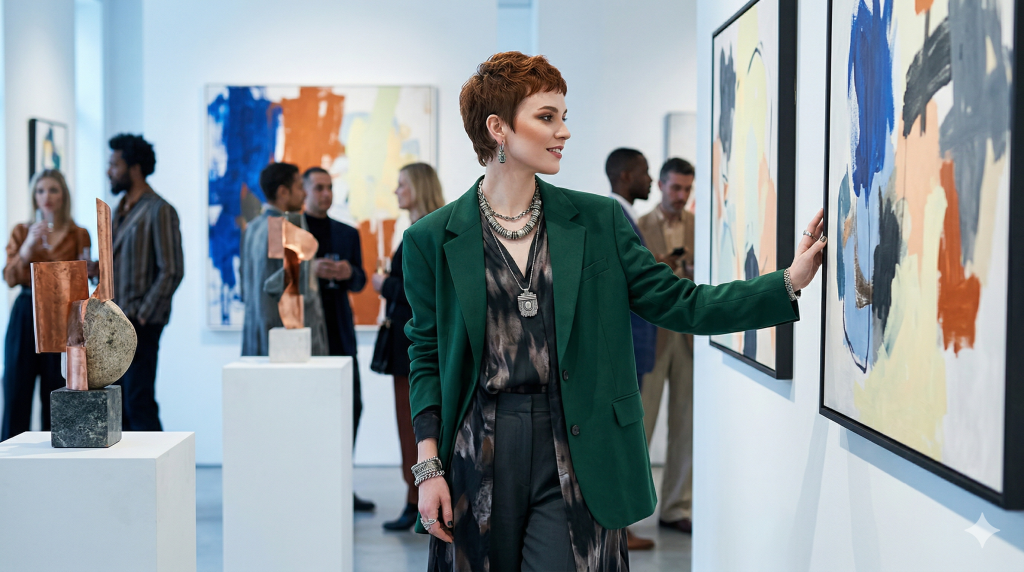
In the contemporary gallery space, the traditional binary of “suit and tie” versus “cocktail dress” has begun to feel like an aesthetic relic. When I walk into a high-profile opening today, I see the human form being treated as a fluid extension of the art on the walls. Gender-neutral fashion isn’t just a trend in these circles; it is a deliberate rebellion against the rigid structures that once defined high society. We are witnessing a shift where the silhouette takes precedence over the gendered expectations of the wearer.
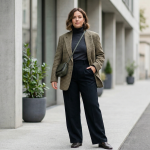
I find that non-binary aesthetics resonate so deeply with the art world because both prioritize concept over convention. An oversized, architectural blazer paired with wide-leg pleated trousers creates a sculptural presence that commands respect without demanding a gendered categorization. This “blank canvas” approach allows the individual to navigate the room as a piece of performance art themselves. It’s about the interplay of texture—think heavy wools meeting sheer organza—and the subversion of classic tailoring. By stripping away the gendered “costume,” the focus shifts entirely to the creative dialogue between the viewer and the exhibition.
Moreover, this dominance of fluid fashion reflects a broader cultural desire for authenticity and intellectualism. In a space dedicated to challenging perceptions, wearing clothes that refuse to be boxed in is the ultimate power move. I often see curators and collectors opting for monochromatic palettes and avant-garde drapes that blur the lines between masculine and feminine. This stylistic choice effectively levels the social playing field, fostering an environment where the merit of one’s ideas—and the quality of the art—takes center stage, unencumbered by the tired tropes of the past.
The New Gallery Vernacular: Moving Beyond Traditional Formalism
I often find myself navigating the hallowed, minimalist halls of a vernissage, where the air is thick with the scent of fresh paint and expensive perfume. In this environment, I’ve observed a profound shift: the rigid, gendered silhouettes of “gallery formal”—the waist-nipping cocktail dress or the boxy, stiff suit—have become relics of a less imaginative era. To me, the new vernacular is about a fluid, intellectualized elegance that prioritizes texture and architectural proportion over the tired tropes of masculine or feminine.
When I curate my own look for an opening, I lean into the power of the monochromatic “anti-form.” I might pair a heavy, drop-shoulder charcoal wool tunic with fluid, wide-leg trousers that pool slightly at the floor, creating a continuous line that feels both grounded and ethereal. This approach treats the body as a sculpture rather than a biological blueprint. By stripping away traditional signifiers like ties or heels and replacing them with structural elements—think a high-mock neck in a technical silk or a sculptural, hand-forged silver brooch—I’m engaging in a visual dialogue with the art itself. It’s a way of saying that in a space dedicated to creative evolution, our presence should be as boundary-pushing as the work on the walls.
Textural Storytelling: Mixing Raw Silks, Heavy Linens, and Industrial Tech-Fabrics
I believe that in the hushed, white-walled sanctuary of a gallery, your silhouette should speak through the silent language of touch. When I curate a gender-neutral ensemble for an opening, I move away from the binary of “masculine” or “feminine” tailoring and instead lean into textural friction. The goal is to create a visual dialogue that mirrors the complexity of the art on the walls. I start with the organic, slightly irregular grain of raw silk—perhaps a wide-leg trouser or a draped tunic—which offers a soft, matte luster that feels grounded yet undeniably elevated.
To ground that ethereal silk, I layer in the architectural weight of heavy, stonewashed linens. There is an inherent honesty in linen’s tendency to wrinkle; it records the movement of the body throughout the evening, turning the garment into a living sculpture. I might opt for an oversized linen duster or a structured vest that provides a boxy, gender-fluid frame. This juxtaposition of “soft versus structured” creates a sensory depth that demands a closer look, much like a textured oil painting.
The final, subversive stroke in my styling involves industrial tech-fabrics. I love the sharp, cold contrast of a heat-pressed nylon pocket or a ripstop harness layered over these natural fibers. By introducing moisture-wicking synthetics or reflective metallic weaves, I’m bridging the gap between the artisanal past and a utilitarian future. This collision of the raw and the manufactured ensures the look remains contemporary and sharp, allowing you to fade into the intellectual atmosphere of the gallery while standing out as a masterpiece of tactile composition.
Volumetric Silhouettes: The Power of Oversized Blazers and Wide-Leg Culottes
I’ve always believed that an art gallery opening isn’t just a place to view a collection; it is a space where we, the attendees, become part of the living installation. To command a room without uttering a word, I lean into the architectural defiance of volumetric silhouettes. There is a deliberate power in drowning the traditional form to create a new, gender-neutral geography of the body.
When I curate a look for these evenings, my cornerstone is the oversized blazer. I’m not talking about a simple “size up,” but a piece engineered with dropped shoulders and a heavy canvas drape that ignores the waistline entirely. It functions as a sartorial shield, blurring the physical binary and shifting the focus to the wearer’s presence rather than their proportions. I prefer fabrics with a certain structural memory—heavy wool blends or bonded crepes—that maintain their sharp, boxy integrity even as I move through the crowd.
To balance the top-heavy drama, I pair these jackets with wide-leg culottes. The magic of a well-cut culotte lies in its ambiguity; at a standstill, they possess the elegance of an A-line skirt, but in motion, they reveal the pragmatic edge of trousers. I look for high-waisted cuts that utilize deep pleats to create volume that flows from the hip. This combination—the rigid structure of the blazer against the fluid sweep of the culottes—creates a silhouette that feels both grounded and ethereal. It’s a sophisticated play on scale that says you understand the principles of design as well as the artist on the walls.
4 Curated Gender-Neutral Styles for Your Next Vernissage
When I curate looks for an art gallery opening, I look for pieces that bridge the gap between “spectator” and “masterpiece.” A vernissage isn’t just about the art on the walls; it’s a silent dialogue between your identity and the space. Here are four gender-neutral styles I’ve developed to help you navigate your next opening with effortless, non-binary sophistication.
1. The Architectural Minimalist
I always say that if the gallery is a “white cube,” your outfit should be the sculpture. This look is defined by exaggerated silhouettes and structural integrity. I recommend opting for a pair of wide-leg trousers in a heavy wool or structured cotton, paired with an asymmetrical tunic or a boxy, cropped blazer. The goal is to let the shape do the talking rather than the gender of the garment. Stick to a monochromatic palette—think slate grey, obsidian, or bone white—to maintain a sharp, intentional edge.
2. The “Art School” Deconstructionist
There is a specific kind of intellectual coolness in looking slightly “unfinished.” I love layering a sheer, oversized organza shirt over a simple ribbed tank, blurring the lines of the torso. Pair this with distressed denim or paint-splattered workwear pants to pay homage to the artist’s process. For footwear, a chunky lug-sole boot adds a grounding, utilitarian element that feels grounded yet rebellious. It’s a look that says you understand the medium as much as the message.
3. The Fluid Dandy
For those who want to lean into elegance without the constraints of a traditional suit, I turn to liquid fabrics. A silk or cupro button-down with a pussy-bow necktie—worn loose and undone—creates a stunning sense of movement. I suggest tucking this into high-waisted, pleated trousers that fluidly drape down to the floor. By mixing traditionally “masculine” tailoring with “feminine” textile choices, you create a sophisticated tension that is perfect for sipping champagne near a mid-century installation.
4. The Curated Maximalist
Sometimes, the art is loud, and you should be too. My favorite way to approach gender-neutral maximalism is through clashing textures and bold, artisanal knitwear. Think an oversized vest with a surrealist intarsia pattern worn over a crisp, oversized poplin shirt. Add a statement accessory, like a chunky resin chain or a series of mismatched silver rings. This style is about curation—treating your body like a gallery wall where every piece, regardless of its “intended” gender, has a rightful place in the collection.
The ‘Monochrome Intellectual’: Layered Tonalities in Earth and Mineral Hues
When I approach the curation of a look for a gallery opening, I lean into the “Monochrome Intellectual”—a sartorial philosophy that prioritizes texture and silhouette over the noise of high-contrast patterns. To master this, I move away from the starkness of clinical black and white, opting instead for a palette of earth and mineral hues. Think of the desaturated greys of weathered slate, the warmth of raw travertine, or the deep, grounding presence of charred umber. These tones don’t just sit on the body; they communicate a quiet, academic rigor that feels right at home among avant-garde installations.
The secret to making a single-color outfit feel dynamic rather than flat lies in what I call “textural friction.” I might pair a heavy, oversized wool blazer in a cool stone grey with a fluid, sand-washed silk shirt in a near-identical shade. By mixing these weights, the outfit catches the gallery’s directional lighting differently, creating depth through shadow rather than color. For a gender-neutral silhouette, I recommend wide-leg trousers with a structured drape, perhaps in a charcoal herringbone, which blurs the line between traditional masculine tailoring and contemporary fluid forms.
I find that mineral tones allow the wearer to act as a sophisticated canvas. When you are standing before a vibrant canvas or a complex sculpture, your attire should complement the space without competing for the spotlight. I often finish the look with a pair of chunky, matte leather loafers or a minimalist Chelsea boot. This “intellectual” layering—a turtleneck under a structured vest, topped with a duster coat in varying saturations of clay—creates a sophisticated, architectural presence that whispers authority. It’s a look that says you haven’t just come to see the art; you are a seamless extension of the cultural dialogue itself.
The ‘Neo-Dandy’: Merging Vintage Victorian Frills with Sharp Masc Tailoring
当我穿梭于那些充满前卫气息的画廊开幕式时,我发现没有什么能比“新浪荡子主义”(Neo-Dandyism)更能精准地捕捉那种游走于性别边缘的艺术张力。我个人极其钟爱这种风格,因为它不仅仅是服装的堆砌,更是一场关于时代错位的视觉博弈。
我会选择一件带有维多利亚时期典型特征的立领衬衫作为灵魂核心——想象一下那种层叠的蕾丝褶边(Ruffles)或是精致的拉夫领(Jabot),这些曾经象征着贵族阶级与柔美气质的元素,在艺术空间的冷调灯光下显得格外戏谑。然而,制衡这种繁复感的关键,在于我外搭的那套线条极其冷硬、甚至带点侵略性的男装剪裁(Sharp Masc Tailoring)。
这种穿搭的精妙之处在于结构冲突:
- 上半身: 我会选用真丝或雪纺材质的褶皱衬衫,让面料在走动间产生一种流动的柔光感。
- 外套: 必须是一件肩线分明的深色双排扣西装或及地长款大衣,用其刚硬的廓形去“镇压”蕾丝的浮夸。
- 配饰: 放弃传统的领带,取而代之的是一枚复古浮雕胸针(Cameo Brooch)或是系在腕间的丝缎。
当你在蒙克或波洛克的作品前驻足时,这种模糊了19世纪浪漫主义与现代极简主义边界的装束,本身就是一种行为艺术。它向外界宣告:美不再被二元性别禁锢,而是力量感与精致感的终极融合。这种平衡术不仅是对经典的致敬,更是艺术爱好者在社交场合中最高级的自我表达。
The ‘Cyber-Artisan’: Integrating Tech-Wear Elements with Hand-Knit Textures
I find that the most compelling silhouettes at a gallery opening are those that disrupt the boundary between the digital and the tactile. In my practice, I lean heavily into what I call the Cyber-Artisan aesthetic—a deliberate collision of high-performance tech-wear and the intimate, irregular soul of hand-knit textures. It’s a look that refuses to be categorized by gender, focusing instead on the tension between the synthetic and the organic.
For a high-concept opening, I recommend layering a structural, matte-black technical shell—think articulated sleeves and waterproof membranes—over a chunky, distressed mohair sweater or an oversized hand-knit vest. The visual friction here is electric: the sleek, industrial lines of the tech-wear act as a frame for the soft, chaotic loops of the knitwear. This juxtaposition mirrors the very nature of modern art, where traditional craftsmanship meets algorithmic precision.
To ground the look, I steer away from traditional footwear in favor of monochromatic technical boots with exaggerated treads. Accessories should feel like artifacts from a near-future studio—perhaps a utilitarian chest rig styled as a harness, or silver jewelry that looks as though it was 3D-printed from liquid mercury. When you walk into a white-cube space dressed like this, you aren’t just an observer; you are a living extension of the installation, embodying a future that values both the pixel and the stitch.