Affordable Minimalist Wardrobe Staples 2026: The Smart Shopper’s Guide to Future Classics
As we navigate the style landscape of 2026, I’ve observed a profound shift in how we approach the “less is more” philosophy. Minimalism this year isn’t about clinical sterility; it’s about intentional warmth and tactile longevity. To build a future-proof wardrobe without draining your bank account, I recommend focusing on what I call “The Anchor Pieces”—items that bridge the gap between high-street pricing and high-end aesthetics through superior fabric choices and architectural silhouettes.
My first rule for 2026 is to prioritize “Soft Structure.” We are moving away from the rigid, boxy blazers of previous seasons and embracing fluid tailoring. Look for relaxed blazers in viscose blends or heavy-weight Tencel at retailers like COS or Mango. These pieces provide that sharp, “sculptural” shoulder look while maintaining a drape that feels effortless. In my own curation, I’ve found that a charcoal or “warm oat” blazer in a matte finish acts as the ultimate versatile layer, elevating a simple organic cotton tee to office-ready status in seconds.
When it comes to the lower half, “The Fluid Trouser” is the undisputed champion. The 2026 silhouette is decidedly wide-leg but with a refined high-rise waist. I suggest scouting for linen-blend trousers with subtle front pleats. Brands like Arket or Uniqlo’s higher-tier collaborations have perfected this balance, offering moisture-wicking, sustainable fabrics that look like premium wool from a distance. The key is the color palette: swap stark black for chocolate brown or deep olive—these “new neutrals” offer more visual depth and pair more harmoniously with the creamy knits dominating this year’s trends.
Finally, let’s talk about the “Textural Basic.” A standard white T-shirt is no longer enough; in 2026, your basics need to work harder. I’m currently advocating for ribbed modal tanks and mercerized cotton tees. These materials have a slight sheen and a heavier “hand-feel” that resists wrinkling and sagging. By investing in these elevated textures at a mid-market price point, you ensure your minimalist foundation remains crisp and “expensive” looking, even after dozens of washes. Remember, the goal isn’t to own more, but to ensure that every single item you do own—from your balloon-leg denim to your seamless knits—carries enough design integrity to stand alone.
Redefining Value: What ‘Affordable Minimalism’ Means in 2026
When I look at the landscape of 2026, I see a profound shift in how we define “affordable” within the minimalist movement. Gone are the days when minimalism was a synonym for “expensive beige.” Today, I define affordable minimalism not by the low cost of entry, but by the Cost-Per-Wear (CPW) and the strategic integration of circularity. We are no longer just buying less; we are buying smarter, pivoting away from the disposable “ultra-fast fashion” cycles that dominated the early 2020s.
In my view, value in 2026 is anchored in textural longevity and modular utility. We are seeing a surge in bio-synthetic blends and recycled high-performance fabrics that offer the hand-feel of luxury silks or heavy-weight linens at a fraction of the traditional heritage-brand price point. For me, an affordable staple is a garment that utilizes these innovations to withstand 50+ wash cycles without losing its structural integrity. It’s about finding those “hero pieces”—the oversized charcoal blazer or the seamless tech-knit dress—that serve as the spine of your wardrobe.
Furthermore, I believe the “affordability” of 2026 is deeply tied to the resale ecosystem. A true minimalist staple now carries a digital passport or a verified durability score, ensuring that the piece retains secondary market value. When I curate a wardrobe today, I’m looking for items that represent a closed-loop investment. We aren’t just consuming aesthetics; we are acquiring flexible assets that honor both our bank accounts and the planet’s boundaries. It’s a democratization of chic that favors discernment over raw spending power.
The Core 8: Budget-Friendly Staples Every Minimalist Needs This Year
When I curate a minimalist wardrobe for my clients in 2026, I always return to a foundational truth: achieving a high-end, sophisticated look should never require emptying your bank account. I’ve spent weeks analyzing both the subtle shifts on the runways and the best high-street offerings to identify the exact pieces that offer maximum versatility for minimal cost. Here are the eight non-negotiable staples I recommend integrating into your daily rotation this year.
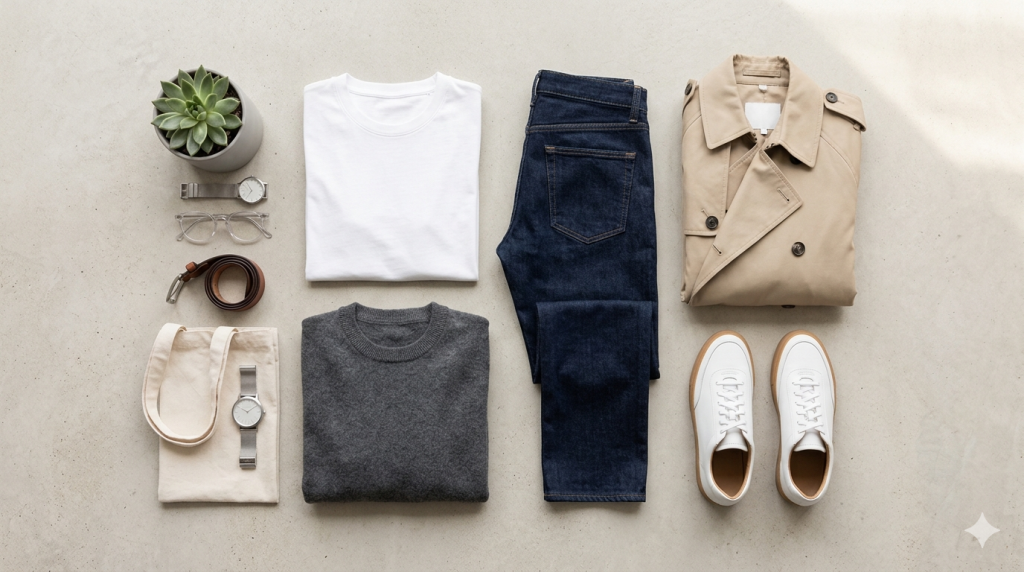
- 1. The Boxy Organic Cotton Tee: I firmly believe you can never have too many white t-shirts, but the 2026 silhouette is decidedly relaxed. I look for dropped shoulders and a slightly cropped hem that hits right at the hipbone. I’ve found incredible options under $20 at everyday retailers that wash and wear just as beautifully as their designer counterparts.
-
2. The Fluid Wide-Leg Trouser: Skinny fits are still taking a backseat in my styling sessions. I always tell my clients to invest in a pair of drapey, wide-leg trousers in charcoal, navy, or taupe. Thanks to advancements in recycled poly-viscose blends, you can easily find trousers that mimic the luxurious sway of wool without the hefty price tag.
- 3. The Oversized Poplin Shirt: This is my ultimate layering hero. Whether thrown casually over a tank top or buttoned up and tucked into denim, a crisp blue-and-white striped poplin shirt adds instant polish. I regularly score these in the men’s department of thrift stores or from budget-friendly basics brands for under $30.
- 4. 90s Vintage-Wash Straight Denim: I’ve completely transitioned my own wardrobe away from high-stretch fabrics toward rigid, 100% cotton denim. It holds its shape far better and looks infinitely more expensive. You don’t need a premium denim label; many affordable eco-lines have perfected the classic mid-blue straight-leg cut this season.
- 5. The Unstructured Trench Coat: For transitional weather, I swear by a trench coat. But for 2026, I’m ditching the stiff epaulettes and heavy buckles. A soft, unstructured trench in olive or classic camel elevates a simple sweatpant-and-sneaker combo instantly. I highly recommend browsing online outerwear edits to find beautifully draped alternatives on a budget.
- 6. The Ribbed Knit Midi Dress: Whenever I need an outfit in under sixty seconds, this is my absolute go-to. A sleeveless ribbed midi in black or espresso brown hugs the figure comfortably and serves as the perfect blank canvas. I love dressing it down with retro sneakers for daytime errands and dressing it up with a blazer and statement earrings for dinner.
- 7. The Refined Loafer: I’m moving away from the overly clunky lug soles of the early 2020s and steering my followers toward a slimmer, more refined almond-toe loafer. Quality vegan leather has come a long way, allowing us to capture that coveted “quiet luxury” aesthetic seamlessly for under $50.
- 8. The Geometric Crossbody Bag: To finish off a look, I always reach for a structured bag with virtually no visible hardware. A sleek, half-moon or minimalist boxy crossbody forces you to carry only the essentials, staying true to the minimalist ethos while keeping your accessory budget entirely intact.

1. Modular Tech-Linens: Breathable Fabrics for Transitional Seasons
When I look at how we are dressing for the increasingly unpredictable weather shifts this year, one affordable innovation has completely revolutionized my styling approach: modular tech-linens. I have always adored the effortless, breezy drape of traditional summer flax, but let’s be honest, the incessant wrinkling and lack of structural memory aren’t exactly conducive to a fast-paced, low-maintenance lifestyle. For 2026, fabric developers have finally cracked the code, blending classic natural linen with recycled elastomers and moisture-wicking polymers. The result is a highly breathable textile that feels incredibly organic against the skin but performs like premium activewear.
What excites me most as a minimalist is the modularity these new fabrics allow. Because tech-linen has a slightly more structured drape and doesn’t fray or crease like its traditional counterpart, designers are incorporating ingenious convertible elements without adding bulk or driving up the price point. For instance, I highly recommend integrating a convertible tech-linen shacket into your capsule wardrobe. These pieces often feature sleek, hidden micro-zippers at the shoulders, allowing you to instantly transform a long-sleeve transitional jacket for a crisp spring morning into a breathable vest for a sweltering afternoon.

By relying on these temperature-regulating, adaptable pieces, I find that I no longer need separate wardrobes for spring, summer, and early autumn. A single pair of tech-linen trousers with adjustable snap-hems can effortlessly bridge the gap between seasons. This is the very essence of modern minimalism: buying fewer, smarter garments that do double-duty. Best of all, because the production methods for these hybrid fabrics have scaled up massively over the last two years, I am seeing these highly functional staples hit the market at incredibly accessible price points, proving that sophisticated, transitional dressing does not require a luxury budget.
2. Sculptural Jersey Basics: High-Density Cotton for a Luxury Feel
I’ve been tracking a significant shift in how we perceive “essentials” for 2026. We are moving away from flimsy, fast-fashion tees and toward what I call Sculptural Jersey. The secret lies in high-density, heavy-gauge
3. The Re-Engineered White Shirt: Boxy Cuts and Eco-Conscious Blends
I’ve seen the “classic white button-down” undergo countless iterations, but 2026 is finally stripping away the stiffness of the past. When I look at the current market, the shift toward boxy, architectural silhouettes isn’t just a stylistic whim—it’s a response to our need for versatility. I’m moving away from those restrictive, slim-fit cuts that often felt too corporate. Instead, I’m recommending shirts with dropped shoulders and truncated hems that offer a structural “weight” without the luxury price tag. This shape allows the fabric to stand away from the body, creating an effortless drape
4. Wide-Leg Utility Trousers: Merging Function with Clean Aesthetics
When I look at the evolution of everyday wear this year, nothing captures the 2026 zeitgeist quite like the wide-leg utility trouser. I’ve completely phased out restrictive silhouettes in my own closet, replacing them with these voluminous, practical marvels. They strike that elusive balance between architectural structure and effortless comfort, proving that you don’t need to spend designer prices to achieve a highly curated, minimalist aesthetic.
What I love most about this year’s iteration is the refinement of the “utility” aspect. We’re moving away from the bulky, overwhelming cargo pockets of the early 2020s. Instead, I am seeing affordable brands master integrated, flush pockets and subtle hardware that maintain a clean visual line. Think crisp cotton-twill blends and sustainable gabardine that drape beautifully without losing their shape. You can easily find these foundational pieces at modern high-street retailers for well under $70, making them an incredibly accessible cornerstone for your daily rotation.

Whenever my clients ask how to style these for a polished look, I always recommend playing with proportions. My absolute favorite pairing is slipping into a fitted, ribbed knit top—perhaps an affordable seamless bodysuit—to offset the generous volume of the trousers. Finish the look with a structured, boxy blazer and a pair of sleek, pointed-toe loafers. This creates an outfit formula that I rely on heavily; it instantly builds a uniform that transitions flawlessly from morning studio meetings to evening dinners, embodying functional, affordable minimalism at its absolute best.
5. Recycled Vegan Leather Accessories: Sleek Bags and Belts Under $100
I’ve spent years tracking the evolution of eco-conscious fashion, and I can confidently say that by 2026, the compromise between ethics, aesthetics, and budget is finally dead. When curating a minimalist wardrobe, the finishing touches are everything, which is why I always recommend investing in recycled vegan leather accessories. Forget the peeling, plasticky pleather of the past. Today’s market is dominated by hyper-durable, post-consumer recycled materials and bio-based alternatives that genuinely mimic the buttery feel of premium calfskin, all while keeping your budget intact.

For bags, I am currently obsessed with structural, unbranded crossbody silhouettes and sleek half-moon shoulder bags. They offer that coveted “quiet luxury” aesthetic without the designer price tag. You can easily find these elevated, durable pieces for well under $100 from forward-thinking labels that prioritize closed-loop production. If you want to understand why these materials are dominating this year, I highly recommend looking into the latest sustainable textile innovations to see just how far the technology has come.
When it comes to belts, less is definitively more. I frequently tell my clients to pair a matte black or rich espresso recycled vegan leather belt with their tailored trousers, oversized blazers, or vintage raw denim. A belt with subtle, hardware-free closures or a simple brushed-silver buckle instantly anchors an outfit without creating visual clutter. The true beauty of these minimalist staples lies in their versatility; a cleanly designed belt or a geometric tote will effortlessly transition from a morning coffee run to an evening dinner reservation, proving that sustainable, highly affordable fashion is the ultimate wardrobe multiplier.