Why Y2K Fashion Trends Are Making a Massive Comeback
The 20-year fashion cycle is a retail standard I’ve watched play out season after season, but the return of the early 2000s aesthetic is driven by forces far more potent than simple timeline mathematics. We aren’t just recycling old silhouettes; we are witnessing an intense, collective yearning for a highly specific cultural mood.
Based on my experience analyzing consumer behavior shifts and runway data, three primary catalysts are driving this massive resurgence:
- The Nostalgia Economy and Escapism: The early 2000s represented a brief window of unbridled techno-optimism and unapologetic fun. Before hyper-curated feeds dictated our personal style, fashion felt louder, highly experimental, and far less serious. As we navigate a complex and often stressful modern climate, I see consumers leaning heavily into the escapism that playful textures, aggressive branding, and bedazzled detailing provide. It acts as a psychological comfort blanket, offering a taste of a perceived simpler time.
- A Hard Rebellion Against Millennial Minimalism: For the better part of the 2010s, my trend forecasting boards were dominated by “millennial gray,” stark neutral palettes, and the rigid rules of elevated basics. The aesthetic pendulum always swings back with equal force. Y2K serves as the perfect antithesis to the restrictive, muted tones of “quiet luxury.” Shoppers are actively rejecting the pressure to look flawlessly polished, demanding the chaotic, expressive, and highly individualized energy that defined the turn of the millennium.
- The “Archival Flex” in High Fashion: If you track recent red carpets and global fashion weeks, you will notice a massive shift in what constitutes a true status symbol. Top stylists and A-list celebrities are bypassing custom modern gowns to hunt down vintage 1999 Tom Ford-era Gucci or 2001 John Galliano for Dior. Owning and wearing a piece of documented, iconic fashion history is now the ultimate flex. This high-fashion validation actively trickles down to the mass market, cementing the era’s aesthetic as highly desirable and luxurious rather than simply outdated.
This perfect storm of psychological need, aesthetic rebellion, and high-fashion endorsement has transformed what could have been a fleeting micro-trend into a dominant, multi-season retail movement that fundamentally alters how brands are currently designing their collections.
Key Y2K Fashion Staples Returning to the Spotlight
When I pull archive pieces for current editorial shoots, the buyer demand for specific early 2000s silhouettes is staggering. The current revival isn’t just a vague nod to millennial nostalgia; it is a direct, stitch-for-stitch resurrection of the hyper-recognizable garments that defined the era’s paparazzi culture. We are tracking a massive pivot away from the minimalist, high-waisted basics of the late 2010s, moving directly into the unapologetic, hardware-heavy staples of the Y2K era.
Low-Rise Jeans and Cargo Pants: Styling the Resurgence
The waistline plummet is the most drastic shift in our current denim and trousers market. For years, I watched clients strictly request high-waisted, ribcage-grazing cuts, but the pendulum has swung hard. Today’s low-rise resurgence leans heavily into relaxed, baggy silhouettes rather than the painted-on flares of 2002. Cargo pants, specifically those cut from lightweight parachute nylon or heavy-duty cotton twill, are leading the utility trend. Brands are over-engineering these pieces with exaggerated drawstrings, oversized flap pockets, and wide-leg drapes that pool around the shoe.
- The Micro-Mini Shift: Runway collections from houses like Miu Miu legitimized the ultra-low waist, creating a shockwave that immediately cascaded down into commercial ready-to-wear markets.
- Parachute Bottoms: Voluminous, swooshy fabrics with adjustable toggles at the ankles are replacing tailored trousers for streetwear-focused styling.
Velour Tracksuits: The Ultimate Early 2000s Comfort Wear
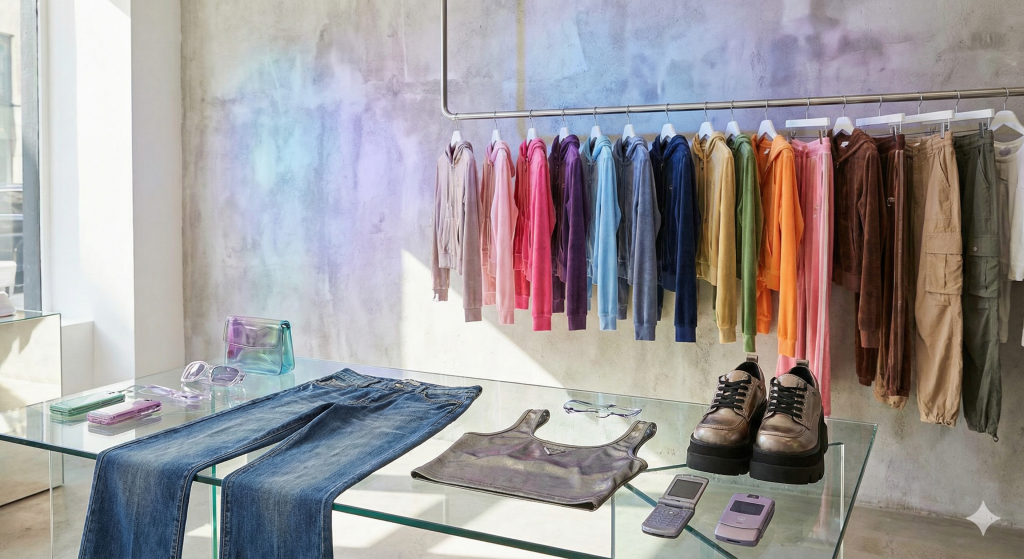
You cannot analyze the millennium aesthetic without referencing the plush, coordinated velour tracksuit. What was once the airport uniform of tabloid queens is now a highly sought-after commodity in both vintage resales and modern luxury capsules. I’ve noticed contemporary designers treating velour as a premium textile again, retaining its original tactile charm while refining the fit for today’s consumer.
| Classic Y2K Element | Modern 2020s Execution |
|---|---|
| Rhinestone text branding across the seat | Subtle tonal embroidery or highly localized, smaller crystal logos |
| Fitted, severely cropped zip-up hoodies | Slightly relaxed, boxy zip-ups with upgraded, heavier metal hardware |
| Ultra-low, hip-hugging flare bottoms | Mid-to-low rise with a significantly wider, straight-leg drape |
Chunky Sneakers and Platform Shoes: Footwear Evolution
The sleek, minimalist white leather sneaker has been officially dethroned by massive, structurally complex footwear. On set, we are constantly styling models in shoes that intentionally disrupt the body’s natural proportions. The exaggerated “Bratz doll” aesthetic heavily influences this sector, demanding aggressive platforms and heavily padded uppers that anchor the baggy bottoms mentioned earlier.
- Skater Silhouettes: Puffy tongues, thick rope laces, and heavily cushioned collars reminiscent of early millennium skate brands are dominating street-style galleries and luxury sneaker drops alike.
- The Extreme Platform: Thick foam or rubber soles, often exceeding three inches, are being attached to everything from knee-high boots to classic loafers, dramatically altering the wearer’s center of gravity and providing the necessary height to keep oversized cargo pants from dragging on the pavement.
Low-Rise Jeans and Cargo Pants: Styling the Resurgence
Let’s face it: the return of the low-rise waistline initially sent a collective shiver down the spines of anyone who lived through the early 2000s, but as an industry insider, I see it as the most liberating denim shift we’ve had in a decade. We spent years restricted by rigid, rib-crushing high-waisted jeans. The pendulum swing back to pelvic-grazing cuts wasn’t just predictable; it was necessary. Today’s low-rise is fundamentally different from the extreme, two-inch zipper cuts championed by pop stars twenty years ago. The modern interpretation focuses on a relaxed, slouched fit that rests naturally on the hip bones, prioritizing fluid movement over extreme exposure.
When I style low-rise jeans for clients or editorial shoots, the rule of thirds becomes non-negotiable. Because the waistline sits lower, the torso appears elongated. To modernize this proportion without looking entirely retro, I pair low-slung, wide-leg denim with structured outerwear. A slouchy low-rise jean anchored by a sharply tailored, oversized blazer creates a deliberate contrast between tailored sophistication and Y2K rebellion. We are also seeing the subtle return of the “whale tail” or exposed hip strap, but rather than visible underwear, designers like Diesel and Miu Miu are building these strap details directly into the trousers for a cleaner, intentional look.
Simultaneously, cargo pants have evolved from a fleeting micro-trend to the absolute workhorse of the Y2K revival wardrobe. The appeal lies in their utilitarian volume. We are moving away from the stiff, heavy canvas of the past and leaning heavily into technical fabrics. Parachute cargos made from lightweight nylon with adjustable bungee-cord ankles are dominating both streetwear and high-fashion runways.
To successfully style these voluminous bottoms today, you need to understand the shift in styling mechanics:
- Fabric Choice Dictates the Vibe: I always recommend opting for silky or crisp nylon parachutes for an athleisure-leaning aesthetic, whereas heavy enzyme-washed denim cargos offer a grungier, skater-inspired edge.
- The Ankle Cinch: Leaving the hem wide open over a puddle of fabric is true to the era, but utilizing the drawstring to cinch the ankle immediately elevates the silhouette, drawing the eye down to a curated footwear choice.
- Strategic Pocket Placement: Authentic Y2K cargos feature asymmetrical, 3D cargo pockets. Be mindful that these add visual bulk; I advise clients to look for styles where the pockets sit lower on the thigh or calf rather than directly on the hips.
To illustrate the styling evolution, here is exactly how we differentiate the modern revival from the original pieces:
| Garment | The 2000s Approach | The Modern Styling Translation |
|---|---|---|
| Low-Rise Jeans | Extreme low cut, skin-tight flare, paired with heavily bedazzled belts. | Relaxed, baggy straight-leg or puddle cut, styled with an exposed built-in hip strap or a minimalist leather belt. |
| Cargo Pants | Stiff cotton, loud camo prints, heavily distressed hems dragging on the floor. | Lightweight parachute nylon, monochromatic muted tones (sage, slate, charcoal), deliberately cinched at the ankle. |
The secret to making low-rise denim and oversized cargos work right now is intention. By treating these pieces as the focal point of the outfit and keeping the surrounding elements elevated and architecturally sound, you strip away the messy adolescence of the original era and replace it with a refined, self-aware streetwear aesthetic.
Velour Tracksuits: The Ultimate Early 2000s Comfort Wear
If there is one specific garment that instantly teleports us back to 2003, it is the velour tracksuit. I remember the exact moment Juicy Couture transitioned from a niche Californian lounge brand to an absolute global necessity, largely thanks to paparazzi shots of Paris Hilton, Britney Spears, and J.Lo. Today, as we integrate these plush sets back into our wardrobes, the approach has shifted from pure loungewear to calculated streetwear.
The modern appeal of the velour tracksuit lies in its unapologetic comfort mixed with a hint of irony. Wearing them today requires a slight update to avoid looking like you are simply wearing a vintage archive piece. We are seeing a distinct move away from the hyper-fitted, low-slung cuts of the early aughts. Instead, contemporary iterations from brands like Skims and the revived lines from Juicy Couture itself favor a slightly more relaxed drape, higher waistlines, and upgraded, heavier hardware.
Here is how I advise my clients to style velour sets for the current street-style scene:
- Break the set apart: Wearing the top and bottom together is a bold, maximalist statement. For a subtler nod to the era, I recommend pairing the cropped zip-up hoodie with a structured straight-leg jean, or wearing the velour pants with a ribbed baby tee and an oversized leather blazer.
- Embrace the monochromatic palette: Solid, rich colors elevate the fabric. Deep burgundies, classic navy, espresso browns, and muted sage greens feel significantly more sophisticated than the bubblegum pinks of the past.
- Update the footwear: The instinctive pairing used to be shearling boots. To modernize the silhouette, I always tell stylists to pair the flared velour bottoms with a sleek pointed-toe boot or a minimalist, architectural sneaker.
To really understand the shift in how we consume this trend, let us look at the evolution of the styling details:
| Styling Element | The 2000s Original | The Modern Revival |
|---|---|---|
| Fit | Dangerously low-rise pants, skin-tight cropped jackets. | Mid to high-rise waists, slightly slouchy and relaxed silhouettes. |
| Embellishments | Massive rhinestone logos across the back or the seat. | Minimalist embroidered logos, clean lines, devoid of heavy bling. |
| Accessories | Slouchy oversized hobo bags, heavily tinted aviators. | Structured micro-bags, sleek rectangular acetate frames. |
The fabric itself remains the hero piece. Velour captures light dynamically, giving a visual richness and texture that standard cotton or fleece sweatpants completely lack. By treating the velour tracksuit as a foundation for high-low mixing—pairing the plush casualness of the fabric with tailored outerwear or luxury leather accessories—we can harness its nostalgic power while keeping the final look firmly rooted in contemporary luxury.
Chunky Sneakers and Platform Shoes: Footwear Evolution
Look down at the streets of SoHo or browse the latest drop from any major sneaker boutique, and the sheer volume of the footwear is impossible to ignore. The dominance of a razor-thin stiletto or a minimalist leather loafer has given way to the aggressive, unapologetic bulk of chunky sneakers and sky-high platforms. In my years tracking footwear life cycles, I have rarely seen a silhouette return with such ferocity. We aren’t just revisiting the aesthetic of the late 90s and early 2000s; we are witnessing a complete engineering evolution of the shoe itself.
Today’s iterations solve the primary flaw of their vintage counterparts: weight. Brands are currently constructing exaggerated outsoles using ultra-lightweight EVA foams and hollowed-out sole units that simply weren’t accessible in 2003. This means consumers get the massive, imposing footprint of a vintage Skechers D’Lites or a heavy-duty platform boot without dragging around five pounds of solid rubber.
When tracking current retail performance and runway presence, three distinct footwear categories are driving this specific revival:
- The “Dad” and Skate Sneaker Hybrid: Moving past the initial wave of luxury chunky sneakers, we are seeing a heavy lean into the puffy, tech-heavy skate shoes of the early 2000s. Think padded tongues, thick laces, and layered mesh panels reminiscent of classic Osiris or DC models, now elevated by top-tier luxury houses and heritage athletic brands alike.
- The Flatform Sandal and Slide: The iconic stretchy black band and heavy wooden or foam sole of the late 90s has returned. Brands have practically re-released their archival blueprints, while modern designers are putting extreme, geometric platform soles on everything from summer slides to winter clogs.
- The Monolith Boot: The DNA of the tower-boots worn by pop stars twenty years ago lives on in aggressively lugged, thick-soled combat and knee-high boots that prioritize a stomping, utilitarian presence.
To understand the market dominance of these shapes, I often map the direct lineage from the archival inspirations to the current top-selling retail SKUs:
| Footwear Category | The Y2K Archival Blueprint | The Modern Evolution Leader |
|---|---|---|
| Chunky Athletic | Skechers Energy / Fila Disruptor | New Balance 9060 / Asics Gel-Kayano 14 |
| Platform Boots | Buffalo London Classics | Prada Monolith / Naked Wolfe Sinner |
| Casual Platforms | Steve Madden Slinky | UGG Platform Tasman / Crocs Mega Crush |
The architectural geometry of these shoes provides necessary visual weight. When pairing the oversized, pooling hems of the bottoms we analyzed in the previous section, a flat, low-profile shoe is entirely swallowed. The heavy tread and elevated midsole of a chunky sneaker anchor the extreme proportions of the lower half, creating a balanced, highly stylized silhouette that makes the wearer look deliberate rather than simply swamped by excess fabric. This volume has transitioned from a nostalgic novelty to a structural necessity in modern apparel coordination.
How to Wear the Y2K Aesthetic Today Without Looking Costumey
Navigating the resurgence of early 2000s fashion requires a delicate hand; the line between a chic, referential outfit and a nostalgic costume is perilously thin. My philosophy as a stylist is simple: modernization through moderation. We are not aiming to perfectly recreate a 2003 red carpet look. Instead, we extract the DNA of the era and fuse it with contemporary styling rules. The secret lies in deliberate juxtaposition, ensuring every outfit feels grounded in the present.
Balancing Baggy Bottoms with Fitted Tops
The rule of proportions is your strongest defense against looking dated. Since we’ve already established how oversized cargo pants, velour bottoms, and low-rise cuts dominate the lower half, the top half demands structure and brevity. I consistently pair voluminous, pooling bottoms with restrictive or cropped tops to create visual harmony. Think ribbed baby tees, structured denim corsets, or fitted halter tops. If you are styling a baggy jean, expose the midriff just enough to break up the fabric, but anchor the look with a sharp, tailored blazer or an architectural leather trench coat. This specific layering technique elevates the ensemble from teenage rebellion to high-fashion editorial.
Incorporating Futuristic Metallics and Holographic Textures
The “cyber” aspect of the millennium shift brought us reflective fabrics and liquid metallics, which can easily swallow an outfit whole if mismanaged. To integrate these textures without looking like a sci-fi extra, treat them as calculated accents rather than the main event. A silver metallic baguette bag or a holographic stiletto is often all you need. If you do opt for a metallic garment, such as a foil-finish mini skirt or liquid-silver pants, neutralize its high-shine intensity with matte, understated companions. My go-to trick in the showroom is pairing high-gloss fabrics with an oversized, heavy-knit cashmere sweater or a crisp, tailored white button-down. The success of the look relies entirely on creating friction between the hyper-synthetic and the natural.
Accessorizing with Butterfly Clips and Tiny Sunglasses
Micro-accessories defined the turn of the century, but wearing them all at once is a rookie styling mistake. Choose exactly one vintage-inspired focal point. If you reach for rimless, colored-lens tiny sunglasses, keep your hair sleek and skip the butterfly clips altogether. Conversely, if you are incorporating hair accessories like snap clips or claw clips, opt for modern finishes like tortoiseshell or brushed matte metal instead of glittery plastics. I strictly advise my clients to pair these playful accessories with minimalist, sophisticated makeup—think a flawless, glowing base and a simple glossy lip—rather than frosted eyeshadow, which tips the scale directly back into parody territory.
Would you like me to draft the next section on “The Role of TikTok and Gen Z in the Y2K Fashion Revival”?
Balancing Baggy Bottoms with Fitted Tops
The foundation of a successful Y2K silhouette relies heavily on mastering proportions. When you are styling oversized cargo pants, parachute pants, or pooling low-rise denim, you risk drowning your frame. The immediate fix, and an absolute non-negotiable in my daily styling work, is the tight-fitting top. This “big pants, little shirt” styling rule dominated the MTV red carpets of the early 2000s and remains the most effective way to wear voluminous bottoms today without looking like you are swimming in fabric.
I always remind clients that contrast is the secret weapon here. The eye needs an anchor. By pairing a baggy, heavy-weight bottom with a top that closely hugs the body, you highlight the waist and create a balanced, flattering shape. To execute this correctly, you need to stock up on a few specific top variations:
- The Ribbed Baby Tee: Look for cropped lengths that hit right at or slightly above the navel. A slight stretch in the fabric ensures a snug fit that contrasts perfectly with rigid denim or loose nylon.
- The Tube Top: A staple of early 2000s R&B aesthetics. I prefer styling seamless bandeau tops with highly detailed cargo pants to balance out the heavy hardware and pocket bulk.
- Structured Corsets and Bustiers: If you want to elevate the look for an evening out, swap the casual cotton tees for a boned corset. This provides intense structural contrast against relaxed, slouchy bottoms.
- Asymmetrical Halters: Necklines with interesting cutouts or asymmetrical straps draw attention upward, ensuring the oversized pants don’t pull focus entirely to the floor.
To make the application foolproof, I have put together a quick reference guide on exactly how we pair these pieces in the studio to achieve that authentic, modern-leaning Y2K balance:
| Voluminous Bottom Style | Ideal Fitted Top Pairing | Why This Works |
|---|---|---|
| Nylon Parachute Pants | Seamless Ribbed Tube Top | The extreme billowiness of parachute nylon requires maximum skin exposure and a skin-tight fit up top to prevent a shapeless silhouette. |
| Low-Rise Slouchy Denim | Graphic Baby Tee (Shrunken Fit) | Creates the quintessential casual Y2K daytime look. The shrunken tee ensures the elongated torso typical of low-rise cuts is framed, not hidden. |
| Oversized Utility Cargos | Structured Satin Corset | Mixes high-glamour with utilitarian streetwear. The rigid boning of the corset sharpens the inherently relaxed nature of heavy canvas cargos. |
When selecting your fitted tops, pay close attention to the hemline. The exact point where the shirt ends and the pants begin dictates the entire vibe of the outfit. For the most authentic execution, a sliver of midriff—ranging from one to three inches—should be visible. This negative space is what effectively breaks up the body and stops the heavy, baggy bottoms from overwhelming your natural lines.
Incorporating Futuristic Metallics and Holographic Textures
The original Y2K era was obsessed with the turn of the millennium, translating early-internet optimism into high-shine wardrobes. Today, reviving cyber-metallics and holographics requires strategic restraint. Instead of head-to-toe foil, we must treat these high-impact finishes as statement accents against matte, contemporary fabrics. The goal is to nod to the space-age aesthetic without looking like an extra in a 1999 sci-fi music video.
To master this balance, I always advise my styling clients to rely on heavy texture juxtaposition. High-gloss finishes naturally catch the light and immediately dictate the focal point of your silhouette, meaning the rest of the outfit must act as a visual anchor.
- The Rule of One: Limit yourself to a single high-shine garment per outfit. A silver chrome puffer jacket effortlessly elevates a basic white tee and the baggy denim we discussed earlier, keeping the look rooted in streetwear rather than costume.
- Organic Grounding: Pair an iridescent slip dress with a chunky, oversized wool cardigan or a structured matte-leather trench. Heavy, organic materials neutralize the sleek artificiality of light-catching fabrics, making them entirely wearable for daytime.
- Micro-Dosing via Accessories: If a metallic garment feels too loud, pivot strictly to accessories. Holographic baguette bags, iridescent shield sunglasses, or metallic strappy mules inject authentic 2000s DNA into a minimalist look without overwhelming the wearer.
For quick reference, here is the styling matrix I use to integrate these highly reflective textures into a modern daily rotation:
| Y2K High-Shine Item | Modern Grounding Element | Ideal Setting |
|---|---|---|
| Silver Liquid-Metal Mini Skirt | Oversized Charcoal Wool Blazer | Night Out / Editorial Street Style |
| Holographic Pointed-Toe Mules | Tailored, Wide-Leg Matte Trousers | Creative Office-to-Drinks |
| Chrome Nylon Parachute Pants | Fitted Ribbed Cotton Tank Top | Weekend Casual |
When we anchor these space-age textures with reliable, everyday staples, the aesthetic shifts instantly from a retro novelty to a highly intentional, modern uniform.
Accessorizing with Butterfly Clips and Tiny Sunglasses
The true magic of the Y2K revival lives in the micro-details. We’ve moved past the minimalist, barely-there jewelry of the 2010s and fully embraced the playful, slightly subversive nature of early-2000s accessories. When I am styling an editorial or prepping a client for an event, I almost always use butterfly clips and tiny sunglasses as the deliberate “wildcard” elements that instantly break up an otherwise rigid or predictable outfit.
Let’s break down the hair hardware first. The modern approach to butterfly clips isn’t about recreating a frantic, haphazard updo. Instead, we are seeing strategic, symmetrical placement. Think two high-quality metallic or matte-finish clips pulling back face-framing tendrils to secure a sleek middle part. If you want to lean hard into the authentic aesthetic, the translucent, glitter-injected plastic clips are back in heavy rotation. The styling secret here is juxtaposition: pair these hyper-youthful hair accessories with contrasting, serious textures—like a structured heavy leather trench or a sharp, oversized wool blazer. Applying them alongside a velvet tracksuit or baby tee risks tipping the look into pure cosplay, but pairing them with modern tailoring creates a brilliant editorial tension.
Then we have the eyewear. The rapid industry shift from massive, face-shielding frames to micro-sunglasses completely alters how we approach facial proportions. We are specifically looking at rimless tinted lenses (especially in washes of rose, amber, and icy blue), wire-rimmed ovals, and harsh, angular “Matrix” silhouettes. The defining rule for wearing these today is positioning: tiny sunglasses are explicitly designed to sit lower on the bridge of the nose. They act purely as a decorative facial accessory, allowing for eye contact over the rim, rather than serving any functional sun protection.
To nail this specific eyewear trend without endless trial and error, I use a straightforward matching system based on architectural balance:
| Face Shape | Ideal Y2K Micro-Frame | Styling Directive |
|---|---|---|
| Round | Sharp, angular rectangles or narrow “Matrix” frames. | Use hard geometric lines to add definition to softer facial features. Opt for opaque black lenses. |
| Square / Angular | Wire-rimmed ovals or rimless circular shapes. | Curved edges soften strong jawlines. Pastel-tinted lenses (pink or yellow) work best here. |
| Oval / Heart | Extreme cat-eye micro-frames or shield-hybrids. | Elongated outer corners draw the eye upward and outward, complementing natural symmetry. |
When integrating these statement pieces, I strictly enforce the “Rule of One” to keep the aesthetic grounded. If you are wearing rimless, pink-tinted micro-glasses, keep your hair completely sleek and skip the butterfly clips entirely. Conversely, if you are stacking pastel hair clips, swap the tiny sunglasses for a cleaner face, letting the hair accessories carry the nostalgic weight. The core objective is a knowing nod to the era, relying on these punchy, scaled-down accessories to inject just enough irony into a contemporary silhouette.
The Role of TikTok and Gen Z in the Y2K Fashion Revival
Gen Z’s obsession with the early 2000s isn’t just a fleeting homage; it is a meticulously documented, algorithm-driven cultural reset. As fashion forecasters, we often talk about the 20-year trend cycle, but TikTok compressed that timeline and injected it with hyper-speed. What we are witnessing is anemoia—a profound nostalgia for a time this demographic barely lived through. For Gen Z, the Y2K era represents a pre-recession, optimistic fantasy that serves as a visual rebellion against the stark, curated minimalism their millennial predecessors championed.
The engine behind this revival is TikTok’s democratic “For You” page (FYP). Unlike older social platforms that rewarded heavily edited, editorial polish, TikTok thrives on raw, authentic styling and community validation. The hashtag #Y2KAesthetic commands tens of billions of views, acting as a real-time, decentralized mood board. The way this demographic consumes and propagates fashion relies on specific in-app mechanics:
- The GRWM (Get Ready With Me) Format: Creators build outfits piece-by-piece on camera, breaking down the styling logic. This makes intimidating Y2K silhouettes highly accessible and replicable for the masses.
- Soundbite Styling: Outfits are contextualized using audio snippets from 2000s pop culture—like Paris Hilton quotes or sped-up Destiny’s Child tracks—creating an immersive, nostalgic vibe that sells the entire lifestyle, not just the garments.
- The Thrift Haul Flex: Sustainability meets status. Sourcing an authentic 2003 Von Dutch hat or a deadstock Ed Hardy tee is celebrated heavily in the comments section, turning the act of secondhand shopping into a competitive sport.
We actively track the pipeline from viral TikTok content to retail sell-through rates, and the correlation is immediate. When a creator successfully styles a tricky early-2000s piece, secondary market platforms like Depop and Grailed see search volume spike within hours. Major fashion houses and fast-fashion conglomerates now actively scrape this very data to dictate their production cycles. Miu Miu’s wildly viral micro-mini skirt set wasn’t just a runway stunt; it was perfectly engineered for the vertical, screen-grabbing dimensions of TikTok.
| Trend Metric | Traditional Fashion Cycle | Gen Z & TikTok Cycle |
|---|---|---|
| Origin Point | Runways, High-end Editorials | User FYPs, Niche Digital Subcultures |
| Pacing & Lifespan | Seasonal (6-month lag) | Micro-seasons (Weekly shifts) |
| Ultimate Status Symbol | Brand new, full-price luxury items | Archival, hard-to-find vintage pieces |
The traditional top-down hierarchy of the fashion industry has been completely fractured by this dynamic. We are no longer waiting for September magazine issues to dictate what is culturally relevant. Gen Z has weaponized TikTok’s algorithm to resurrect, redefine, and commercialize the Y2K aesthetic entirely on their own terms, forcing the entire global fashion supply chain to rapidly follow their lead.
Sustainable Ways to Shop for Authentic Y2K Clothing
Finding genuine Miss Sixty jeans or an original Juicy Couture tracksuit shouldn’t mean contributing to the modern fast-fashion waste cycle. When I source authentic Y2K pieces for editorial shoots or personal styling clients, I actively avoid modern mall brands manufacturing synthetic “dupes” and head straight for the secondary market. Buying authentic vintage is the most environmentally responsible way to participate in this revival, keeping existing garments out of landfills while guaranteeing you get the superior heavyweight denims and actual cotton-blend velour of the early 2000s.
Online resale platforms like Depop, Vinted, Grailed, and Poshmark are current goldmines, but navigating them requires strategic search tactics. Modern fast-fashion brands heavily pollute the generic search term “Y2K.” To filter out the noise and find sustainable, authentic pieces, we must use highly specific brand names and era-accurate terminology.
- Target Era-Specific Brands: Instead of searching for “baggy jeans,” search for original Mudd, Candie’s, early Diesel, XOXO, JNCO, or Baby Phat.
- Hunt for Deadstock: Use keywords like “deadstock Y2K” or “NWT vintage.” Deadstock refers to unsold inventory from the late 90s and early 2000s that has been sitting in warehouses. It provides the brand-new feeling without the new-production environmental cost.
- Demand Tag Photos: I always ask sellers for a close-up photo of the care and brand tags. Paper tags, “Made in USA” labels, and stitched woven labels (rather than cheap screen-printed neck tags) usually indicate an authentic piece manufactured before the major fast-fashion explosion.
Local consignment shops and curated vintage boutiques offer another high-yield, low-impact avenue. Unlike massive charity shops where you might dig through bins for hours, curated vintage stores have specialized buyers who do the era-sorting for you. While you pay a slight premium for their curation, the carbon footprint of individual shipping is eliminated, and you can physically inspect the garment’s integrity. When evaluating a piece on the rack, I always inspect the hardware. Authentic early 2000s cargo pants and low-rise denim utilized heavy-duty metal zippers (like YKK) and solid brass rivets, a stark contrast to the flimsy plastic hardware common in today’s rapid production cycles.
| Feature | Authentic Y2K Vintage (Sustainable) | Modern Fast Fashion Remake (Unsustainable) |
|---|---|---|
| Denim Weight | Heavy, rigid 100% cotton, built to last decades. | Thin, highly elastic synthetic blends (spandex/polyester). |
| Tracksuit Fabric | Thick cotton-blend velour or terry cloth. | Micro-shedding 100% polyester that degrades in the wash. |
| Label Details | Embroidered or woven patches, paper care tags. | Printed directly on the fabric to save manufacturing costs. |
Finally, upcycling and tailoring existing garments is a highly effective way to achieve the aesthetic sustainably. Transforming a standard pair of thrifted mid-90s straight-leg jeans into raw-hem low-rise shorts, or cropping an oversized vintage graphic tee, gives old clothes a specialized second life. Many local tailors can easily alter the waistline or hem of high-quality vintage pieces to mimic the distinct, fitted silhouettes of the era. By focusing strictly on these circular fashion models—resale, deadstock hunting, and upcycling—we keep the daring spirit of the early 2000s alive without replicating the severe ecological mistakes of contemporary mass production.
FAQ
Q: How do I navigate sizing when buying authentic vintage Y2K pieces?
I always advise my clients to completely ignore the size tag. Vintage sizing from the late 90s and early 2000s runs significantly smaller than modern vanity sizing. A size 6 from 2002 typically fits like a contemporary size 2 or 4. When sourcing vintage items, always ask sellers for exact flat measurements—specifically the rise, hip, and inseam for the denim and cargos we covered earlier—and compare them directly against a garment you already own that fits you perfectly.
Q: I am a millennial who wore these trends the first time around. Can I still wear the Y2K aesthetic without looking like I am trapped in my teenage years?
Absolutely. The secret here is elevation and restraint. Instead of wearing the head-to-toe mall-brand looks of our past, we blend one statement Y2K piece with sharp, modern tailoring. Try pairing a subtle cowl-neck metallic top under an oversized blazer, or wear a high-quality velour track jacket with structured trousers rather than the matching sweatpants. You want to nod to the era through texture and silhouette, rather than creating a literal time capsule outfit.
Q: Are there specific Y2K designer accessories that are currently worth the investment?
Yes, my recent market analysis shows resale data heavily favoring specific “It” bags from that era. The Dior Saddle Bag, Fendi Baguette, and Prada Nylon shoulder bags continue to hold impressive value. If you are browsing resale platforms for authentic goods, keep a close eye out for the Balenciaga Motorcycle City bag. Its slouchy, hardware-heavy aesthetic is experiencing a massive spike in search volume and premium pricing across luxury consignment sites this quarter.
Q: What is the most common styling mistake people make when adopting this revival?
Over-accessorizing. The original Y2K era was notoriously maximalist—think stacking butterfly clips, rimless tinted sunglasses, chunky resin rings, and heavy chain belts all in one outfit. Today’s iteration demands a more curated approach. Pick one strong focal point. If you are styling a dramatic chunky sneaker and baggy bottom combination, keep the jewelry sleek and minimal to let the exaggerated proportions stand out.