The Rise of Eco-Conscious Campuses: Why Sustainable Fashion Matters in 2026
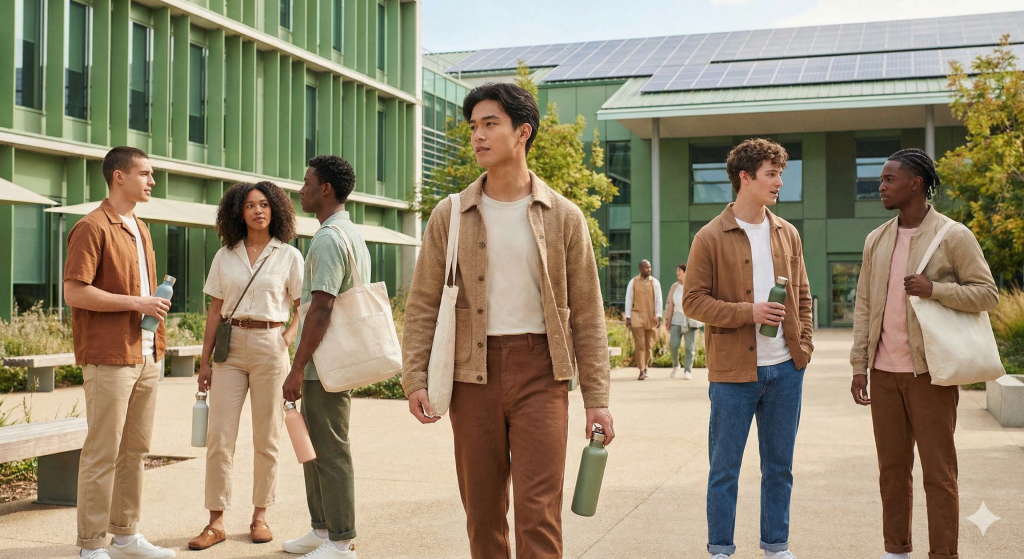
Walk across any major university quad this semester, and you will notice a seismic shift in the unspoken campus dress code. The era of the disposable, 50-item ultra-fast-fashion haul is dead. In 2026, showing up to a lecture in a freshly unbagged, micro-trend virgin polyester top isn’t just passé—it’s actively frowned upon by peers. As someone who tracks consumer behavior for global fashion houses, I can tell you that the 18-to-22 demographic has completely rewired the concept of social currency. It is no longer about who is wearing the newest item, but who has the smartest sourcing story.
This shift didn’t happen overnight, but 2026 marks the tipping point where eco-consciousness moved from a fringe campus subculture to the mainstream baseline. Why is this happening now? We are seeing a convergence of economic pressure, climate reality, and a massive cultural backlash against the greenwashing of the early 2020s. Today’s college students are hyper-literate in supply chains. They know the difference between genuine circularity and a PR stunt, and they are voting with their limited, yet highly influential, dollars.
Several distinct drivers have forced this evolution on campuses nationwide:
- The Stigma of Overconsumption: Visible overconsumption is now a major social faux pas. The “outfit repeater” stigma has completely flipped; wearing the same high-quality or thrifted piece creatively multiple times is celebrated as a styling flex.
- Institutional Policy Shifts: We are seeing universities implement strict sustainability mandates. From banning ultra-fast fashion brands from sponsoring campus events to installing mandatory textile recycling drops in every freshman dorm, the infrastructure now supports the mindset.
- The “Cost-Per-Wear” Awakening: Inflation has hit student budgets hard. The math of buying a $10 shirt that falls apart after two washes no longer tracks. Students are treating their wardrobes as investment portfolios, shifting their focus entirely toward durability.
To truly understand this market shift, look at how the baseline psychology of a college shopper has evolved. Here is the data-driven reality I share with brands trying to capture the Gen Z and emerging Gen Alpha campus demographic:
| The 2020 Campus Mindset | The 2026 Campus Mindset |
|---|---|
| Trend-chasing via weekly digital hauls | Curating a distinct, slowly evolving personal uniform |
| Brand prestige based on massive logos and hype | Brand prestige based on transparency, ethics, and material innovation |
| Discarding or abandoning garments at the end of the semester | Viewing every garment as an asset to be resold, swapped, or upcycled |
This isn’t just a fleeting aesthetic; it is a permanent behavioral reset. When we talk about sustainable fashion on campus today, we aren’t just talking about buying organic cotton. We are witnessing an entirely new, peer-regulated economy based on extending the lifecycle of every garment. The students aren’t waiting for the legacy fashion industry to fix itself—they are building their own circular systems right outside their dorm rooms.
Top Sustainable Fashion Trends for College Students in 2026
Walking the quads from Central Saint Martins to UCLA this semester, the aesthetic shift is undeniable. The era of the disposable, poly-blend fast-fashion haul is officially dead. For 2026, I am tracking a radical pivot where sustainability is the absolute baseline for what constitutes “good taste” among students. The current collegiate demographic is treating their closets like curated, functional archives. The visual language of eco-fashion has completely shed its dated, “crunchy” reputation, morphing into sharp, hyper-intentional streetwear and elevated utility.
In my recent trend forecasting across global campuses, I’ve noted that the most sought-after looks prioritize radical transparency and structural ingenuity. The “cool factor” of an outfit now directly correlates with how a garment was sourced, altered, or even grown in a lab. We are witnessing the death of the fast-fashion micro-trend cycle in favor of macro-movements that emphasize longevity and aggressive personal expression.
| Macro-Movement | 2026 Campus Execution | The Aesthetic Vibe |
|---|---|---|
| The Reconstructed Archive | Frankenstein silhouettes, visible heavy mending, intentionally distressed textures born from pre-loved garments. | Grungy, hyper-personalized, rebellious. |
| Bio-Tech Minimalism | Lab-grown textures, raw earthy tones, seamlessly compostable layering pieces replacing basic cotton tees. | Sleek, futuristic, organic. |
| The Fluid Uniform | Detachable components, adjustable hems, shared non-binary silhouettes that adapt to multiple dress codes. | Utilitarian, adaptable, highly functional. |
These overarching movements translate directly into the highly specific, wearable styles dominating 8 AM lectures and weekend off-campus events alike. Students are demanding garments that mutate, adapt, and eventually return safely to the earth without leaving a trace of microplastics behind. To understand exactly what is hanging in the most stylish dorm closets right now, we need to examine the specific material and structural innovations defining the class of 2026.
Upcycled and Patchwork Denim Revival
Denim has always been the unofficial uniform of the college student, but in 2026, we are witnessing a complete rejection of virgin cotton jeans in favor of hyper-customized, upcycled patchwork pieces. I’ve spent the last few months tracking street style across major university campuses, and the prevailing silhouette is definitively the reconstructed “Frankenstein” jean. These are garments meticulously spliced together from two, three, or even four different pairs of thrifted or deadstock pants.
This movement isn’t just about covering up a tear; it is a deliberate, high-fashion aesthetic that has filtered down to the quad. Students are treating denim as a raw material rather than a finished product. We are seeing a massive shift toward high-contrast color blocking—think a vintage stonewash leg dramatically paired with a rigid, raw indigo panel, all held together by thick, exposed threading.
From an insider’s perspective, the appeal here is twofold: radical individuality and measurable environmental impact. Since a single new pair of jeans requires roughly 1,800 gallons of water to produce, campus creatives are entirely bypassing that ecological toll. They are utilizing specific, localized techniques to elevate discarded textiles:
- Sashiko Mending: This traditional Japanese embroidery technique has exploded in dorm rooms. Students use heavy white or contrasting thread to create geometric patterns over weak spots, turning structural reinforcement into a statement design element.
- Laser-Etched Scrap Paneling: With makerspaces becoming standard on college campuses, fashion students are using CNC laser cutters to etch custom patterns into denim scraps before sewing them onto jackets and jeans as appliqué patches.
- Hem and Waistband Flipping: We are seeing waistbands detached and sewn to the bottom hems for a weighted, ultra-baggy drop, or multiple waistbands layered at the top to create a built-in corset effect.
To really understand how this trend is manifesting on the ground, I’ve categorized the dominant patchwork styles currently driving campus micro-trends:
| Patchwork Style | Vibe & Aesthetic | Key Construction Details |
|---|---|---|
| The Asymmetrical Split | Minimalist grunge, elevated streetwear | One leg entirely light wash, one leg dark wash, bisected down the exact center crotch seam. |
| The “Boro” Maximalist | Art-school eclectic, vintage-heavy | Dozens of small, frayed scraps overlapping; heavy use of visible hand-stitching and mixed textures (e.g., upcycled corduroy mixed with denim). |
| Structural Cut-Outs | Y2K club-kid meets utility | Knee or thigh panels removed and replaced with sheer upcycled deadstock fabrics or contrasting patterned denim. |
For brands and student designers alike, the message is clear: the perceived value of denim in 2026 is no longer about pristine condition. It is entirely about the story, the visible labor of the reconstruction, and the total absence of new water usage. The more a piece looks like it has lived multiple lives, the higher its cultural currency on campus.
Biodegradable Basics and Mycelium Leather Accessories
I spent last month previewing the textile innovations at the Copenhagen Fashion Summit, and the loudest buzz wasn’t about silhouettes—it was about end-of-life. We are tracking a massive shift on campuses right now: students no longer just want clothes made from recycled materials; they want garments that can literally disappear into the compost bin when they wear out. This is the era of the biodegradable basic.
The standard poly-blend campus t-shirt is officially obsolete. In 2026, the brands winning the college demographic are engineering everyday basics—tees, underwear, and socks—from next-generation organic compounds. We are seeing heavy adoption of seaweed-blended lyocell (like SeaCell) and algae-infused cottons. These materials are incredibly soft, naturally antimicrobial (which means fewer washes required in cramped dorm laundries), and entirely biodegradable.
The industry secret that finally made this viable for the mass student market? Compostable elastane. For years, the 2% spandex needed for stretch made basics un-compostable. Now, threads like ROICA™ V550 break down without releasing toxic microplastics. If you look at what freshmen are packing this year, it is a stack of these closed-loop, stretch-friendly tees.
Transitioning from apparel to hardware, we have to talk about the total disruption in the accessories market by mycelium. If you had told me five years ago that the reigning “It” bag on the quad would be grown from mushroom roots, I would have been skeptical. But the scaling of mycelium leather has dramatically driven down price points, making it fully accessible on a student budget.
Brands are utilizing the vegetative part of fungi to cultivate a material that mimics the hand-feel, durability, and natural patina of animal leather. For students, this translates to heavy-duty items that can survive the daily grind of campus life.
- The Tech Backpack: Mycelium fibers are naturally water-resistant and incredibly lightweight. We are seeing a surge in minimalist, unlined mycelium backpacks capable of protecting laptops during rainstorms without the ecological guilt of polyurethane (PU) plastics found in older vegan leathers.
- Dorm-to-Class Footwear: Chunky mycelium slides and reinforced combat boots are replacing traditional leather. They break in faster than cowhide and don’t scuff as easily, making them perfect for high-traffic campus walking.
- Small Leather Goods (SLGs): Lanyards, cardholders, and phone crossbody bags made from mushroom leather are becoming standard campus bookstore stock.
To give you a clear picture of why we are steering buyers away from legacy materials toward these 2026 innovations, look at this breakdown of campus utility versus environmental impact:
| Accessory Material | Durability (Campus Wear) | Water Resistance | End-of-Life Fate |
|---|---|---|---|
| Traditional PU “Vegan” Leather | Low (Cracks and peels after 1-2 semesters) | High | Sits in a landfill for 500+ years |
| Animal Leather | Very High | Moderate (Requires chemical treatments) | Treated with toxic chromium; slow breakdown |
| Mycelium Leather (2026 Standard) | High (Develops a natural patina) | High (Naturally hydrophobic) | 100% Biodegradable in industrial compost |
What I find most fascinating as a forecaster is the mindset shift. You aren’t just buying a bag or a t-shirt anymore; you are buying biological technology. The college demographic is the first to truly normalize wearing grown materials, and it is forcing legacy fast-fashion retailers to scramble for biological alternatives just to stay relevant in the campus ecosystem.
Gender-Neutral and Modular Capsule Wardrobes
Walk through any campus quad in 2026, and you will immediately notice the rigid binaries of collegiate fashion have dissolved. We are tracking a massive, deliberate shift toward hyper-functional, gender-fluid silhouettes that prioritize longevity over micro-trends. From my recent conversations with buyers at Copenhagen Fashion Week, it is clear that Gen Z’s approach to dorm-room closets has fundamentally changed. The focus is now on pieces that adapt to the wearer, rather than forcing the wearer to conform to the garment.
Gender-neutral design in 2026 goes far beyond the basic “unisex” hoodie of the past. We are looking at elevated, adjustable tailoring. Think drop-shoulder blazers, wide-leg utility trousers with hidden interior drawstring waists, and relaxed-fit knitwear. By removing gendered grading from the design process, brands are creating universally wearable pieces. This drastically reduces production waste and makes the garments highly liquid assets for campus clothing swaps.
Paired with this fluidity is the explosion of the modular capsule wardrobe. Dorm room storage is notoriously limited, making versatility a necessity. Modular garments are designed with interchangeable, adaptable elements. I am seeing students build entire semester wardrobes around just 10 to 12 high-performing core items.
- Zip-and-Transform Silhouettes: Utility pants that cleanly zip down into jorts, or trench coats with detachable lower panels to become cropped jackets.
- Multi-Way Fastenings: Cardigans and wrap shirts with strategic snap buttons that allow them to be draped, cropped, or layered as scarves.
- Reversible Engineering: High-quality outerwear featuring a weather-resistant shell on one side and a textured knit on the other, effectively halving the need for seasonal jacket purchases.
To give you a concrete idea of how we advise building this out, here is a snapshot of the foundational 2026 modular campus capsule:
| Garment Category | The 2026 Modular Piece | Wearability Factor |
|---|---|---|
| Outerwear | Reversible Quilted/Nylon Bomber | Transitions from rainy morning lectures to evening social events seamlessly. |
| Bottoms | Adjustable-Waist Cargo Parachute Pants | Genderless sizing; drawcords at ankles change the silhouette from wide-leg to jogger. |
| Tops | Detachable-Sleeve Poplin Button-Down | Serves as a formal layering piece or a breezy short-sleeve summer shirt. |
| Knitwear | Multi-way Wrap Sweater | Can be worn as a standard crewneck, an open cardigan, or a thermal wrap. |
By investing in these shape-shifting, non-binary pieces, students are actively dismantling the overconsumption model. It requires a bit more upfront curation, but as we analyze the lifecycle of these garments, the return on investment for both the student’s wallet and the environment is undeniable.
How to Build a Sustainable College Wardrobe on a Budget
Let’s get one thing straight: the biggest myth in the industry right now is that you need a trust fund to participate in the circular economy. I hear it constantly from students who want to ditch fast fashion but are intimidated by the $150 price tags on ethically made organic basics. The reality is that building an eco-conscious closet on a dining-hall budget isn’t about buying expensive “green” labels; it’s about fundamentally shifting your acquisition strategy.
We need to talk about the 70/30 Wardrobe Principle. When I advise young adults transitioning their style, I recommend sourcing 70% of your closet from secondary markets. The remaining 30% is reserved for strategic, high-quality investments where hygiene or structural integrity matters most—like footwear, intimates, or heavy winter outerwear. This ratio immediately slashes your overall spend while maximizing your environmental impact.
To pull this off without looking like you’re wearing a chaotic assortment of hand-me-downs, you have to master the math of the closet. Here are the practical parameters I tell my clients to use when evaluating any potential addition to their rotation:
- The 72-Hour Rule: Fast fashion thrives on manufactured urgency and algorithmic push notifications. If you see an item, wait three days. If you’re still mentally mapping how it pairs with the specific modular pieces we discussed earlier, it’s worth tracking down.
- Ruthless Cost-Per-Wear (CPW) Calculation: A $20 trendy poly-blend top that pills and loses its shape after two parties costs $10 per wear. A $60 vintage wool sweater that survives four years of freezing lecture halls costs pennies per wear. Stop looking at the sticker price and start looking at the lifecycle cost.
- Color Anchoring: Instead of chasing every micro-aesthetic that hits your feed, anchor your wardrobe in a strict baseline palette—for instance, navy, oat, and a pop of olive. This ensures that a single thrifted jacket can integrate seamlessly into five different outfits, reducing the volume of clothes you actually need to buy.
Building this way introduces intentional friction into your shopping habits. That friction is exactly what protects your wallet. By treating your closet as a highly curated collection rather than a disposable rotation, you immediately insulate your bank account from the relentless hype cycle.
Mastering Campus Clothing Swaps and Thrift Flipping
We’ve officially moved past the era where being seen in the same outfit twice was a fashion faux pas. On campuses today, the real flex is pulling off a fit that literally no one else can buy. Clothing swaps and thrift flips have evolved from niche weekend hobbies into the primary supply chains for the most stylish students I observe.
Let’s talk about maximizing your haul at a campus clothing swap. The rookie mistake is showing up late and blindly grabbing whatever happens to be in your size. The strategy I always teach my interns and students is the “Curation First” method. You have to treat a swap like a fast-paced sample sale.
- Pre-Swap Networking: The best pieces rarely make it to the open tables. Connect with organizers on campus community apps beforehand to get sneak peeks of the inventory. High-value outerwear and vintage basics usually disappear in the first ten minutes.
- Leverage the Tier System: The most successful swaps in 2026 operate on a point or tier system (e.g., a fast-fashion tee equals one token, a vintage leather blazer equals five). Bring high-quality, well-maintained items from your own closet to earn the leverage you need for premium pulls.
- Host a Micro-Swap: University-wide mega-swaps are great for volume, but dorm-room micro-swaps with 5 to 10 peers sharing a similar aesthetic yield a much higher success rate. You spend less time digging and more time styling.
Once you’ve secured your base pieces, the magic happens in the flip. You don’t need a fashion degree or an expensive industrial sewing machine to completely transform a garment. The current aesthetic we are seeing across university lookbooks thrives on visible mending, asymmetric hemlines, and hardware integration.
Here is my cheat sheet for high-impact, low-effort thrift flips that require minimal equipment:
| Base Item (The Thrift Find) | The 2026 Flip Technique | Skill Level & Tools Needed |
|---|---|---|
| Oversized Men’s Button-Down | The Boxy Cropped Shacket: Cut the hem straight across at your natural waist. Leave the edge raw to fray naturally, or use iron-on hemming tape for a clean, boxy silhouette. | Beginner. Fabric scissors, iron-on tape. |
| Baggy Graphic T-Shirts | The Safety-Pin Corset: Fold the excess fabric at the back and weave large, heavy-duty safety pins through the folded edges to create a fitted, corseted back. No sewing required, and it adds an instant punk-industrial edge. | Beginner. Heavy-duty safety pins. |
| Outdated Maxi Skirts | Asymmetrical Draping: Gather one side seam of the skirt and pull it up to your mid-thigh. Hand-stitch a small O-ring or D-ring hardware piece to hold the gather in place, creating a dramatic, asymmetrical drape. | Intermediate. Needle, thread, metal hardware. |
When you master these two skills—strategic swapping and targeted flipping—you completely divorce your personal style from your bank account balance. I consistently see students building modular, runway-adjacent wardrobes entirely from items that cost them nothing more than a few hours of creativity and a bit of thread.
Renting vs. Buying: A Cost-Per-Wear Analysis
When my styling clients on campus complain about the upfront price tags of eco-friendly garments, I immediately hand them a calculator and introduce the Cost-Per-Wear (CPW) metric. As industry insiders know, the true cost of a garment isn’t what’s on the price tag—it’s how much you pay for every single time you put it on your body. The formula is simple: (Total Cost of Item + Maintenance) / Number of Wears = CPW.
Let’s look at how this directly applies to a typical semester. College life is split between high-rotation daily uniforms and one-off events like sorority formals, rush week, or that crucial senior capstone presentation. Knowing when to invest in ownership versus when to tap into the rental market is what separates amateur shoppers from strategic, sustainable dressers.
| Garment Scenario | Buying Approach (Sustainable Brand) | Rental Approach (Peer-to-Peer or App) | The Expert Verdict |
|---|---|---|---|
| The Daily Denim
(Worn 3x/week for 30 weeks) |
Cost: $150
Wears: 90 CPW: $1.66 |
N/A (Too high rotation) | Buy. High-rotation basics from sustainable, durable brands pay for themselves in months. |
| The Spring Gala Dress
(Worn 1 time) |
Cost: $220 + $15 dry cleaning
Wears: 1 CPW: $235.00 |
Cost: $35 rental fee
Wears: 1 CPW: $35.00 |
Rent. Statement pieces with high visual memory should almost always be rented. |
| The Internship Blazer
(Worn 1x/week for 15 weeks) |
Cost: $180
Wears: 15 CPW: $12.00 |
Cost: $50/month (3 months = $150)
Wears: 15 CPW: $10.00 |
Rent initially. If you love the fit and will wear it post-grad, buy it. Otherwise, a seasonal rental subscription makes more financial sense. |
By 2026, the rental market has evolved far beyond formalwear. We are seeing a massive spike in localized, campus-specific peer-to-peer rental networks. Instead of relying solely on national giants, students are using geolocated apps to rent a neighbor’s leather jacket for the weekend for $10. This micro-rental economy drastically lowers the shipping emissions associated with traditional rental models, solving one of the industry’s biggest sustainability critiques.
To master this balance, I recommend my students audit their calendar at the start of syllabus week. Here is the exact strategy I give them:
- Audit your semester events: Highlight every formal, theme party, and presentation. These are your rental targets.
- Set a CPW threshold for purchases: I tell my clients never to buy a piece of clothing unless they can confidently project a CPW of under $3.00 within a year. If you can’t visualize wearing a $90 sweater at least 30 times, put it back on the rack.
- Factor in maintenance: Dry-clean-only items destroy a good CPW. When buying, lean toward machine-washable eco-materials (which we cover in the fabric guide) to keep the lifetime cost practically zero.
By shifting your mindset from “what does this cost today?” to “what does this cost per wear over my college career?”, you stop hoarding cheap, disposable fast fashion and start building a high-impact, low-footprint wardrobe that actually respects your student budget.
Best Ethical and Eco-Friendly Brands for Students in 2026
Finding genuinely sustainable brands on a student budget used to feel like an impossible puzzle. After tracking the market shifts over the last few seasons, I’ve curated a list of labels that actually get it right for 2026—balancing strict environmental ethics with campus-ready aesthetics and, critically, accessible pricing structures like dedicated student discounts or circular buy-back programs.
Here are the brands we are seeing dominate eco-conscious campuses this year, categorized by how you actually wear them.
The Daily Uniform: Basics & Streetwear
- Kotn: If you need reliable tees, hoodies, and sweatpants, this certified B-Corp is my top recommendation. They work directly with cotton farming communities in Egypt to ensure fair wages and regenerative farming practices. They maintain a permanent 15% student discount network, making their cost-per-wear incredibly competitive against fast-fashion giants.
- For Days: They have revolutionized the circular fashion model for Gen Z. Their aesthetic leans heavily into relaxed, vintage-inspired streetwear, but the real draw is their closed-loop system. You can purchase a “Take Back Bag,” fill it with your old, worn-out clothes from any brand, and receive store credit toward their 100% recyclable catalog. It is the smartest way to clear out a cramped dorm closet.
- Pact: The undisputed king of organic cotton basics. From socks and underwear to simple dresses, everything is Fair Trade Certified. They run aggressive back-to-school sales that I always advise students to wait for to stock up on base layers.
Athleisure & Activewear
- TALA: This brand has aggressively disrupted the activewear market with high-performance leggings and sports bras made from recycled nylon and bamboo blends. They are fully transparent about their tier-one and tier-two factories, and their pricing is intentionally set just below major heritage sports brands to capture the student demographic.
- Girlfriend Collective: Still the gold standard for size inclusivity (XXS to 6XL) and post-consumer recycling. Their compression leggings are made from recycled water bottles and fishing nets. I highly rate their “ReGirlfriend” program—when your leggings finally wear out, you ship them back to be recycled into new gear, earning you a discount on your next purchase.
Denim & Heavy Rotation Pieces
- MUD Jeans: Denim is notoriously toxic to produce, but MUD has perfected the “Lease A Jeans” model. This is brilliant for a student budget. Instead of dropping $150 upfront, you pay a small monthly fee (around $10). After a year, you can keep them, swap them for a new style, or return them to be shredded and recycled into new denim.
- Nudie Jeans: While the upfront cost is higher, they offer free repairs for life. I regularly see students pooling their money for one incredible pair of Nudie jeans, knowing they can take them to a local Nudie repair shop (or mail them in) whenever they blow out a knee.
Footwear
- Thousand Fell: The only sneaker brand I point students toward right now. They produce fully recyclable, vegan leather sneakers designed to be returned. They even integrate a small deposit into the purchase price that you get back when you send the shoes in for recycling.
- Cariuma: A staple on college campuses, particularly their skate-inspired silhouettes. They plant two trees in the Brazilian rainforest for every pair sold and use materials like bamboo, sugarcane, and responsibly sourced natural rubber.
Brand Evaluation Matrix for Students
| Brand | Core Category | Price Tier | Standout Student/Eco Feature |
|---|---|---|---|
| Kotn | Basics | $$ | 15% Student Discount & B-Corp |
| For Days | Streetwear | $$ | Take Back Bag (Store Credit for old clothes) |
| TALA | Activewear | $$ | Accessible pricing & Recycled Materials |
| MUD Jeans | Denim | $ (Monthly) | Leasing model prevents upfront cost burden |
| Thousand Fell | Sneakers | $$$ | Closed-loop design with recycling deposits |
When curating your wardrobe from these labels, I recommend signing up for their newsletters using your .edu email address. Many of these brands quietly roll out targeted, unadvertised discounts to university domains at the start of the fall and spring semesters.
Fabric Guide: Eco-Materials to Look For and Toxins to Avoid
When I evaluate a garment’s true sustainability, the very first thing I do is check the care label for fiber composition. The raw material dictates everything from the item’s carbon footprint to its end-of-life biodegradability. In 2026, we have moved past the basic “organic cotton” baseline into a highly sophisticated era of regenerative and bio-fabricated textiles. Getting familiar with these materials—and knowing which chemical finishes to run from—is the most technical but rewarding part of building an ethical closet.
The 2026 Eco-Material A-List
We are seeing incredible innovations hitting mainstream campus wear this year. I highly recommend prioritizing these fibers when you are hunting for new or even deadstock pieces:
- Regenerative Organic Certified (ROC) Cotton & Wool: It is no longer just about avoiding pesticides. ROC materials actively sequester carbon and rebuild soil health. Brands sourcing regenerative fibers are actively repairing the earth’s ecosystems rather than simply doing “less harm.”
- Next-Gen Cellulosics (Circulose & TENCEL™): Viscose and rayon have a dark history of deforestation. Today, I look for Circulose, a brilliant material made entirely from discarded textile waste (like worn-out jeans). I also heavily rely on TENCEL™ Lyocell for basics; its closed-loop production process recovers and reuses 99% of the water and chemical solvents involved.
- Algae and Seaweed Blends: Fibers like Kelsun are massive in 2026 streetwear. Seaweed requires zero fresh water or fertilizer to grow, and the resulting fabrics are naturally antimicrobial—perfect for throwing on for an 8 AM lecture and hitting the campus gym afterward without needing an immediate wash.
- Recycled Synthetics (With a Caveat): ECONYL (regenerated nylon from ocean plastics and carpets) and rPET (recycled polyester) are definitely preferable to virgin petroleum plastics. However, I advise using them strictly for outerwear, backpacks, or swimwear. They still shed microplastics in the dorm laundry room, so if you must wash them, always use a microfilter washing bag.
Toxic Additives to Keep Off Your Skin
The darkest side of the apparel industry is not just physical waste; it is the invisible chemical cocktail used in dyeing and processing. As a student, you are living, sweating, and sleeping in these clothes. Your skin absorbs a percentage of what it touches. I advise my clients to avoid these hidden dangers at all costs:
| Toxin / Chemical | Commonly Found In | The Danger & How to Avoid It |
|---|---|---|
| PFAS (Forever Chemicals) | “Stain-resistant” or “Waterproof” campus backpacks, sneakers, and rain jackets. | These fluorinated chemicals do not break down in the environment and are heavily linked to severe hormonal disruptions and organ damage. Always check the brand’s site for “PFC-free DWR” (Durable Water Repellent) guarantees. |
| Formaldehyde | “Wrinkle-free,” “Iron-free,” or “Shrink-proof” button-downs and cheap fast-fashion basics. | Used to prevent wrinkling during overseas shipping. It is a known respiratory irritant, a major cause of contact dermatitis, and a recognized carcinogen. If a cheap garment smells intensely chemical right out of the polymailer, bag it back up. |
| Azo Dyes & Heavy Metals | Brightly colored, neon, or ultra-dark synthetic garments from ultra-fast-fashion sites. | These synthetic dyes often contain lead, cadmium, and chromium. They wash out into global waterways, causing severe ecological damage to garment-producing communities. To stay safe, I always tell students to look for the OEKO-TEX® Standard 100 certification, which guarantees the finished fabric has been rigorously tested and is free of harmful substances. |
Checking labels takes an extra ten seconds, but it fundamentally shifts your purchasing power. Once you know how a regenerative fiber feels compared to a toxic, plastic-coated textile, you will never want to go back.
FAQ
Q: How do I actually care for delicate eco-fabrics or mycelium pieces in a notoriously brutal dorm laundry room?
A: I get this panicked question every semester. Dorm machines are practically designed to destroy clothes. My foolproof rule for students is “low and slow.” For those biodegradable basics we talked about, skip the industrial dorm dryers entirely—the heat degrades the natural fibers rapidly. Wash everything on cold to preserve both the fabric and energy, and buy a cheap, foldable drying rack that fits under your bed. If you still have older recycled synthetic pieces, throw them in a microplastic-catching wash bag before tossing them in. As for your mycelium leather accessories: keep them away from the washing machine entirely. A simple spot-clean with a damp cloth keeps them looking fresh.
Q: I’m constantly seeing new “core” aesthetics on TikTok. How do I stay on-trend without abandoning my modular capsule wardrobe?
A: You don’t have to give up participating in fashion culture just because you’re shopping sustainably. When I style editorials, we rarely swap out the foundational pieces. Keep your modular wardrobe as your high-quality, neutral base. To hit those hyper-fast 2026 micro-trends, focus strictly on accessories, a single thrift-flipped statement piece, or makeup/hair. If an aesthetic requires a highly specific, wild silhouette, that is exactly when you utilize the rental platforms we discussed. Rent the statement jacket for the month the trend is hot, then send it back.
Q: Between classes and studying, I don’t have time to read a brand’s 40-page sustainability report. What is your 10-second test to spot greenwashing?
A: Ignore the earthy packaging and look straight at the volume. If a fast-fashion brand is dropping 500 new styles a week but heavily promoting a “conscious” line because 5% of their inventory uses recycled polyester, that is textbook greenwashing. True eco-conscious brands produce in small, controlled batches. Also, look past vague buzzwords like “eco-friendly” on the tags. I always scan for hard, third-party certifications—like the GOTS or Fair Trade labels we covered in the fabric guide. If they don’t have the receipts, keep your money.
Q: We covered apparel, but what about sustainable sneakers? Most options still look like orthopedic hiking shoes.
A: The footwear industry has finally bridged the gap between streetwear aesthetics and eco-consciousness in 2026. We are seeing major sneaker drops moving completely away from virgin plastics. You want to look for kicks utilizing algae-based foam soles—which literally clean waterways during production—or agricultural waste leathers (like apple or corn). If buying next-gen materials new is out of your budget, pivot to the booming refurbished sneaker market. Dedicated platforms now authenticate, deep-clean, and resole vintage sneakers, giving you top-tier streetwear credibility with zero new environmental footprint.
Q: I want to organize a campus clothing swap, but I’m worried people will just bring unwearable trash. How do I prevent that?
A: Quality control is everything for a successful swap. When we help student unions set these up, I always advise implementing a “token system” and a strict entry check.
- The Check: Have two volunteers at the door inspecting items. Clothes must be washed, have no missing buttons, and no unfixable stains.
- The Tier System: Categorize items. A heavy winter coat or a designer vintage piece earns a “Gold” token, while a basic t-shirt earns a “Silver” token. Swappers can only trade like-for-like. This ensures the student bringing a great upcycled denim jacket doesn’t walk away with a fast-fashion tank top, keeping the event fair and highly competitive.