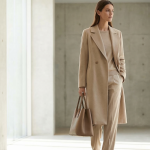
Why Sustainable Spring Fashion is a Game-Changer for Petite Women
For years, the industry standard for pattern grading has been fundamentally stacked against anyone under 5’4″. In my time working behind the scenes in styling and garment construction, I have watched mass-market brands use a single fit model—typically 5’7″ or taller—and simply shrink the pattern mathematically to create smaller sizes. This lazy grading completely ignores the unique skeletal proportions of petite women. The shoulder slopes are off, the armholes sit far too low, and the natural waistline ends up hovering somewhere near the hips. Fast fashion relies on this high-volume, generic-fit model to keep manufacturing costs low, leaving shorter women swimming in excess fabric.
This is exactly why the shift toward sustainable and slow fashion is a massive structural win for smaller frames. Eco-conscious fashion operates on a totally different production ethos. We are seeing a move away from the “one size fits nobody” approach toward intentional, quality-driven construction, which directly benefits petite consumers in several measurable ways:
- Superior Fabric Drape: Cheap synthetics like polyester blends hold stiff shapes that easily overwhelm a smaller silhouette, making you look boxed in. Sustainable spring staples rely heavily on natural and semi-synthetic fibers—like Tencel, Ecovero viscose, and washed linen—which possess a natural, fluid drape. They skim the body rather than adding unnecessary bulk, automatically elongating your visual line.
- The Made-to-Order Advantage: A significant portion of ethical fashion operates on a pre-order or small-batch model to eliminate deadstock waste. This production style allows many eco-brands to offer customized inseams or precise torso measurements directly at checkout, effectively giving you bespoke sizing at a ready-to-wear price point.
- Tailoring ROI (Return on Investment): We will dive deep into specific alteration techniques later in this guide, but consider the basic economics now. Spending $40 to tailor a $20 fast-fashion dress that will disintegrate in three washes makes zero financial sense. Conversely, investing that same tailoring budget into a high-quality, ethically produced piece ensures a garment that will survive years of wear. The cost-per-wear heavily favors the sustainable route.
I always remind my petite clients that finding the right fit is entirely about controlling proportions, and sustainable fashion provides a far superior raw canvas. Because ethical brands prioritize longevity, their construction often utilizes wider seam allowances and higher-stitch-count seams. This means when you inevitably need to tweak a hem or take in a bodice, the garment actually holds up to the tailor’s shears without unravelling. By rejecting rapid-cycle production lines, sustainable spring fashion forces a return to clothes that are built to fit the actual human body wearing them, rather than forcing the body to fit a statistically flawed average.
Top Sustainable Spring Fashion Trends for Petite Women
Spring collections have historically overwhelmed smaller frames with excess fabric, but the industry’s shift toward mindful, slow fashion has radically changed our seasonal silhouettes. I spend a lot of time in design showrooms, and what we are seeing right now is a deliberate pivot away from fast-fashion micro-trends toward structural, intentional pieces. For those of us under 5’4″, this is a massive win. Sustainable design inherently prioritizes precision and longevity, meaning the sloppy, oversized cuts of the past few years are being replaced by tailored, proportion-conscious garments that actually respect a petite figure. Let’s break down the specific pieces dominating the eco-conscious runway this season.
Eco-Friendly Tailored Linen Sets: Maximizing Proportions
Linen is a springtime non-negotiable, but this year, we are moving past the shapeless boho sacks. Designers are utilizing low-water European flax to create structured, two-piece sets designed specifically with shorter torsos in mind. A coordinated vest and trouser set in a monochromatic earth tone instantly creates an unbroken vertical line, making you appear taller and leaner without relying on uncomfortable heels.
- The Insider Rule: Look for sets where the tailored vest hits exactly at your natural waistline, rather than extending down to the hips. This simple geometry visually lengthens the leg line.
- The Eco-Factor: Undyed or naturally dyed linen uses significantly fewer toxic chemicals and requires almost zero irrigation compared to conventional crops. You get a highly breathable, elegant fabric that ages beautifully with each wash.
Upcycled Cropped Trench Coats: Styling Rules for Shorter Frames
The traditional sweeping trench coat is notoriously tricky for petites—it often looks like the coat is wearing you. Enter the cropped trench, heavily featured this season and crafted from deadstock gabardine or upcycled vintage outerwear. This silhouette stops right at the high hip, maintaining the classic springtime aesthetic without dragging down your frame.
| Feature | Traditional Trench | Cropped Upcycled Trench |
|---|---|---|
| Hemline | Mid-calf to ankle (visually cuts off petite legs) | High hip to natural waist (elongates the lower body) |
| Fabric Sourcing | Virgin polyester blends | Repurposed vintage cotton / deadstock twill |
| Proportion Focus | Often overshadows small shoulders | Draws the eye upward toward the face |
When I style clients in these cropped jackets, I always pair them with fitted bottoms to balance the slight volume of the coat’s storm flaps and epaulets. Because these are often upcycled, each piece carries unique hardware or contrasting stitching, adding bespoke character to your spring rotation.
Organic Cotton High-Waisted Trousers: The Ultimate Fit Guide
We are finally seeing the end of the low-rise revival, which is excellent news for petite proportions. High-waisted trousers made from GOTS-certified organic cotton are the anchor of this season’s sustainable wardrobes. The rigid, dense nature of organic cotton twill provides architectural structure that holds its shape, unlike flimsy fast-fashion synthetics that cling in the wrong places and sag by midday.
- Rise Measurement: For petites, a true high rise should sit between 10 and 11 inches. Anything higher might graze your ribcage, which visually shortens an already compact torso too much.
- Inseam Strategy: Seek out sustainable brands explicitly offering a 26-inch or 28-inch inseam. A slight ankle crop paired with a sleek loafer or low block heel is my go-to styling trick for creating the illusion of a longer leg.
- Environmental Impact: Organic cotton eliminates synthetic pesticides from the supply chain, ensuring safer conditions for garment workers while keeping microplastics out of our water systems.
Focusing your spring acquisitions on these three core trends allows you to invest in pieces that not only respect the environment but are architecturally designed to flatter a smaller frame. The emphasis this season is entirely on fit, fabric integrity, and creating vertical illusions.
Eco-Friendly Tailored Linen Sets: Maximizing Proportions
The matching linen set is having a massive moment this spring, and for petite frames, it is a masterclass in visual trickery. I always tell my clients that wearing a coordinated top and bottom creates an unbroken vertical line—a “column of color”—that instantly elongates the silhouette. But when we are talking about eco-friendly linen, the sourcing and the specific cut make or break the look.
Traditional linen is inherently better for the earth than synthetic blends, as flax requires zero irrigation and minimal pesticides. However, for a petite body, you must look specifically for organic, enzyme-washed linen. Raw, untreated linen is incredibly stiff and will add unnecessary bulk to a smaller frame, causing the fabric to wear you rather than the other way around. Enzyme-washed eco-linen offers that coveted soft drape that falls flush against the body, maintaining your natural proportions without overwhelming them.
When curating your spring sets, I recommend focusing on these exact combinations to manipulate and maximize your proportions:
- The Cropped Waistcoat and High-Rise Trouser: This is the hero silhouette of the season. A sustainable linen waistcoat that stops exactly at your natural waist (the narrowest part of your torso), paired with trousers that sit just above the belly button, shifts your visual center of gravity upward. This optical illusion makes your legs look miles long.
- The Soft-Tailored Blazer and Short Set: If you love a blazer, skip the oversized, boxy trends that swallow petite women whole. Instead, seek out eco-conscious brands cutting blazers with higher armholes and a cropped hemline hitting the high hip. Pair this with a tailored, A-line linen short with a 3- to 4-inch inseam to expose more leg and balance the coverage on top.
To ensure your linen set works flawlessly for your height, I use a strict checklist during client fittings. Here is exactly what you should look for to keep the proportions in your favor:
| Detail | The Petite-Friendly Approach | Why It Works |
|---|---|---|
| Trouser Front | Flat-front or single-pleat maximum | Heavy pleating in linen creates pooling and excess volume at the hips, which immediately drags the eye down and widens a petite frame. |
| Hem Length | Floor-sweeping (with a slight heel) or distinct ankle crop | Awkward mid-calf lengths chop the leg. A floor-grazing wide leg in a drapey eco-linen extends the leg line beautifully. |
| Shoulder Seams | Hitting exactly at the natural shoulder line | Dropped shoulders on a petite frame look sloppy. Crisp, perfectly aligned shoulders provide necessary structure to relaxed linen sets. |
Keep an eye out for sets dyed with plant-based or low-impact botanical dyes. Not only are these safer for the water supply, but they also tend to yield beautiful, earthy neutrals—like olive, terracotta, and warm ivory—that make monochromatic dressing look incredibly expensive and elevated. By choosing the right drape and focusing on strategic hemlines, an eco-friendly linen set becomes the hardest working, most flattering staple in your spring lineup.
Upcycled Cropped Trench Coats: Styling Rules for Shorter Frames
The traditional calf-grazing trench coat is notorious for swallowing petite frames whole. In my years of styling, I’ve seen countless shorter women drown in excess gabardine, losing their natural shape entirely. That is why I am currently obsessed with upcycled cropped trench coats for spring. Forward-thinking sustainable designers are rescuing vintage, oversized macs destined for landfills and reworking them into sharp, abbreviated silhouettes that visually raise your center of gravity.
Because these pieces are upcycled—often reconstructed from heritage outerwear—you get the heavy, luxurious drape and water-resistant properties of vintage fabrics without the environmental footprint of virgin materials. But styling a cropped trench on a frame under 5’4″ requires a strategic eye for proportion. Here are my strict styling rules for making this reworked trend work for you:
- Nail the “Golden Hemline”: The coat must hit right at your natural waist or no lower than your high hip bone. If it falls past the mid-hip, it cuts your torso in an awkward place, drags the eye downward, and instantly shortens your legs.
- Embrace the Column Trick: Since a trench brings inherent volume and structured hardware to your upper half, balance it by wearing a sleek base layer underneath. Tucking a fitted top into high-waisted bottoms (like the organic cotton trousers we’ll cover next) creates a continuous vertical line that elongates your silhouette while letting the cropped jacket serve as a framing piece.
- Check the Shoulder Placement: Many upcycled pieces were originally men’s coats. Ensure the designer’s rework included taking in the shoulders. A dropped shoulder on a trench coat adds unnecessary bulk to a petite frame; you want the seam sitting precisely at your natural shoulder joint.
When hunting for or styling these reworked pieces, you have to keep an eye on the structural details. Vintage coats often come with heavy hardware that doesn’t scale well. Here is a quick cheat sheet I give my clients to ensure the coat won’t overpower them:
| Trench Detail | Petite-Friendly (Do’s) | Frame-Swamping (Don’ts) |
|---|---|---|
| Lapels & Flaps | Narrow to medium width; sharp notches. | Oversized, sweeping storm flaps that swallow the chest. |
| Closure | Single-breasted or worn entirely open. | Wide double-breasted rows (adds visual horizontal width). |
| Sleeves | Bracelet length (shows the narrowest part of your wrist). | Long, bulky sleeves covering the hands. |
I always tell my petite clients to push up the sleeves to expose their forearms. It is a classic stylist secret that instantly adds lightness and breathability to heavy spring outerwear, ensuring the upcycled fabric accentuates your body rather than hiding it.
Organic Cotton High-Waisted Trousers: The Ultimate Fit Guide
The high-waisted trouser is the oldest trick in the petite styling playbook for creating the illusion of legs that go on for days. But when you introduce organic cotton into the mix, the fit dynamics change completely. Unlike synthetic blends packed with elastane, 100% organic cotton has a structured, honest drape. It holds its shape beautifully and breathes perfectly for spring weather, but it won’t forgive a sloppy fit. If you’re 5’4″ or under, buying off-the-rack organic cotton trousers requires knowing your exact numbers.
Because organic cotton lacks aggressive stretch, pinning down your ideal proportions is non-negotiable. This is the exact fit matrix I use when styling shorter frames to guarantee an elongating, flawless look:
| Measurement Area | The Petite Sweet Spot | The Stylist’s Reasoning |
|---|---|---|
| The Front Rise | 10 to 11 inches | Anything over 11.5 inches swallows a shorter torso, creating a bulky effect rather than an elongated silhouette. The waistband must sit exactly at your natural waist—the narrowest part of your midsection. |
| The Ankle Inseam | 25 to 26 inches | Hits perfectly right at the ankle bone. This is the ideal spring length for exposing a bit of skin above loafers or low-heeled mules, which visually lightens your bottom half. |
| The Full Inseam | 28 to 29 inches | Designed to barely sweep the top of your shoe. Pair this strictly with a pointed-toe shoe or a slight heel to dramatically extend the vertical leg line without dragging on the pavement. |
Beyond the raw measurements, the silhouette matters immensely. I typically steer my petite clients toward a straight-leg or a tailored, subtle barrel-leg cut. An overly exaggerated wide-leg in crisp organic cotton can easily overwhelm a smaller frame due to the fabric’s natural stiffness. If you are committed to a wide-leg style, ensure the trouser is tailored flush against your high hip and waist before the fabric drops. This anchors the garment against your body, ensuring the volume starts lower down and doesn’t visually widen your entire frame.
There is one essential insider rule specific to this fabric: always account for the wash cycle. Pure organic cotton, free from toxic anti-shrink chemical treatments, will naturally contract by about 2% to 3% after its first encounter with water. If those trousers fit skin-tight right out of the boutique bag, they will be uncomfortably restrictive after laundry day. I always recommend sizing up if you are between sizes. Wash your trousers on a cold, gentle cycle and let them air dry before you ever take them to your tailor for hem adjustments. Hemming a brand new, unwashed pair of organic cotton pants is the fastest way to accidentally end up with capris.
How to Build a Petite-Friendly Sustainable Capsule Wardrobe
Building a sustainable capsule wardrobe when you are under 5’4″ requires a fundamental shift in how you view closet real estate. Over my years styling petite clients and advocating for slow fashion, I have found that traditional minimalist capsule templates often fail shorter women. They typically assume standardized proportions and rely heavily on oversized layering, which can quickly swallow a smaller frame. When we commit to eco-conscious fashion, we inherently agree to own fewer, higher-quality garments. For petite women, this means every single piece in your spring rotation must pass a rigorous dual-test: it must align with ethical production standards, and it must actively contribute to vertical visual harmony.
The secret to a highly functional spring collection lies in a concept I call the “Petite-Eco Multiplier.” Instead of cycling through a dozen fast-fashion spring blouses that require constant tucking, pinning, and adjusting, you invest your budget into a curated matrix of ethically made, precisely scaled items. Because you are already familiar with the elongating power of the tailored linen sets and high-waisted trousers we covered previously, your focus now shifts to engineering a wardrobe where these hero pieces cross-pollinate seamlessly.
A highly efficient, petite-friendly sustainable spring capsule typically consists of 15 to 20 core items, excluding activewear and intimates. Here is the exact inventory breakdown I use to build foundational spring wardrobes for my private clients:
- 5 Core Tops: Two fitted organic cotton ribbed tanks, two lightweight Tencel blouses (v-neck or wrap style to elongate the neck), and one structured hemp-blend button-down cut to a cropped length.
- 4 Bottoms: One pair of straight-leg raw denim jeans, one pair of high-waisted organic linen trousers, one bias-cut midi skirt (hemlines hitting just below the knee or at the ankle bone), and one pair of tailored shorts.
- 2 Dresses: A regenerative cotton wrap dress and a sleek, vertically ribbed deadstock fabric slip dress.
- 3 Outerwear Pieces: Your upcycled cropped trench, a fitted zero-waste knit cardigan, and a tailored short-hem blazer.
- 3 Pairs of Shoes: Nude-toned vegan leather mules, classic low-profile white sneakers (ethically sourced rubber), and a slight-block heel sandal to add height without compromising comfort.
We also need to address the “alteration tax” that petite women inevitably face. Shorter women are used to spending extra money taking up hems or lifting shoulders on off-the-rack clothing. Shifting to a sustainable capsule drastically changes this financial dynamic. By buying fewer pieces from transparent, eco-conscious brands—many of which now offer dedicated petite sizing or custom-to-order models—you eliminate the constant drip of cheap replacements and direct that money toward garments that actually fit.
| Wardrobe Model | Average Spring Pieces | Lifespan | Tailoring Required | Environmental Impact |
|---|---|---|---|---|
| Conventional Fast Fashion | 35+ trend-driven items | 1-2 Seasons | Frequent (but rarely worth the cost) | High waste, synthetic shedding |
| Sustainable Petite Capsule | 15-20 curated items | 5+ Years | Minimal (pieces are pre-proportioned) | Low waste, biodegradable materials |
A true capsule is rigid in its piece count but highly fluid in its styling application. Your overarching goal is to curate a collection where a single sustainable silk camisole can transition effortlessly from a morning market run tucked into denim, to an evening dinner layered under your cropped blazer. Every piece must pull its weight. To achieve this level of versatility without overwhelming your silhouette, we will systematically approach your closet using a proven three-step methodology.
Step 1: Performing a Sustainable Spring Closet Audit
The most sustainable garment is the one already in your closet, but for us petites, navigating what actually works for our proportions requires a ruthless editorial eye. Before we even think about acquiring new spring pieces, we need to assess what you currently own through a very specific lens: the intersection of eco-conscious longevity and petite-friendly fit.
I always have my private clients start with the “Proportional Try-On” method. Pull every spring-appropriate item out of your wardrobe and put it on your body. You aren’t just looking for what sparks joy; you are checking for structural harmony. Because shorter frames can easily be overwhelmed by excess fabric, a piece that is ethically made still isn’t sustainable for you if it hangs in the back of your closet due to a dropped waistline, bulky shoulders, or an awkward midi-hem that hits right at the widest part of your calf.
As you try on your current spring inventory, divide your wardrobe into three strict, actionable piles:
- The Core Rotation (Keep): These are the pieces that currently fit your body perfectly. For a petite frame, this usually means shoulder seams that sit flush on the shoulder bone, waistlines that hit your natural waist (not your hips), and hemlines that elongate the leg.
- The “Needs Rescue” Pile (Tailor/Mend): We will dive deep into exact tailoring strategies later, but for now, isolate garments that have great sustainable fabric but poor execution for a 5’4″ and under frame. Think of that organic linen dress that swallows you whole but could be easily hemmed, or the vintage denim jacket with sleeves that need taking up.
- The Responsible Exit (Donate/Swap/Resell): Be honest with yourself. If a piece requires entirely changing its structural architecture to fit your petite frame—like moving the armholes, taking in the bust, and entirely recutting the silhouette—it is better off finding a new home. Funnel these items to sustainable resale platforms or local clothing swaps.
To keep your audit focused, I recommend using this quick diagnostic matrix when evaluating pieces you are on the fence about:
| Garment Type | The Petite Fit Check | Audit Action |
|---|---|---|
| Spring Trousers & Denim | Does the crotch drop too low? Does the waistband sit cleanly on your natural waist to elongate your legs? | If the rise is too long, it’s a structural nightmare. Resell/Swap. If just the hem is too long, put it in the Tailor pile. |
| Lightweight Blouses & Shirts | Check the armholes. Are they excessively deep, revealing your bra and adding unwanted width to your torso? | Deep armholes on a petite frame drag the eye downward. If it can’t be easily darted, Resell/Swap. |
| Transitional Jackets | Where does the jacket end? Ideally, spring jackets should hit at the high hip or be truly cropped to avoid cutting your vertical line in half. | If it hits below the widest part of your hips, it stunts your height. Tailor (crop it) or Donate. |
Once you have your final “Keep” pile, take a hard inventory of your gaps. Do you have enough high-waisted bottoms to anchor your cropped spring knits? Are you missing a well-proportioned, lightweight mid-layer? Documenting these specific missing elements directly prevents impulse buying. It ensures that when we do source new pieces in the next phases, they serve a distinct, long-term purpose in your sustainable rotation.
Step 2: Selecting Low-Impact Fabrics That Flatter Petites
The secret to dressing a petite frame isn’t just about tailoring hemlines; it is entirely dependent on how a material behaves in motion. When evaluating sustainable textiles, the weight, drape, and stiffness are make-or-break factors for shorter silhouettes. Heavy, rigid fabrics will immediately swallow a 5’2″ frame, adding visual bulk and cutting off the body’s natural lines.
I always direct my styling clients toward regenerated cellulosic fibers like Tencel™ Lyocell and Cupro (often referred to within the industry as vegan silk). Unlike stiff conventional cottons that box out a smaller figure, these closed-loop fabrics possess a highly fluid drape. They skim the body and fall straight down, creating continuous vertical lines that naturally elongate the legs and torso. As an insider rule of thumb, check the fabric weight if you are shopping online: look for a Grams per Square Meter (GSM) of around 120-150 for spring blouses and slip skirts. Anything heavier runs the risk of wearing you.
Spring fashion inevitably brings linen into the conversation, but this is where petites need to be strategic. Heavy, unwashed flax can create a tent-like effect. To get that breezy, eco-friendly spring look without the added volume, I recommend sourcing garments made from organic linen blended with organic cotton or deadstock silk. This specific blending softens the fiber, providing that coveted breathability and subtle structure without the rigid bulk.
Here is my strict fabric-sourcing cheat sheet when building out a petite-friendly eco-wardrobe:
| Fabric Type | Sustainability Profile | Why It Flatters Petites |
|---|---|---|
| LENZING™ ECOVERO™ | Generates up to 50% lower emissions and water impact than generic viscose. | Exceptional for wrap dresses and wide-leg trousers. It cinches at the waist and flows downward without bunching at the hips. |
| GOTS Certified Lightweight Poplin | Organic farming uses 91% less water than conventional cotton. | Crisp enough for sharp tailoring (like a cropped trench), but thin enough to neatly tuck into high-waisted bottoms without creating midriff bulk. |
| Peace Silk (Ahimsa Silk) | Non-violent silk breeding and harvesting; completely biodegradable. | Provides a subtle sheen that reflects light, adding dimension to the frame without relying on heavy layering. |
A final note on achieving the perfect fit: we often rely on stretch to comfortably accommodate curves on a shorter frame. However, virgin elastane (spandex) is a synthetic nightmare that sheds microplastics. When you need a bit of give for a snug, body-skimming fit, look at the garment tags for ROICA™ V550. It is a premium, degradable stretch yarn that eco-conscious designers are quietly swapping into their collections. It offers excellent recovery, ensuring your trousers won’t bag out at the knees—a very common issue that instantly drags down a petite leg line and ruins the outfit’s proportions.
Step 3: Mastering Color Theory to Elongate Your Silhouette
The human eye naturally stops wherever a color breaks. For petite frames, every horizontal color contrast acts as a visual speed bump that instantly shortens the body. That is why I always tell my styling clients that mastering color theory is less about finding your seasonal palette and entirely about building an architectural tool for elongation. When we construct your spring capsule, how we stack tones matters just as much as the low-impact fabrics we have already selected.
The “Column of Color” Technique
This is a foundational styling secret, but we are executing it with a modern, conscious twist. By wearing the same color—or closely related shades—from head to toe, you create an unbroken vertical line. This tricks the eye into seeing height. I highly recommend utilizing undyed organic materials or garments colored with natural botanical dyes for this approach. Soft spring tones like sage green, raw ecru, and muted terracotta work beautifully in this context.
To master tonal dressing without looking flat, you must rely on the textural variations of your eco-friendly fabrics. Since we are avoiding harsh synthetic blends, you can create depth by layering a smooth, deadstock silk camisole under a textured, heavy-weight linen blazer, both in similar shades of oat or sand. The lack of color contrast elongates the frame, while the texture provides high-end visual interest.
| Color Strategy | Visual Effect on Petite Frames | Sustainable Spring Example |
|---|---|---|
| Monochromatic (Exact Match) | Maximum elongation; creates a continuous, sweeping vertical line. | A matching organic cotton ribbed tank and wide-leg trouser set in midnight blue. |
| Tonal / Analogous (Similar Shades) | High elongation; adds subtle depth without breaking the silhouette. | Mint green Tencel blouse paired with a deeper forest green upcycled skirt. |
| High Contrast Blocking (Top vs. Bottom) | Cuts the body strictly in half; visually shortens the legs. | Avoid: Bright white top with rigid black hemp denim right at the waistline. |
Strategic Placement of Contrast
If you love vibrant spring colors, you do not have to abandon them for the sake of looking taller. The trick lies in vertical placement. I advise keeping the darkest color on the bottom to ground your silhouette, while placing lighter, illuminating shades near your face. This draws the viewer’s gaze upward, emphasizing your face and shoulders rather than the midpoint of your body.
We also cannot ignore footwear when discussing the color line. Always match your sustainable vegan leather or recycled-sole shoes to your trousers, or if you are showing off your legs in spring weather, match the shoes closely to your natural skin tone. A stark color contrast at the ankle—like wearing black loafers with bare legs or a light hem—is the quickest way to subtract two inches from your perceived height.
Best Ethical and Eco-Conscious Brands with Dedicated Petite Lines
Finding ethical fashion is hard enough; finding it cut for a 5’4″-and-under frame often feels like hunting for a unicorn. Over my years styling and forecasting, I’ve watched clients settle for “sustainable” pieces that overwhelm their frames, simply because the eco-fashion space historically ignored petite grading. Scaling down a pattern isn’t just about chopping two inches off a hem—it requires raising the armholes, lifting the natural waistline, and narrowing the shoulders. I’ve audited dozens of eco-conscious labels, and these are the standout brands that actually invest in dedicated, mathematically precise petite lines alongside rigorous ethical standards.
Reformation: The Spring Dress Destination
When my petite clients need a floral midi or a lightweight spring wedding guest look, Reformation is my immediate pull. They operate 100% carbon-neutral and rely heavily on deadstock fabrics and low-impact materials like TENCEL™ Lyocell. What makes their petite line industry-leading is the true re-grading of the torso. A Reformation petite dress features a raised waistline that hits precisely at a shorter woman’s narrowest point, completely avoiding that dreaded “saggy waist” effect. Keep an eye out for their spring linen drops, which sell out notoriously fast.
Eileen Fisher: The Architectural Capsule Masters
Don’t let the relaxed silhouettes fool you—Eileen Fisher’s petite grading is some of the most exact in the business. As a certified B Corp, they are the gold standard for circular fashion with their ‘Renew’ take-back program. If you are looking to execute the tailored linen sets we discussed earlier, this is where you invest. Their petite organic linen pants are cut to skim the ankle perfectly without requiring a trip to the tailor, and their regenerative cotton tops are scaled so the drop-shoulders don’t look sloppy on a smaller frame.
Baukjen: The European Tailoring Secret
Based in London, Baukjen is a B Corp that consistently scores high in ethical production and living wage audits. I recommend them for structural spring pieces—think organic cotton blouses and lightweight cropped jackets. Their petite range is brilliant because they adjust the sleeve length and the bust darts, a costly manufacturing detail many brands skip. Their closed-loop Ecovero viscose dresses offer phenomenal drape for petites without adding bulk.
Boden: The Eco-Conscious Color Palette
While many sustainable brands lean heavily into muted neutrals, Boden brings the vibrant palettes required for a true spring refresh. They have ironclad Fair Trade commitments and use highly traceable organic cottons. Their petite sizing is exceptional for structured spring coats (vital for the cropped trench styling rules we covered) and high-waisted trousers. The crotch depth on their petite trousers is actively shortened, preventing the extra fabric pooling around the hips that plagues standard-size pants worn by shorter women.
To help you navigate these investments efficiently during your closet audit, I’ve compiled a quick insider matrix on where to allocate your budget:
| Brand | Eco-Credentials | Best Spring Investment for Petites | Price Bracket |
|---|---|---|---|
| Reformation | Carbon-neutral, Deadstock rescue, TENCEL™ | Lightweight midi dresses, bias-cut skirts | $$$ |
| Eileen Fisher | B Corp, Regenerative Fibers, Circular supply chain | Organic linen matching sets, relaxed trousers | $$$ |
| Baukjen | B Corp, Closed-loop Viscose, Living wage verified | Tailored blouses, Ecovero day dresses | $$ |
| Boden | Fair Trade, Traceable Organics, Recycled synthetics | Vibrant spring outerwear, patterned wide-leg bottoms | $$ |
Before purchasing, always check the specific inseam and high-point-shoulder (HPS) measurements listed on these brands’ size guides. Even within dedicated petite lines, a brand’s fit model can vary slightly. For instance, Reformation’s petite fit model is typically 5’2″, while Eileen Fisher grades for proportions closer to 5’3″. Knowing your exact measurements against their specific grading block will save you the headache—and the carbon footprint—of return shipping.
Pro Tailoring Tips: Altering Sustainable Garments for a Perfect Fit
The open secret among stylists is that nobody walks off the rack looking flawless, especially not us petites trying to navigate sustainable fashion. Because many ethical brands operate on smaller production runs, dedicated petite sizing isn’t always available. Tailoring isn’t a sign that a garment is flawed; it is the final, essential step in the design process to make those organic cotton trousers or upcycled trench coats actually work for your exact proportions.
When working with sustainable spring fabrics like linen, hemp, and raw organic cotton, the absolute first rule of alterations is the Pre-Wash Mandate. Natural, unblended fibers have a much higher shrinkage rate than the synthetic blends found in fast fashion. I always require my clients to wash and dry their new eco-friendly garments exactly how they plan to care for them long-term before taking them to the tailor. A perfectly hemmed pair of raw linen pants will turn into an awkward pedal-pusher if you alter them prior to their first wash.
Let’s break down the mechanics of altering for a shorter frame. We are usually battling two main issues with standard sizing: vertical length and visual bulk. Here is how I approach the most common alterations for my petite clients:
- The Shoulder Lift: Sustainable outerwear, like those upcycled spring trenches we discussed, often features relaxed, dropped shoulders. On a petite frame, this can drag your entire silhouette down. If a piece fits perfectly everywhere else, lifting the garment at the shoulders (rather than just shortening the hem) pulls the armholes up and realigns the waist suppression to your actual natural waist. It is an expensive alteration, but it fundamentally transforms the fit.
- Original Hem Retention for Organic Denim: High-waisted organic denim is a staple, but chopping off three inches ruins the natural fade and distressing at the ankle. Always ask your tailor to “keep the original hem.” They will cut the excess fabric and reattach the factory hem, preserving the intended aesthetic of the brand while perfectly hitting your ankle bone.
- Darting Boxy Silhouettes: Boxy, zero-waste cuts are incredibly popular in sustainable design to minimize fabric scraps during production. To prevent these cuts from swallowing a petite frame, I add subtle fish-eye darts to the back of linen shirts and organic cotton poplin dresses. This removes excess volume around the midsection while maintaining the eco-conscious design ethos at the front.
To help you allocate your wardrobe budget, I use this general return-on-investment (ROI) matrix for tailoring sustainable pieces:
| Alteration Type | Fabric Considerations | Petite Impact | Cost Estimate |
|---|---|---|---|
| Hemming Trousers/Jeans | Tencel and Lyocell require a blind hem to preserve their fluid drape. | Very High (Instantly elongates the leg) | $15 – $25 |
| Shortening Sleeves | Linen blazers may need sleeves shortened from the shoulder to preserve button details. | High (Exposes the wrist, a key petite styling trick) | $25 – $45 |
| Taking in the Waist | Organic cotton canvas can be thick; ensure the tailor grades the seams to reduce bulk. | High (Prevents the “swallowed up” look) | $20 – $40 |
| Lifting Shoulders | Complex on lined upcycled coats; requires deconstructing the armhole. | Transformational (Realigns the entire garment) | $50 – $90+ |
When searching for a tailor, look for someone experienced with natural textiles. Sustainable fabrics behave differently under a sewing machine than polyester. A heavy-handed tailor using synthetic thread on delicate organic silk or fine-gauge Tencel can cause puckering at the seams. I recommend asking local sustainable boutiques who they partner with for alterations, ensuring your ethical investment pieces remain in expert hands.
FAQ
Q: Sustainable fashion often comes with a higher price tag. How do I build this spring wardrobe without blowing my budget?
I hear this constantly from my styling clients. The trick is redefining how we look at price. We have to shift our mindset to “cost per wear.” A fast-fashion spring dress might cost $30 and fall apart after one season, while a certified organic cotton petite dress might cost $150 but hold its shape and value for a decade. To keep upfront costs down, I always recommend starting with the secondhand market. Platforms like Poshmark, ThredUp, and Vestiaire Collective have robust filters for petite sizing. Set up saved searches for the specific eco-conscious brands we discussed earlier. You will often find pieces with the tags still attached for a fraction of the retail price.
Q: We’ve covered the clothes, but what about sustainable spring shoes? How do I choose styles that won’t cut off my leg line?
Shoes can easily make or break the visual proportions we just built with your high-waisted trousers and cropped jackets. For spring, you want to maintain an unbroken visual line. Look for low-vamp shoes—styles that cut across the foot closer to the toes rather than the ankle. Pointed-toe flats or low block heels in tones that match your skin color are my go-to industry secrets for adding perceived inches to a petite frame. Brands like Rothy’s (utilizing recycled marine plastics) or Nisolo (a certified B-Corp) offer excellent, ethically produced pointed mules and loafers that check both the aesthetic and environmental boxes.
Q: Spring means florals. Can I wear prints without looking overwhelmed or losing the mix-and-match versatility of my capsule?
It is a highly valid concern; large, bold patterns can swallow a shorter figure whole. My studio rule for petites is that scale matters. Stick to micro-prints, like ditsy florals or subtle, narrow vertical stripes, which naturally draw the observer’s eye up and down rather than side to side. If you want to incorporate a print sustainably, buy just one statement piece—like a deadstock silk-blend blouse—and pair it with the solid neutrals in your closet. Keep the background color of your printed piece in the exact same color family as your trousers to maintain that elongating monochromatic illusion we established earlier.
Q: Shopping vintage is an amazing eco-friendly choice, but vintage sizing is incredibly frustrating for petites. Any insider tips?
Vintage sizing is notoriously smaller than modern vanity sizing, which is actually a hidden advantage for us. A vintage 1970s size 8 often fits perfectly like a modern size 2 or 4 petite. My biggest piece of advice: completely ignore the size tag. When shopping vintage online, only look at the exact garment measurements—bust, waist, hips, and especially the inseam and shoulder width. Keep a note on your phone with your exact measurements. Focus on silhouettes that are easy for your tailor to adjust, like A-line midi skirts or bias-cut slip dresses, rather than complex structured blazers with intricate shoulder pads that are expensive and difficult to scale down.