Decoding Affordable Quiet Luxury Fashion Trends for Women
Let’s get straight to the reality of the current market: the era of head-to-toe logos acting as the sole indicator of style is over. We are seeing a massive recalibration in how women dress, pivoting sharply toward an aesthetic that whispers rather than screams. As an industry insider observing the ripple effect from runway to retail, I can tell you that “quiet luxury” is no longer gated behind four-figure price tags. It has evolved into a highly accessible, democratic movement where the illusion of wealth is crafted through intention, not just income.
To truly decode this trend, we have to look at the shifting consumer psychology. Women are increasingly rejecting the frantic cycle of micro-trends. Instead, the focus has shifted entirely to the cost-per-wear ratio. The modern accessible quiet luxury movement is built on the premise that looking expensive does not require an endless budget; it requires discipline. We are tracking a structural change in how mid-tier and contemporary brands operate. They have recognized this appetite for restraint and are re-engineering their collections to mimic the finish and feel of heritage fashion houses, stripped of the overt branding.
This is not about buying “cheap” clothes; it is about strategic acquisition. The new aesthetic relies on a subtle signaling system understood only by those who share the same sartorial values. To illustrate the shift I see in buying patterns, look at the transition from traditional luxury consumption to this new, accessible mindset:
| The Old Standard | The Affordable Quiet Luxury Shift |
|---|---|
| Logocentric and highly recognizable pieces. | Anonymous, unbranded items where the design speaks for itself. |
| Trend-driven purchases with a one-season lifespan. | Seasonless, cross-functional pieces designed for longevity. |
| Value derived strictly from the designer label. | Value derived from drape, fit, and visual weight. |
| Impulse buying based on social media virality. | Calculated curation and rigorous wardrobe editing. |
What makes this trend so powerful is its democratizing effect. You no longer need a trust fund to participate in the “stealth wealth” narrative. The industry is currently flooded with data showing a surge in demand for elevated basics—pieces that project an air of old-money nonchalance but are priced for the everyday professional. This trend is an exercise in visual restraint. It proves that when you strip away the flashy hardware and the loud prints, what remains is a refined, polished core that makes any woman look incredibly put-together, regardless of her tax bracket.
Essential Elements of the Quiet Luxury Aesthetic on a Budget
Translating the “stealth wealth” aesthetic into a high-street budget isn’t about hunting for cheap replicas of The Row or Brunello Cucinelli; it’s a rigorous exercise in strategic restraint. In my years of styling and analyzing fashion market shifts, I’ve found that faking an infinite bank account requires a forensic focus on three foundational pillars: the composition of the garment, the visual weight of its color, and how it interacts with the human form. When we strip away loud logos and recognizable prints, the eye immediately darts to these structural details. Mastering them is the only way to make accessible pieces look inherently expensive.
Fabric Selection: Maximizing Quality within Budget
I always tell my private clients: the tag inside the side seam is the only label that actually matters. When you are shopping under a strict budget, your biggest enemy is cheap synthetics. High-shine polyester and flimsy acrylic instantly shatter the illusion of luxury because they lack natural drape and hold onto static and odors. To win at this game, we have to become obsessive label readers.
- Hunt for the “High-Low” Blends: You might not be able to afford 100% Grade-A cashmere, but a blend of 10% cashmere and 90% merino wool or cotton offers that coveted soft hand-feel at a fraction of the cost. It provides the tactile illusion of luxury.
- Prioritize Dense Naturals: In warmer months, opt for heavyweight linen and 100% cotton poplin. These fabrics crease naturally, which paradoxically reads as relaxed wealth. The stiffness of a dense poplin also holds tailoring beautifully.
- The Silk Alternatives: If real silk is out of reach, bypass the standard polyester satin entirely. Look for high-quality Cupro or viscose. These semi-synthetics mimic the fluid, liquid-like drape and breathable nature of silk much more convincingly.
The Core Color Palette: Neutrals and Earth Tones
Color strategy is where we can manipulate perception the most effectively. Rich, muted tones naturally absorb light in a way that makes affordable fabrics appear denser and more refined. Neon or highly saturated colors demand expensive dye processes and premium silks to look their best; on a high-street budget, they almost always look flat and artificial.
To build a convincing foundation, I rely heavily on a tight, tonal spectrum. Tonal dressing—layering varying shades of the same color family from head to toe—is a classic editor’s trick that creates an unbroken, elegant vertical line.
| The “Expensive” Shade | Why It Works on a Budget | Colors to Swap Out |
|---|---|---|
| Midnight Navy | Hides slight fabric imperfections and doesn’t fade as noticeably as stark black over time. It looks incredibly chic when paired with black accessories. | Avoid cheap, flat blacks which often show a reddish or grey undertone after one or two washes. |
| Camel & Oatmeal | Evokes the natural, undyed look of premium raw materials like vicuña and unbleached cashmere. It instantly brightens the face without shouting. | Avoid bright, mustard yellows or harsh oranges that highlight fabric cheapness. |
| Chocolate Brown | Adds incredible depth and pairs beautifully with gold-toned jewelry for a rich, established vibe that feels very 90s minimalist. | Avoid overly saturated purples or magentas which rarely translate well in budget-friendly dyes. |
Tailoring and Silhouette: Elevating Affordable Pieces
The single biggest giveaway of a budget-friendly garment is the fit. Mass-market brands cut their patterns to fit the widest possible demographic, which means they truly fit no one perfectly. The aesthetic we are chasing demands intention; the clothes must look like they were made specifically for your body.
My non-negotiable rule is to allocate 15% to 20% of your shopping budget strictly for alterations. Buying a $50 pair of wide-leg trousers and spending $25 to have the waist taken in and the hem dropped to perfectly kiss the top of your shoe will yield a garment that looks like it cost $500. Focus entirely on the silhouette: shoulders should sit exactly on the joint, hemlines should be crisp, and trousers should pool gracefully rather than bunch awkwardly. We want fluid, relaxed shapes that imply you have the luxury of moving slowly and carefully through the world. A slightly oversized, expertly tailored silhouette will always look more affluent than something tight and restrictive.
Fabric Selection: Maximizing Quality within Budget
When I source pieces for clients looking to achieve that elevated, old-money aesthetic on a real-world budget, the absolute first thing I check is the inner composition label. The foundation of the quiet luxury look is how a garment drapes and moves across the body, and you simply cannot fake good drape with cheap, flimsy materials. However, you do not need to spend thousands on vicuña or pure heavy-weight silk to achieve this.
The industry secret to affordable quiet luxury lies in strategic fabric blends and prioritizing natural fibers. Fast fashion relies heavily on pure acrylic and high-shine polyester because they are cheap to produce, but these materials are dead giveaways of a low-budget garment. Instead, we need to focus on accessible natural fibers and high-quality semi-synthetics.
My non-negotiable rules for budget fabric sourcing:
- Hunt for strategic blends: A sweater that is 90% cotton and 10% cashmere will feel and look significantly more expensive than a 100% acrylic sweater. The small percentage of luxury fiber softens the cotton and completely transforms the garment’s texture.
- Prioritize fabric weight (GSM): A thick, densely woven cotton poplin shirt holds its shape, mimicking the structured tailoring of high-end brands. If you hold a white cotton shirt up to the light and can clearly see your hand through it, leave it on the rack.
- Embrace cellulosic fibers: If pure silk is out of the budget, turn to Tencel (Lyocell), Modal, Cupro, and high-quality Viscose. These are derived from wood pulp and offer a beautiful, matte drape that closely mimics washed silk, avoiding the static cling and cheap sheen of standard polyester.
- The “Matte” rule: Shiny fabrics almost always look cheaper than matte ones unless they are genuine silk charmeuse. Opt for brushed finishes, matte satins, and flat knits.
To make shopping easier, I have put together a quick cheat sheet that I share with my styling clients. This is how we swap unattainable textiles for accessible, high-quality alternatives that maintain the stylistic integrity we are aiming for:
| The Unattainable Luxury Fabric | The Affordable Quiet Luxury Alternative | Why It Works |
|---|---|---|
| 100% Pure Cashmere | Merino Wool or Cotton-Cashmere Blends | Merino offers excellent thermoregulation and a very fine, smooth knit that does not pill as aggressively as cheap, loosely spun cashmere. |
| Heavyweight Silk Charmeuse | Cupro or Tencel (Lyocell) | These semi-synthetics breathe well, feature a sophisticated matte sheen, and drape fluidly over the body’s natural lines. |
| Genuine Suede Leather | High-Grade Microsuede or Brushed Cotton | Captures the textural contrast and soft light-absorption of real suede without the exorbitant price point or difficult maintenance. |
| Linen-Silk Blends | Linen-Viscose Blends | Viscose adds weight and reduces the severe wrinkling of pure cheap linen, giving the garment a more fluid, elegant fall while keeping the organic texture. |
A final word on maintaining this illusion: even the best budget-friendly fabrics will lose their luxurious appeal if neglected. I always instruct my clients to invest twenty dollars in a good electric fabric shaver. Removing pilling from a merino wool blend sweater instantly restores its pristine appearance, making a $50 knit look like a $500 designer piece. Proper care—steaming rather than ironing, and folding heavy knits rather than hanging them—preserves the structural integrity of these carefully selected fabrics, extending their lifespan and ensuring your wardrobe always looks deliberately curated.
The Core Color Palette: Neutrals and Earth Tones
When I source pieces for clients aiming for high-end polish on a realistic budget, color is the immediate, non-negotiable filter. You can find a well-cut, reasonably priced wool-blend sweater, but if it is dyed in a stark, synthetic-looking neon, the illusion shatters instantly. The quiet luxury aesthetic relies on a foundation of restrained, intentional neutrals and earth tones. These shades inherently reflect light more softly, mimicking the natural dyes historically used in heritage garments, which immediately elevates the perceived value of accessible fashion.
We need to look beyond basic optic white and pitch black. While those are wardrobe staples, they can sometimes read as flat or harsh if the budget doesn’t allow for premium silks or fine-gauge cashmere. Instead, I advise building your base around “complex neutrals.” A $50 turtleneck in a rich, saturated chocolate brown or a warm oatmeal will look exponentially more luxurious than the exact same garment in a bright primary color.
Here are the specific shades I recommend prioritizing when filtering online catalogs or scanning the racks:
- Ecru and Ivory: Always opt for these over stark, optic white. They carry a creamy undertone that looks richer and more forgiving, especially in affordable knits and shirting.
- Camel and Caramel: The absolute cornerstones of accessible luxury. A camel coat or a caramel-toned wide-leg trouser suggests warmth and traditional expense.
- Navy and Charcoal: These are your softer, more sophisticated alternatives to black. Navy, in particular, holds its dye remarkably well across different price points, masking cheaper fabric blends effectively while maintaining a sharp silhouette.
- Muted Earth Tones: Incorporate washed olive green, terracotta, or slate blue when you want subtle contrast without breaking the cohesive, expensive feel of the wardrobe.
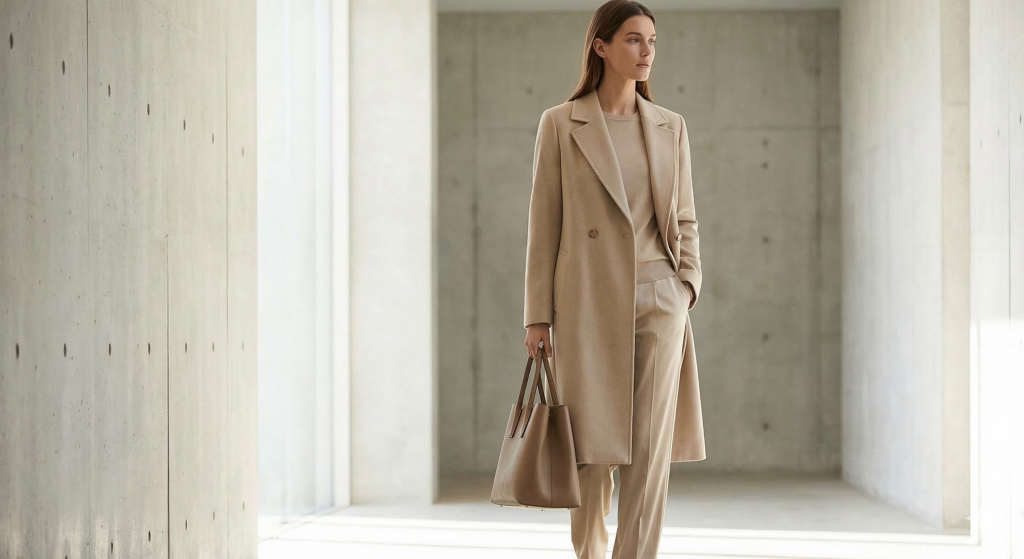
The secret to making these affordable colors look like they came from a designer boutique lies in how we combine them. Tonal dressing—wearing variations of the same hue from head to toe—is the oldest styling trick in my playbook. Pairing an oatmeal ribbed top with taupe trousers and a camel jacket forces the eye to process the outfit as a single, elongated, custom-made silhouette.
To help you put this into practice, I use a simple pairing matrix to ensure budget-friendly pieces always look intentionally styled:
| Base Color | Tonal Match (For Depth) | Contrast Match (For Impact) |
|---|---|---|
| Camel | Oatmeal, Biscuit | Navy, Chocolate Brown |
| Ecru | Ivory, Soft Stone | Charcoal Grey |
| Olive Green | Khaki, Sage | Cream, Rich Tan |
By strictly enforcing this palette, you eliminate the risk of clashing tones that often give away a lower price tag. It allows you to mix and match effortlessly, ensuring that every accessible piece you invest in works seamlessly to build that effortless, affluent aesthetic.
Tailoring and Silhouette: Elevating Affordable Pieces
The secret to making a $50 garment look like a $500 designer piece doesn’t lie in the label, but in the fit. I always tell my clients that silhouette is the most ruthless giveaway of a garment’s price tag. Mass-market brands cut their clothing to fit the widest possible demographic, resulting in generic, unrefined shapes that lack intent. To achieve the quiet luxury aesthetic on a budget, you must master the art of strategic tailoring and intentional silhouettes.
Quiet luxury favors a relaxed yet architectural silhouette. Think gentle volume balanced by sharp structure—an oversized wool coat anchoring a sleek, fitted turtleneck, or fluid, wide-leg trousers paired with a slim knit. The goal is “slouchy sophistication.” A piece should drape beautifully over the body without clinging or looking overly rigid. When shopping accessible brands, I advise looking for garments that already possess inherent structural integrity: padded shoulders on blazers, crisp, deep pleats on trousers, and bias-cut skirts that naturally follow your lines rather than fighting them.
You don’t need a bespoke budget; you simply need a reliable local tailor. Factoring $20 to $40 for alterations into the cost of an affordable piece is the smartest investment you can make for your wardrobe. Here are the specific, high-impact alterations we prioritize to instantly elevate off-the-rack finds:
- Nipping the Waist: Boxy jackets, blazers, and even simple button-downs immediately look custom-made when a tailor takes them in just a half-inch at the natural waistline. This creates a subtle shape synonymous with high-end European tailoring.
- Precision Sleeve Hemming: Nothing screams “mass-produced” louder than sleeves that swallow your hands. Suit jackets, blazers, and heavy outerwear should end exactly at the wrist bone, allowing a sliver of a watch or silk cuff to peek through.
- The Perfect Trouser Break: Wide-leg trousers are foundational to this aesthetic. Have them hemmed to barely graze the floor while wearing your preferred everyday shoe. A perfect, uninterrupted drape from the hip down elongates the leg and exudes effortless elegance.
- Shoulder Alignment: Ensure the shoulder seams sit exactly where your natural shoulder ends. If an affordable blazer is too wide in the shoulders (unless explicitly designed as an oversized drop-shoulder), leave it on the rack. Altering shoulders is costly and often ruins the garment’s balance entirely.
When pulling pieces from affordable retailers, I actively check the interior seams. Garments with a little extra fabric in the seam allowance give your tailor room to work. A golden rule I live by: always buy for your widest measurement. If a slip skirt fits your hips flawlessly but gaps at the waist, buy it and have the waist taken in. Creating a refined, quiet luxury silhouette relies heavily on the fact that it is always cheaper and easier to remove fabric than to add it.
Must-Have Affordable Quiet Luxury Pieces for Women This Year
The shift from micro-trends to enduring silhouettes means our buying strategy this year must be laser-focused on structural integrity. We are seeing high-street retailers finally mastering the drape and weight that used to be exclusive to designer ateliers. Building an affordable quiet luxury wardrobe right now isn’t about hoarding random neutral basics; it is about securing specific, high-impact items that do the heavy lifting for your daily rotation.
I always advise my private styling clients to prioritize garments that offer maximum versatility while maintaining an expensive-looking architecture. When you are operating on a budget, every single piece must justify its space on the hanger by pairing flawlessly with at least three other items you own. Below is the seasonal hit-list of accessible pieces that perfectly capture the stealth-wealth aesthetic:
| The Must-Have Piece | Why It Elevates Your Look | What to Look For (Budget-Friendly) |
|---|---|---|
| The Fluid Wide-Leg Trouser | Creates an instantly elongated, elegant line. Replaces stiff, casual denim for a more sophisticated daytime uniform. | Deep front pleats, a hidden hook-and-bar closure (zero visible buttons), and a puddle-hem length. Viscose-twill blends offer the best cheap drape. |
| The Crisp Poplin Shirt | The ultimate layering tool. It brings a sharp, architectural element to soft knitwear or relaxed trousers. | 100% cotton, slightly oversized fit, a rigid collar, and dropped shoulders. Avoid flimsy, transparent fabrics at all costs. |
| The Bias-Cut Midi Skirt | Offers movement and a subtle sheen that looks highly premium, effortlessly transitioning from office to evening. | Cupro or high-quality satin that mimics silk. A hidden elastic waistband ensures a smooth silhouette under fitted tops. |
| The Structural Overcoat | Acts as the armor of your outfit. A strong coat immediately masks a simple t-shirt and makes it look intentional. | A double-breasted front with matching, subtle buttons. Look for raglan sleeves and a midi-to-maxi length for that dramatic sweep. |
When curating these pieces, the secret lies entirely in the styling execution. A crisp poplin shirt tucked halfway into fluid trousers, cinched with a tonal belt, instantly mimics the look of a $2,000 outfit for a fraction of the price. Quiet luxury is an exercise in restraint. You do not need a closet bursting with options; you need a curated rail of reliable, impeccably executed garments.
Beyond these structural additions, the true anchor of your wardrobe will always come down to a few non-negotiable categories. These are the foundational items where your budget—no matter how strict—must be allocated with the utmost care, as they dictate the perceived value of everything else you wear.
The Perfectly Tailored Neutral Blazer
A well-cut blazer isn’t just another wardrobe addition; it is the absolute structural foundation of the quiet luxury aesthetic. Since we have already established the importance of specific fabric weights and earth-toned palettes, applying those principles to your outerwear is where you will see the highest return on your style investment. I always tell my private clients that if you only buy one piece to elevate your everyday rotation, make it a slightly oversized, meticulously tailored neutral blazer in camel, soft taupe, or a deep charcoal.
The secret to making an accessible blazer look like a bespoke designer commission lies in the nuanced details that mass-market brands often overlook. You don’t need a four-figure budget; you simply need a sharp, critical eye for construction. Here is exactly what I look for when sourcing budget-friendly blazers for editorial shoots:
- The Shoulder Seam Rule: The seam must hit the exact edge of your natural shoulder. Drop shoulders read as casual streetwear, not elevated luxury. If an off-the-rack piece doesn’t fit correctly here, leave it. A tailor cannot easily or cheaply reconstruct a bad shoulder.
- The 10-Dollar Button Hack: Fast fashion brands save pennies by using flimsy, highly reflective plastic buttons. I instantly upgrade high-street blazers by swapping these out for matte horn, tortoiseshell, or fabric-covered buttons purchased from a local haberdashery. It costs virtually nothing but completely transforms the garment’s visual weight.
- Lapel Proportions: Stick to a classic notch or subtle peak lapel measuring around 3 to 3.5 inches at its widest point. Extreme skinny lapels look dated to the early 2010s, while exaggerated wide lapels trend too theatrical for this minimalist aesthetic.
To ensure your purchase punches well above its retail price tag, use my diagnostic fit checklist in the fitting room before you head to the register:
| Fit Area | The “Quiet Luxury” Standard | Red Flags (Leave it on the rack) |
|---|---|---|
| Sleeves | Should end exactly at the prominent wrist bone, allowing 1/4 inch of your shirt cuff to peek through. | Excess fabric bunching at the elbow or sleeves extending past the base of the thumb. |
| Drape & Body | Hangs straight down from the underarm without pulling across the back vents. | The dreaded “X” crease radiating from the front button when fastened. |
| Internal Lining | Lays entirely flat, ideally matching the exterior color perfectly or offering a subtle, classic pinstripe. | Noisy, high-static polyester lining, or lining that sags below the jacket’s back hem. |
When styling this piece, I recommend treating the blazer as your daily armor. Drape it over your shoulders rather than wearing it fully, or pair it with straight-leg denim and a simple leather loafer for an effortlessly polished uniform. Would you like me to seamlessly transition into writing the next section on sourcing the high-quality knitwear and cardigans that layer perfectly underneath this blazer?
High-Quality Knitwear and Cardigans
Nothing telegraphs refined wealth quite like a substantial, perfectly draped knit. When I source pieces for clients who want that elevated aesthetic on a realistic budget, knitwear is where we focus heavily on density and finish. You don’t need a four-figure designer tag to achieve this look, but you do need to be ruthless about construction.
The secret to affordable knitwear that looks expensive lies in the gauge—the number of stitches per inch. A tight, fine gauge looks polished and resists snagging, while a heavy, chunky knit needs actual weight to drape correctly. I always recommend doing the “scrunch test” when shopping: squeeze the fabric in your fist. If it bounces back immediately without holding deep wrinkles, it will maintain its shape beautifully on your body.
To build a versatile quiet luxury rotation, I prioritize three specific knit silhouettes in any wardrobe:
- The Fine-Gauge Turtleneck: Your layering workhorse. Look for a slim—not skin-tight—fit in merino wool or a high-quality viscose blend. It should sit smoothly under the tailored blazers we discussed earlier without adding unnecessary bulk.
- The Slouchy V-Neck Cardigan: Skip flimsy, paper-thin cardigans. Opt for a medium-to-heavy weight ribbed knit with slightly dropped shoulders. Hardware matters immensely here; I often advise clients to swap out cheap plastic buttons for tortoiseshell or tonal matte buttons. It is a five-minute DIY that instantly adds immense visual value to a budget-friendly garment.
- The Classic Crewneck: This is the piece you wear traditionally or utilize for the classic “draped over the shoulders” styling trick, which instantly elevates a simple base layer and tailored trousers.
Navigating fiber blends at accessible price points requires a strategic eye. Since 100% Grade-A cashmere is rarely budget-friendly, I look for smart alternatives that offer a similar tactile experience and comparable longevity.
| Fiber / Blend | Why It Works for Quiet Luxury | What to Avoid |
|---|---|---|
| 100% Extrafine Merino Wool | Offers a subtle sheen and incredibly smooth hand-feel. It looks highly polished and regulates temperature effortlessly. | Coarse, itchy standard wools that lack a fluid drape. |
| Cotton-Cashmere Blends | Provides the durable structure of cotton with a touch of the luxurious softness of cashmere. Excellent for year-round, transitional wear. | Blends where cashmere is less than 5% (it is usually just a marketing gimmick at that level). |
| Viscose-Nylon Blends | When densely knitted, this blend creates a heavy garment with an exceptional, fluid drape that looks highly structured. | Anything with high acrylic content, which leads to immediate and unsightly pilling. |
Maintenance is just as important as the initial purchase. Even the most luxurious knitwear looks cheap if it is covered in fuzz. I keep an electric fabric shaver on hand and gently depill my cardigans and sweaters after every few wears. This single habit is the most effective way to ensure your affordable knits maintain their pristine, boutique-fresh appearance season after season.
Minimalist Handbags and Hardware-Free Shoes
When sourcing accessories that whisper rather than shout, the immediate giveaway of a budget piece is often cheap, shiny hardware. I always tell my styling clients that the secret to elevating an affordable accessory wardrobe lies in subtraction, not addition. You want the eye to rest on the silhouette and the texture of the material, which immediately reads as more expensive than it actually is.
For minimalist handbags, the structural integrity is your best indicator of hidden quality. Slouchy bags demand exceptionally high-grade, buttery leather to drape correctly—a rarity in the affordable market. Instead, I recommend investing in highly structured, architectural shapes like the half-moon shoulder bag, the rigid top-handle box bag, or a streamlined north-south tote. Look for bags that feature blind embossing (if any branding at all), tonal stitching, and hidden magnetic closures or leather-covered snap buttons.
A quick industry insider trick I use when evaluating a budget-friendly bag: check the edge painting. High-end quiet luxury bags have smooth, matte, hand-painted edges on the straps. If the edges are fraying, overly thick, or glossy, it breaks the illusion of a premium item.
Moving down to footwear, the “no-hardware” rule is equally vital. A classic loafer can instantly ground an outfit in that understated aesthetic, provided it lacks oversized gold-tone horsebits or chunky chains. We are currently seeing a massive shift toward high-vamp ballet flats, almond-toe slingbacks, and clean leather ankle boots without visible side zippers.
Here is a concise breakdown of the footwear and bag elements you should prioritize versus what you should leave on the shelf:
| Accessory Category | The Quiet Luxury Buy | The Budget Giveaway (Avoid) |
|---|---|---|
| Everyday Tote | Unlined double-faced faux/real suede, hidden magnetic clasp | Stiff, plastic-feeling vegan leather with contrast bright stitching |
| Shoulder Bag | Sleek hobo or half-moon shape, matte finish, continuous strap | Heavy chain straps, oversized logos, prominent metallic zippers |
| Loafers | Classic penny loafer style, smooth upper, tonal sole | Exaggerated chunky lug soles, bright brass hardware, synthetic shine |
| Everyday Flats | High-vamp ballet flats, subtle square or almond toe | Metal toe-caps, excessive bows, elastic scrunch backs |
When you strip away the embellishments, you force the manufacturer to rely on the cut and the material. While we cannot expect full-grain calfskin on a tight budget, modern material science has given us incredible, durable synthetics and affordable split leathers that mimic the real thing flawlessly—provided they aren’t masked by unnecessary, flashy details.
Would you like me to seamlessly draft the next section on the “Step-by-Step Guide to Building a Quiet Luxury Capsule Wardrobe” following this exact expert tone and formatting?
Step-by-Step Guide to Building a Quiet Luxury Capsule Wardrobe
Building a wardrobe that whispers rather than screams requires ruthless editing. In my years of styling clients and editing collections, I’ve found that the biggest hurdle isn’t a lack of funds—it is a lack of systemic discipline. You already know the neutral palettes and elevated fabrics we discussed earlier; now we need to execute the assembly.
Step 1: The Ruthless Wardrobe Audit
Before buying a single new item, we must clear the visual noise. Pull everything out of your closet. Your immediate goal is to quarantine any piece that relies on conspicuous branding, trendy micro-silhouettes, or distressed detailing. If an item announces its designer or trend cycle before it highlights you, it does not belong in this capsule. Retain only the structurally sound, neutral baseline pieces that currently fit flawlessly.
Step 2: Map Your Lifestyle Formula
A true capsule must serve your actual life, not a fantasy aesthetic. I always instruct my clients to categorize their week into percentages. If 60% of your time is spent in a corporate environment and 40% is casual, your capsule should reflect that exact mathematical ratio. For an affordable quiet luxury approach, aim for a tight, hard-working rotation of 15 to 20 highly versatile items.
- Outerwear (2 pieces): A sharp trench and a structured wool-blend coat.
- Tailoring (3-4 pieces): One perfectly draped blazer, two pairs of tailored trousers (one wide-leg, one straight).
- Base Layers (5-7 pieces): Opaque modal or silk-blend tees, fine-gauge merino knits, and a crisp poplin shirt.
- Footwear & Accessories (4 pieces): Hardware-free leather loafers, a block-heel boot, and an unbranded, structured leather tote.
Step 3: The 70/30 Budget Allocation Rule
When working with an accessible budget, you cannot afford to spread your money evenly across all garments. Apply the 70/30 rule. Funnel 70% of your seasonal budget into your “anchor” pieces: coats, footwear, and your everyday handbag. These are the items that finish a look and dictate its perceived value. Spend the remaining 30% on base layers. A $30 cotton-cashmere blend sweater layered under a well-structured coat looks infinitely more expensive than its price tag.
Step 4: The Fit-Over-Label Mandate
This is perhaps the most tightly held industry secret: fit is the ultimate luxury. A $50 pair of high-street trousers tailored perfectly to your inseam and waist will always look more elevated than a $500 designer pair that pulls at the hips. Build a mandatory “alteration tax” into your budget. When you buy an affordable blazer, immediately take it to a tailor to have the waist nipped or the sleeves shortened to hit exactly at your wrist bone. Another immediate upgrade I use on set: swap out cheap, shiny plastic buttons on accessible cardigans and blazers for matte tortoiseshell or horn-effect buttons.
Step 5: Master the Tonal Matrix
To maximize a limited capsule wardrobe, rely heavily on tonal dressing. Monochromatic and tonal outfits naturally read as more intentional, bespoke, and expensive. Pair an oatmeal knit sweater with a slightly darker camel trouser, and finish it with beige loafers. This visual continuity elongates the silhouette and entirely masks the varying price points of the individual garments. Keep your capsule tightly restricted to a maximum of three core neutrals to ensure every single piece mathematically works with the others without a second thought.
Top Accessible Brands for Quiet Luxury Womenswear
Finding the sweet spot between elevated aesthetics and an accessible price point requires knowing exactly which labels to shop and, more importantly, what to buy from them. Over years of sourcing pieces for clients and analyzing retail shifts, I’ve curated a shortlist of brands that consistently deliver that understated, wealth-whispering aesthetic without the designer markup.
My working directory of accessible brands that master the quiet luxury ethos focuses heavily on labels that prioritize cut, drape, and material integrity over branding:
- COS: The undisputed champion of high-street architectural minimalism. Backed by the H&M group but operating in a completely different design stratosphere, COS excels at elevated proportions and heavyweight fabrics that drape like designer pieces.Insider Tip: Skip their trendier seasonal items and focus strictly on their outerwear—specifically their wool-blend tailored coats—and their heavyweight cotton t-shirts, which hold their shape beautifully after multiple washes.
- Massimo Dutti: Inditex’s premium tier label is my go-to recommendation for women seeking sophisticated European tailoring. They lean heavily into natural fibers, which is exceptionally rare at this price point.Insider Tip: Their suiting and silk separates are phenomenal. When buying their blazers, look for 100% wool or linen compositions, and always size up once for that slouchy, relaxed-but-expensive drape.
- Quince: This direct-to-consumer brand has completely disrupted the market by stripping out supply chain middlemen. If you want Mongolian cashmere or washable silk without the traditional retail markup, this is where we source it.Insider Tip: Their $50 Mongolian Cashmere Crewneck is arguably the best value in the industry right now. Pair it with their 100% washable silk slip skirts for a flawless textural contrast.
- Uniqlo U (Christophe Lemaire Collection): While mainline Uniqlo is great for basic layering, the biannual Uniqlo U collection designed by Christophe Lemaire (formerly of Hermès) is a masterclass in accessible quiet luxury.Insider Tip: Set your calendar for their drop dates. You are essentially buying Hermès-pedigree silhouettes at mass-market prices. Their trench coats, wide-leg trousers, and fine-gauge merino knits sell out immediately for a reason.
- Everlane: Known for radical transparency, Everlane is essential for grounding your wardrobe. They excel at the “unfussy” side of quiet luxury.Insider Tip: Their footwear and accessories are the hidden gems. The Italian leather Day Glove flats and their structured, logo-free leather crossbody bags look identical to pieces sitting in luxury boutiques for five times the price.
To help you navigate these options strategically, I’ve compiled a quick reference matrix to streamline your sourcing:
| Brand | Price Tier | Hero Categories (What to Buy) | Vibe / Aesthetic |
|---|---|---|---|
| COS | $$$ | Heavyweight cottons, architectural outerwear | Modernist, structured, Scandi-chic |
| Massimo Dutti | $$$ | Tailoring, silk blouses, leather belts | Traditional European elegance |
| Quince | $$ | Cashmere knitwear, washable silk | Luxurious essentials, D2C minimal |
| Uniqlo U | $ | Trench coats, wide trousers, merino knits | Avant-garde basics, utilitarian luxury |
| Everlane | $$ | Leather footwear, logo-free bags | Relaxed Americana, practical minimalism |
Shopping these brands effectively requires discipline. It is incredibly easy to get distracted by their trend-driven seasonal pieces or loud prints. I always advise my styling clients to walk into these stores—or browse their sites—with blinders on, navigating straight past the micro-trends and heading directly toward the natural fibers, the structured outerwear, and the unbranded leather goods.
FAQ
Q: How do I keep my budget-friendly pieces looking expensive season after season?
A: I always tell my styling clients that maintenance is the great equalizer in fashion. You can buy a $40 sweater, but if it’s pilling, the aesthetic is instantly broken. Your secret weapons are a motorized fabric shaver and a quality garment steamer. Wrinkles and fuzz scream cheap. Skip the dryer entirely for your knits and tailored separates—lay them flat to dry. When storing, fold heavy knits rather than hanging them to prevent shoulder dimples, and use broad, padded hangers to maintain the shoulders of your blazers.
Q: Can I still wear prints, or does this style strictly demand solids?
A: You absolutely can wear prints, but we need to be highly selective. High-contrast, chaotic patterns disrupt the minimalist energy. Instead, look for tonal prints—think a charcoal micro-stripe on a black silk blouse, or a subtle, small-scale houndstooth in camel and cream. Jacquard fabrics are an excellent loophole; the pattern is woven directly into the texture, offering visual depth without the noise of a printed dye.
Q: What is the fastest industry trick to elevate a budget piece I already own?
A: Button swapping. It’s a trick we use constantly on set when dealing with studio pulls. Mass-market brands often cut production costs by using flimsy, shiny plastic buttons that reflect light poorly. Take a basic cardigan or an affordable trench coat and replace the hardware with faux horn, tortoiseshell, or heavy matte metal buttons. A $5 investment at a haberdashery can make a $50 coat look like a $500 designer pull.
Q: When shopping online, how can I spot poor quality before I hit purchase?
A: Never trust the styling in the campaign photos; look strictly at the macro product shots and the fabric composition tab. If a winter knit is more than 30% acrylic, I pass—it will pill aggressively after two wears. Zoom in on the seams. Are they puckering? Does the pattern align at the side seams? If the stripes or checks don’t match up perfectly where the fabric panels meet, it’s a dead giveaway of rushed, low-budget manufacturing.
Q: Is it acceptable to mix fast fashion pieces into my capsule?
A: Yes, the “high-low” mix is standard practice, even among fashion editors at fashion week. The rule is to allocate your budget to the structural pieces and outerwear. You can seamlessly integrate a $15 mass-market cotton t-shirt or a simple ribbed tank underneath a sharply tailored blazer. Keep the ultra-budget items strictly to your base layers, where their primary job is to provide a clean, fitted canvas rather than making a structural statement.
| Item Category | Where to Splurge (Relatively) | Where to Save (High-Low Mix) |
|---|---|---|
| Tops | Silk button-downs, heavy cashmere | Cotton crewnecks, ribbed tank tops |
| Bottoms | Wool trousers, structured denim | Slip skirts, simple leggings for layering |
| Outerwear | Wool coats, tailored blazers | Lightweight layering cardigans |