
The Future of Plastic-Free Sweat: Top Biodegradable Activewear Brands for Hot Yoga in 2026
As a fashion forecaster who spends more time sweating it out in 105-degree studios than I probably should, I’ve experienced the evolution of workout gear firsthand. For years, my biggest grievance was that “high-performance” and “sweat-wicking” were simply industry code words for wrapping ourselves in synthetic plastics. But as we navigate 2026, I am thrilled to report that the era of microplastic-shedding leggings is finally making its exit. We are officially entering the golden age of biodegradable activewear, and I want to introduce you to the pioneers who are making plastic-free hot yoga a reality.
Reprise Activewear: The Plant-Based Powerhouse
Whenever someone asks me for my top hot yoga recommendation, Reprise Activewear is the first name off my tongue. I practically live in their TENCEL™ Lyocell blends. What fascinates me about their current collection is how they’ve perfected the stretch-to-compression ratio using ROICA™ V550, a globally certified compostable premium stretch yarn. When I wear their ribbed leggings through a grueling ninety-minute Bikram session, they breathe flawlessly and never trap odors like traditional polyester. Most importantly, I have the peace of mind knowing they won’t sit in a landfill for five centuries.
Pangaia: Material Science Meets the Mat
I’ve always admired Pangaia for their relentless pursuit of material innovation, but their latest activewear line designed specifically for high-sweat environments is a masterclass in eco-engineering. They’ve integrated bio-based EVO® nylon—derived from renewable castor beans—with SeaCell, a fiber spun from seaweed and natural wood pulp. In my own studio testing, the seaweed infusion actually feels soothing on flushed, post-yoga skin. It’s incredibly durable during deep stretches, yet meticulously engineered to break down naturally without leaving toxic residues at the end of its lifecycle.
Iron Roots: The Microplastic-Free Mavericks
If you’re like me and prefer a slightly more structured fit for intense vinyasa flows and inversions, Iron Roots is completely changing the game. They strictly refuse to use any plastics in their apparel. Instead, they rely on a brilliant blend of hemp, organic cotton, and eucalyptus fibers. I was initially skeptical about wearing hemp in a heated room, fearing it would be far too heavy and absorb too much moisture. However, their proprietary weave is surprisingly lightweight, highly breathable, and naturally antibacterial. I find myself having to wash their pieces far less frequently, which extends their life and saves water—a double win in my book.
Transitioning our yoga wardrobes isn’t just a fleeting trend I’m observing; it’s a necessary systemic shift I’m actively participating in. When we step into a heated studio to detoxify our bodies, it makes perfect sense that the fabrics sitting against our skin are equally clean. By choosing these biodegradable innovations, we ensure that the only thing we leave behind on the mat is our sweat.
Why Traditional Synthetics Fail in the Hot Room: The Rise of Bio-Based Performance
In my years tracking high-performance textiles, I’ve seen countless practitioners walk into a 105°F studio draped in standard polyester, only to leave feeling like they’ve been shrink-wrapped in plastic. Traditional synthetics—essentially petroleum-derived plastics—are designed for durability, but they hit a hard limit in the “hot room.” Because these fibers are hydrophobic, they don’t absorb sweat; they trap it against your skin, creating a micro-climate of heat and bacteria that leads to that all-too-familiar post-class “poly-stink.” Worse, as your body heat rises, the friction against synthetic fibers can cause irritation and “yoga rash,” reminding us that our largest organ, the skin, isn’t meant to be sealed off by crude oil derivatives.
I am seeing a radical shift toward bio-based performance fabrics that finally bridge the gap between technical demand and ecological integrity. We are moving past the era where “natural” meant baggy cotton that gets heavy and saggy when wet. Today’s innovators are engineering fibers from renewable sources like castor beans, eucalyptus pulp (Tencel™), and even seaweed. These bio-polymers are naturally hydrophilic and thermoregulating, meaning they pull moisture away from the body and allow the skin to breathe in a way that traditional nylon simply cannot replicate.
When I test these bio-based sets in a heated Vinyasa flow, the difference in “hand-feel” is immediate. These materials possess a cellular structure that mimics human skin, providing a cooling effect as moisture evaporates. More importantly, when these garments eventually reach the end of their lifecycle, they don’t linger for 500 years in a landfill. They are designed to break down in months, not centuries, ensuring that our pursuit of personal wellness doesn’t come at the cost of the planet’s health. For the modern yogi, the choice is becoming clear: if it isn’t breathable for the earth, it isn’t truly breathable for you.
The ‘Microplastic Soup’ Problem: How Humidity Accelerates Synthetic Shedding
Every time I step into a hot yoga studio, the first thing that hits me is the wall of dense, suffocating humidity. As a fashion trends analyst, I used to just focus on how well my leggings held their shape in that 105-degree room. Now, I can’t stop thinking about what we are actually leaving behind on our mats. We are unknowingly bathing in what I call the “microplastic soup.”
Let me break down the reality of what happens to standard synthetic activewear—your typical polyester, nylon, and spandex blends—when subjected to the extreme environment of hot yoga. It is not just about sweating; it is a perfect storm of environmental stressors that dramatically accelerates fabric degradation.
- The Thermal Friction Factor: When I flow through a Vinyasa, the intense heat softens the synthetic polymers of my gear. Add the constant friction of thighs rubbing together or sliding against a sticky rubber mat, and those weakened plastic fibers snap and shed at an alarming rate.
- Humidity as a Catalyst: In a standard, climate-controlled gym, shed microplastics often become airborne dust. But in a room with 40% to 60% humidity, moisture acts as a heavy binding agent. The shedding doesn’t just float away; it clings.
- The Sweat Wash: As we sweat profusely, the moisture essentially “washes” these tiny plastic fragments directly off our clothes. They pool on our skin, mix with our sweat, and drip onto the floor, creating a literal microscopic soup of petroleum-based shedding.
I recently reviewed textile degradation research regarding synthetic fiber shedding, and the mechanics confirmed my worst fears: elevated moisture and temperature act as a hyper-accelerant for microplastic release. By wearing traditional synthetics in these classes, we are essentially marinating in our own plastic runoff. This microscopic debris eventually washes down the studio drains or our showers at home, directly entering the local water supply.

The intense heat and humidity of a hot yoga session act as a catalyst, accelerating the breakdown of synthetic activewear into microplastics.
Realizing that my favorite high-performance sets were actively breaking down into toxic sludge mid-chaturanga was a massive wake-up call for me. It became painfully clear why the fashion industry must pivot immediately. We cannot claim to be pursuing wellness while our garments silently poison the very environment we breathe and sweat in. This invisible crisis is exactly why I have shifted my focus entirely toward activewear engineered from true, earth-compatible, biodegradable materials.
Key Bio-Materials That Thrive Under 105°F Heat and 40% Humidity
When I’m curating a high-performance, eco-conscious wardrobe for the hot room, I look for materials that don’t just claim to be “green,” but actually survive the brutal intersection of 105°F heat and 40% humidity. In these conditions, traditional synthetic polyesters become a plastic trap for your skin. Instead, I prioritize a new generation of bio-polymers and plant-based fibers that offer a cooling sensation while remaining fully compostable at the end of their lifecycle.
Here are the power players I’m currently seeing dominate the sustainable activewear space:
- Amni Soul Eco® Nylon: This is a game-changer for hot yoga. Unlike standard nylon that lingers in landfills for centuries, this enhanced polyamide 6.6 formula allows garments to biodegrade in around five years when disposed of in anaerobic landfills. In the studio, its molecular structure facilitates rapid heat dissipation and moisture transport, keeping you from feeling “bogged down” during a
Tencel™ Lyocell & Modal: The Cooling Kings of Natural Wicking
When I step into a studio heated to 105 degrees, the last thing I want clinging to my skin is a non-porous synthetic plastic blend. Over my years of analyzing performance fabrics and sustainable fashion, I’ve found that the true heroes of the hot room are wood-pulp derivatives. I constantly tell my clients and readers that if they want unparalleled moisture management without the environmental guilt, they need to look at these specific botanical fibers.
If you are wondering how wood pulp translates to a sweaty vinyasa flow, let me break down the science of why I call them the cooling kings. These fibers are produced in a revolutionary closed-loop system. The water and non-toxic solvents used to transform sustainably harvested eucalyptus and beechwood into silken threads are recycled at a recovery rate of over 99%. But as a fashion trend expert, I am just as obsessed with their on-mat performance as I am with their impressive eco-credentials.
They are naturally cool to the touch—a godsend when you are twenty minutes into a grueling Bikram session. I’ve tested countless fabrics, and I can confirm they absorb up to 50% more moisture than standard cotton, pulling sweat away from the body and releasing it into the air to keep you dry. Furthermore, unlike traditional polyester that traps odor-causing bacteria and requires harsh washing, the microscopic structure of these natural fibers creates an unfavorable environment for microbial growth. I literally feel my skin breathing easier, and my gear stays incredibly fresh.
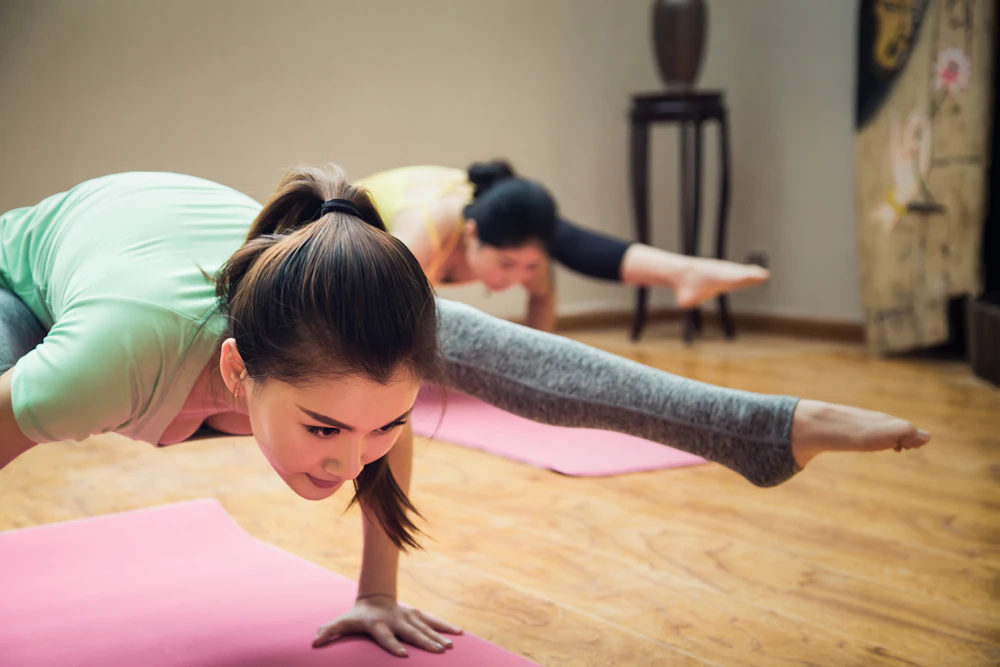
Whenever someone asks me for brand recommendations, I immediately point them toward innovators like Reprise Activewear and Groceries Apparel. They masterfully utilize these silky, durable fabrics to create leggings and crops that feel like a weightless second skin while offering exactly the right amount of stretch.
Best of all, when I eventually wear my favorite sets down to the threads, I take immense comfort in knowing they are certified as fully compostable and biodegradable in marine, soil, and freshwater environments. They seamlessly return to the earth, proving to me once and for all that we absolutely do not have to sacrifice our planet for high-performance stretch, cooling, and sweat management.
Roica™ V550 vs. Elastane: The Breakthrough in Cradle-to-Cradle Stretch
In the world of high-performance yoga gear, we’ve long been tethered to a problematic paradox: the very stretch that allows us to transition from Cobra to Down Dog is usually the very thing that prevents a garment from ever returning to the earth. For years, I’ve watched brands struggle with traditional elastane (often known as spandex or Lycra). While it provides that essential “second-skin” compression we crave in a 105°F studio, it’s essentially a plastic pollutant that lingers in landfills for centuries.
That is why I consider the shift to Roica™ V550 to be the single most important breakthrough in sustainable activewear. Unlike conventional elastane, Roica™ V550 is a world-first, Cradle to Cradle Certified™ stretch yarn that is designed to break down without releasing harmful substances into the environment. When I evaluate a brand’s “biodegradability” claims, this is the gold standard I look for.
The technical superiority of V550 over standard elastane comes down to its end-of-life cycle:
- Standard Elastane: A synthetic polymer that breaks into microplastics. In a hot yoga setting, where friction and sweat are constant, these fibers shed easily and remain environmentally toxic forever.
- Roica™ V550: Engineered to degrade significantly faster. When the garment finally loses its life, it won’t haunt the planet. It has been awarded a Gold Level Material Health Certificate, ensuring it meets the strictest requirements for human and environmental safety.
For those of us practicing hot yoga, the benefits are more than just ethical. In my experience, Roica™ V550 maintains its shape memory exceptionally well under heat, avoiding the “baggy knee” syndrome that plagues cheaper eco-alternatives. By pairing this fiber with organic cotton or Tencel™, designers are finally creating high-compression leggings that are literally “born to be worn and designed to return.” We are no longer choosing between a deep stretch and a clean conscience.
Bamboo Viscose & Hemp Blends: Antimicrobial Powerhouses for Odor Control
When I step into a 105-degree hot yoga studio, the last thing I want to worry about is my gear clinging to me or, worse, holding onto stubborn sweat odors. Over my years of analyzing activewear innovations and testing countless eco-friendly garments, I’ve found that the true heroes of high-sweat environments aren’t synthetic plastics, but rather the ingenious pairing of bamboo viscose and hemp. I constantly recommend these specific blends to my clients because they naturally tackle the biggest pain point of hot yoga: bacterial growth.
Hemp is natively antimicrobial, highly durable, and remarkably breathable. When woven with bamboo viscose—which I absolutely love for its buttery, silk-like texture and rapid moisture-wicking capabilities—the resulting fabric becomes a thermoregulating powerhouse. The bamboo fibers quickly pull sweat away from your skin, while the tough hemp fibers actively prevent odor-causing bacteria from taking root. It is a complete game-changer for heavy sweaters. I recently tested a beautiful seamless set from EcoAsana that utilized a 55% hemp and 45% bamboo viscose split. Even after a gruelling 90-minute Bikram session, followed by accidentally leaving the damp clothes in my gym bag overnight, the set smelled completely neutral the next morning.

What fascinates me most right now as a trend forecaster is how the top-tier sustainable brands are utilizing closed-loop processing for these natural fibers. They are avoiding the harsh, toxic chemicals traditionally used to break down bamboo, ensuring the garment retains its organic integrity and remains entirely biodegradable at the end of its lifecycle. When I wear these pieces, I know I am not just investing in a stink-free savasana; I am actively choosing a performance fabric that won’t shed harmful microplastics into our water systems with every wash.
Curated List: Best Biodegradable Brands Specifically for Hot Yoga
When I’m flowing through a high-intensity Bikram session, the last thing I want is to feel like I’m wrapped in a plastic bag that will outlive me by five hundred years. The industry is finally catching up to our demand for performance gear that doesn’t sacrifice the planet. After testing dozens of kits in 105°F heat, I’ve curated the brands that are leading the charge in truly biodegradable, high-performance activewear.
1. MATE the Label
I’ve turned to MATE the Label specifically for their “MOVE” collection. While many brands claim to be “green,” MATE utilizes a sophisticated blend of organic cotton and a small percentage of Amni Soul Eco®—the world’s first biodegradable polyamide 6.6. Unlike traditional synthetics that linger in landfills for centuries, this fabric is engineered to decompose in about five years when disposed of in anaerobic conditions. For hot yoga, I find their sports bras exceptionally breathable; they don’t trap heat against my skin like recycled polyester often does.