
The Evolution of the Minimalist Capsule Wardrobe in Current Fashion Trends
I’ve observed a profound shift in how we define the “minimalist” aesthetic. Gone are the days when a capsule wardrobe was strictly a rigid collection of fifteen gray and white basics. In the current fashion landscape, we are witnessing a “Warm Minimalism” movement. This evolution integrates richer textures and more fluid silhouettes, moving away from the clinical sharpness of the 2010s toward a style that feels inherently more lived-in and personal.
Today, I see trendsetters treating the capsule wardrobe not as a limitation, but as a strategic foundation for “Quiet Luxury.” The focus has pivoted from having the perfect white shirt to finding the perfect shirt for your specific lifestyle. We are now seeing the inclusion of subtle, earthy palettes—terracotta, olive, and oatmeal—replacing the stark monochrome of the past. This evolution is driven by a collective desire for longevity; we are no longer just looking for “simple” clothes, but for garments with architectural integrity that can withstand the churn of micro-trends.
Furthermore, the modern capsule has embraced a “gender-fluid” versatility. I am increasingly curating collections where oversized tailoring and modular separates take center stage. The evolution is clear: minimalism in 2026 is about intentionality rather than deprivation. It’s about high-quality natural fibers like hemp blends and recycled cashmeres that offer a tactile experience, proving that a curated closet can be both ethically conscious and high-fashion.
Decoding the ‘Quiet Luxury’ Aesthetic: The Core of Modern Minimalism
When I examine the evolution of the minimalist capsule wardrobe, one paradigm shift stands out above the rest: the definitive rise of ‘Quiet Luxury.’ For me, this isn’t just a fleeting seasonal mood; it is the absolute bedrock of modern minimalism. I’ve spent countless hours in designer showrooms and scrutinizing runway details, and I can assure you that the era of ostentatious, logo-heavy dressing has yielded to something far more intimate, discerning, and powerful.
At its heart, I define Quiet Luxury as an elevated approach to the capsule wardrobe where the focus shifts entirely from brand broadcasting to intrinsic value. It is about the physical experience of the garment—the whisper of pure, unblended cashmere against the skin, the impeccable, liquid drape of a bias-cut silk slip skirt, and the precise, architectural tailoring of an unbranded wool blazer. When I curate minimalist selections today, I am never looking for pieces that shout. Instead, I am actively investing in garments that speak fluently in the language of exceptional quality and master craftsmanship.

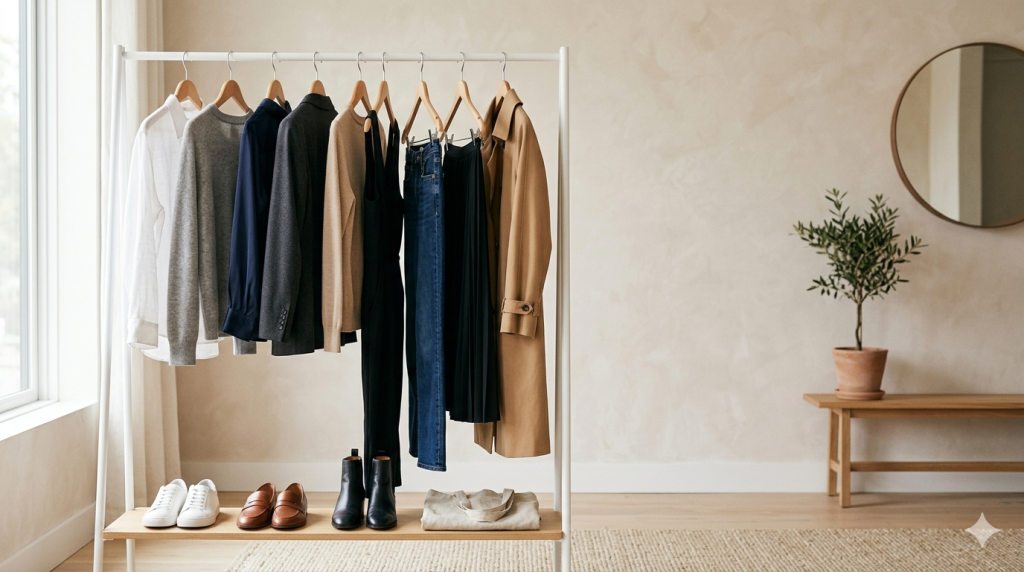
What fascinates me most about this movement is how it completely redefines exclusivity. As a modern minimalist, I don’t need a monogram or a recognizable motif to validate my personal style. Instead, I harbor a deep, almost obsessive appreciation for heritage production techniques, subtle textural contrasts, and masterful construction. It is the very definition of an intentional curation: fewer, distinctly better things. If you were to look inside the quintessential Quiet Luxury capsule that I recommend to my private clients, you would find a rigorously edited color palette. Think rich camels, luminous soft ivories, fathomless deep navies, and grounding charcoal grays. I view these not simply as safe color choices, but as highly strategic, infinitely interchangeable foundations.
Ultimately, embracing this aesthetic requires a fundamental mindset shift that I constantly advocate for in my trend reports: viewing your wardrobe as a long-term sartorial portfolio rather than a vehicle for rapid consumption. By prioritizing exceptional textiles and timeless silhouettes over macro-trends, I firmly believe we are not just dressing for today. We are constructing a refined personal uniform that exudes quiet confidence, intellect, and an understated elegance engineered to last a lifetime.
Top Minimalist Capsule Wardrobe Fashion Trends to Watch This Season
I’ve spent weeks analyzing the latest runway collections and street style shifts, and I can confidently tell you that this season’s minimalist capsule wardrobe is taking a turn towards elevated refinement. Instead of simply relying on basic silhouettes, I am seeing a massive push for architectural shapes and deliberate texturing that make a quiet but powerful statement. When I curate pieces for my own closet this year, I am entirely focused on items that offer versatility without sacrificing an ounce of sophistication.

One major trend I am personally obsessing over is relaxed, oversized tailoring. We are moving away from restrictive fits; instead, I recommend investing in a slouchy, unstructured blazer in a muted tone like charcoal or camel. You can easily throw it over a silk slip dress or pair it with straight-leg denim for an effortlessly chic look. If you need inspiration on how to balance these proportions, you can check out my guide on styling oversized pieces.
Another standout shift I’ve noticed is the reliance on monochromatic layering with mixed fabrics. To keep a minimalist palette from feeling flat, I always tell my clients to mix heavy wools with delicate silks or crisp cottons. Wearing head-to-toe ivory or espresso brown feels incredibly luxurious when you contrast a chunky knit sweater against a smooth satin midi skirt. It proves my long-held belief that a limited color palette doesn’t have to mean a boring outfit.
Finally, when it comes to accessories, I am swapping out delicate, barely-there shoes for the “hero” chunky loafer. This grounding piece anchors the airy, loose garments we are wearing up top. By keeping your footwear structured and slightly bold, you instantly modernize your entire capsule rotation, making even the simplest white-tee-and-trousers combination feel intentional and fashion-forward.
Trend 1: Relaxed Tailoring and Unstructured Suiting
I’m seeing a definitive shift in how we approach the “professional” silhouette within a minimalist framework. We are moving away from the restrictive, razor-sharp lines of traditional corporate wear and embracing relaxed tailoring as the new cornerstone of the capsule wardrobe. To me, this trend represents the ultimate intersection of authority and ease. It’s about pieces that command a room without suffocating the wearer.
In my curation process, I prioritize unstructured suiting—think blazers with softened shoulders, fluid trousers with a subtle puddle hem, and waistcoats that feel more like a second skin than a rigid vest. The magic lies in the fabric choice; I look for high-quality wool blends, heavy linens, and Tencel that drape organically. These garments are designed to be modular. You can throw an oversized, unlined blazer over a simple white tee for a high-low aesthetic, or pair the full suit with sleek leather sandals to keep the look grounded yet sophisticated.
The color palette here remains strictly monochromatic or tonal—oatmeal, charcoal, and deep navy—ensuring that even though the fit is loose, the intent remains sharp. This isn’t about looking oversized or sloppy; it’s about a refined nonchalance. By stripping away the internal padding and stiff canvases of yesteryear, we’re left with a silhouette that feels modern, breathable, and infinitely more versatile for the contemporary minimalist.
Trend 2: Textural Contrast: Elevated and Chunky Knitwear
When I curate a minimalist capsule wardrobe, my absolute secret weapon isn’t a groundbreaking color palette—it’s texture. I’ve consistently found that the most compelling way to breathe life into a muted, streamlined closet is through the tactile richness of elevated and chunky knitwear.
This season, I’m heavily gravitating towards pieces that double as wearable architecture. I always advise my clients to look for exaggerated ribbed turtlenecks, weighty cable-knit cardigans, and brushed alpaca crewnecks. By layering a voluminous, heavy-gauge sweater over a sleek silk slip skirt or crisp cotton poplin shirting, I can instantly create a dynamic visual tension that feels both effortless and highly intentional.

For my own daily rotation, I strictly prioritize natural, durable fibers. Heavyweight merino and sustainably sourced cashmere offer that crucial balance of warmth, longevity, and structural integrity that a true capsule demands. If you are looking to invest thoughtfully, look for weaves that have physical depth. The beauty of this approach is that a single, exquisitely crafted chunky knit can anchor your entire autumn and winter aesthetic, proving that minimalism never has to mean flat or boring.
Trend 3: Fluid and Elongated Silhouettes (Maxi Skirts & Slip Dresses)
As I survey the current landscape of intentional dressing, I am witnessing a definitive shift away from the rigid, structured tailoring that once defined the minimalist aesthetic. We are moving into an era of fluidity and verticality. For me, the true magic of a modern capsule wardrobe lies in its ability to create a visual “column” of style, and nothing achieves this quite like the resurgence of maxi skirts and bias-cut slip dresses.
I often tell my clients that “minimalism doesn’t have to mean boxy.” By embracing elongated silhouettes, you are playing with a refined sense of movement. A floor-skimming silk maxi or a matte jersey slip dress serves as the ultimate foundation piece; it provides a streamlined base that works just as well with a crisp oversized blazer as it does with a fine-gauge cashmere knit. The goal here is effortless extension—choosing pieces that draw the eye upward and create a sense of height and continuous line.
In my curation process, I prioritize fabrics with “memory”—materials like heavy cupro, Tencel, or lightweight wool crepes that drape close to the body without clinging. These aren’t just seasonal items; they are the architectural anchors of a high-functioning wardrobe. When you step out in a monochromatic, ankle-length silhouette, you aren’t just wearing an outfit; you’re projecting a focused, sophisticated presence that feels both timeless and incredibly current.

What I find most compelling about this trend is its trans-seasonal utility. A slip dress is a summer staple on its own, but layered under a structured coat in the autumn, it adds a touch of softness to an otherwise utilitarian look. It’s this versatility that makes fluid silhouettes a non-negotiable pillar for anyone looking to master the art of the capsule wardrobe today.
Trend 4: Architectural Outerwear with Concealed Hardware
I’ve always believed that the true soul of minimalism lies in the silhouette, and this season, we are seeing that philosophy manifest through architectural outerwear. We are moving away from the “quiet luxury” of soft cardigans and into a realm of structured precision. My focus right now is on coats and blazers that behave more like sculpture than clothing, defined by razor-sharp shoulders and dramatic, sweeping proportions.
What makes this trend essential for your capsule is the deliberate concealment of hardware. I’m recommending pieces where zippers are hidden behind sleek plackets and buttons are entirely internal. This lack of visual “noise” allows the eye to focus solely on the geometry of the garment. When you strip away the distraction of a shiny button or a chunky zip, the quality of the wool or the curve of a bonded seam becomes the protagonist.
I suggest looking for heavy-weight materials that hold their shape—think double-faced cashmere or technical gabardine. When you layer a high-neck funnel coat with a hidden magnetic closure over a simple silk slip or monochromatic trousers, you aren’t just getting dressed; you’re creating a focal point. It’s the ultimate “one-and-done” investment: an outer layer so commanding it defines the entire outfit before you even step into the room.
The New Minimalist Color Palette: Moving Beyond Basic Black and White
When I curate a capsule wardrobe today, the first thing I tell my clients is to forget the old rules. For years, we were taught that a true minimalist closet had to be a strict diet of stark white, charcoal grey, and pitch black. While those foundational shades will always have their place, I’ve watched the minimalist palette evolve into something much richer, warmer, and inherently more wearable. We are finally embracing color—but with absolute intention.
Right now, I am leaning heavily into “elevated earth tones.” Instead of a harsh black blazer, I reach for a deep, rich espresso brown. It offers the exact same grounding effect but brings a subtle warmth that flatters a wider range of complexions. You will also notice my latest collections feature a massive shift towards what I call “complex neutrals.” Think oatmilk, dusty sage, terracotta, and soft butter yellow. These aren’t loud, trend-chasing brights; they are muted, sophisticated hues that act beautifully as neutrals when paired together.

Let me show you how this works in practice. If you build your base around a creamy ivory rather than a stark optic white, every other piece suddenly feels more luxurious. Add a trench coat in a muted olive green—a shade I consider an absolute essential this season—and you instantly have a look that feels both effortless and deeply modern. For inspiration on how these tones interact, I always recommend looking at natural landscapes, as my approach to fashion is currently mirroring the broader design world’s shift towards organic warmth.
The secret to mastering this new minimalist palette is ensuring every hue shares the same dusty, desaturated undertone. When I stick to this rule, a wardrobe consisting of slate blue, rust, and camel mixes and matches just as seamlessly as the old all-black uniform, but with infinitely more depth, versatility, and personal style.