
Defining the 2026 Boho Chic Aesthetic: Beyond the Flower Crown
The 2026 iteration of Boho Chic has shed its costume-party skin. We’ve officially moved past the era of mass-produced lace dusters and those ubiquitous polyester flower crowns that defined the mid-2010s. This year, the aesthetic is defined by “Tactile Futurism”—a sophisticated blend of raw, organic textures and sharp, intentional silhouettes that prioritize movement over mere decoration.
When I look at the shift in festival street style this season, the most striking evolution is the departure from “performative vintage” toward authentic utility. We aren’t just dressing like wandering spirits; we’re dressing for the physical demands of a three-day desert or forest marathon. The 2026 Boho silhouette is leaner and more architectural. Think less “billowing fabric” and more “structured fluidity.”
To master this look, you need to understand the three pillars that separate a dated outfit from a 2026 trend-setter:
- Structural Transparency: Instead of simple crochet, we are seeing 3D-knitted mesh and laser-cut linens. These pieces provide the necessary ventilation for summer heat while creating complex shadows on the skin, acting as a natural accessory.
- The “Found Object” Philosophy: The 2026 aesthetic relies heavily on high-low contrast. I’m seeing stylists pair archival 1970s suede vests with bio-acetate eyewear and technical trekking hardware. It’s a grounded, earthy look that acknowledges we live in a high-tech world.
- Desaturated Depth: We’ve traded neon-pinks and artificial dyes for “weathered” tones. The goal is to look as though your outfit has been bleached by the sun and rinsed in sea salt—a look of lived-in luxury rather than fresh-off-the-rack synthetic brilliance.
The “Chic” in Boho Chic now comes from intentional layering rather than excessive accessorizing. We’re replacing the ten-stack of plastic bangles with a single, heavyweight reclaimed brass cuff. We’re swapping the fringe bag for modular belt pouches that integrate into the garment’s structure. It’s a transition from “more is more” to “meaningful weight.”
| Element | Outdated (2016-2022) | The 2026 Standard |
|---|---|---|
| Headwear | Synthetic Flower Crowns | Hand-woven Raffia Buckets or Sculptural Head-wraps |
| Silhouette | Oversized/Baggy | Contoured Knits with Asymmetrical Hems |
| Detailing | Cheap Plastic Sequins | Raw Stone Inlays and Hand-stitched Embroidery |
In short, the 2026 Boho spirit is rugged, refined, and deeply personal. It’s no longer about looking like everyone else at the main stage; it’s about a silhouette that suggests you’ve traveled somewhere interesting and brought back the best parts of the journey on your back.
Essential Elements of a High-Impact Summer Festival Wardrobe
Building a festival wardrobe that genuinely turns heads while surviving twelve hours in the desert sun requires a strategic approach to silhouette and layering. I always tell my styling clients to start with a foundation of fluid, unrestrictive garments and build tension through contrasting weights. The current boho silhouette is decidedly less voluminous than previous iterations, trading overly billowy layers for body-skimming bias cuts paired with structured micro-tops.
To achieve this balance, your packing list must prioritize versatility over sheer volume. We are anchoring the look with four specific architectural pieces that can be endlessly remixed across a three-day weekend.
- The Architectural Crochet Co-ord: We have moved past basic granny squares. Look for densely woven, engineered crochet sets featuring asymmetric hemlines and integrated metallic threads that catch the stage lights. A midi skirt and matching bralette offer maximum ventilation while maintaining a sharp, deliberate shape.
- The Floor-Sweeping Sheer Overlay: Replacing the heavy, outdated suede fringe jackets, the modern duster is ultra-sheer, crafted from deadstock chiffon or fine mesh. It provides dramatic movement as you walk through the festival grounds without adding a single degree of thermal insulation.
- The Bias-Cut Slip Base: Whether it is a midi dress or a separate skirt, the bias cut is non-negotiable. It skims the hips and flares perfectly at the ankle, offering full mobility for dancing while serving as the ideal fluid canvas for heavy leather layering.
- The Grounding Harness or Corset Belt: This is where the “high-impact” truly registers. To prevent sheer, romantic fabrics from looking like sleepwear or a literal retro costume, I immediately ground them with rigid leather, suede, or high-grade vegan alternatives. A structured underbust corset or a multi-strap waist harness introduces necessary visual tension.
This structural foundation guarantees your outfit photographs beautifully from every angle. The friction between a soft, flowing sheer duster and a heavy, hardware-laden belt creates the exact contemporary edge we are aiming for this season. By establishing these core silhouettes first, we set the stage for integrating specific textiles and tones.
Core Fabrics and Textures: Balancing Comfort with Style
When I pull festival looks for my clients, the immediate conversation shifts from aesthetics to survival—specifically, how fabrics will behave after twelve hours in 90-degree desert heat or sudden evening humidity. The 2026 iteration of boho chic is entirely intolerant of cheap synthetics. We immediately bin the fast-fashion polyesters. They trap heat, breed bacteria, and cling awkwardly. Instead, the foundation of a high-impact, enduring silhouette relies on advanced natural fibers and strategic texture mapping.
My studio’s sourcing heavily prioritizes materials that actively work with your body temperature while delivering that essential tactile richness. Here are the non-negotiable fabrics anchoring this season’s aesthetic:
- Engineered Pointelle & Open-Weave Cotton: We are moving past heavy, chunky crochet. Pointelle offers a delicate, vintage-inspired texture while essentially acting as wearable air-conditioning. It provides the visual complexity of knitwear without the suffocating weight.
- Enzyme-Washed Raw Linen: Yes, it wrinkles, and you need to embrace that. The “lived-in” rumple of a raw linen maxi skirt paired with a structured leather belt creates the exact high-low friction we want. The enzyme wash is key—it breaks down the stiff fibers so the linen drapes fluidly right off the hanger.
- Upcycled Parachute Silk: This is a massive structural trend this summer. It is incredibly durable, weighs almost nothing, and catches the wind beautifully for those sweeping, dynamic movements. I use it primarily for voluminous cargo-harem hybrids or lightweight dusters.
- Distressed Suede Alternatives: Vegan micro-suedes have evolved. We use them for fringed vests and heavy belts because they provide the necessary rugged, grounding texture of traditional leather, but at a fraction of the weight and with significant stain resistance.
The secret to an elevated boho look isn’t just selecting the right fabric; it is the collision of textures. Flat, uniform outfits read as two-dimensional and uninspired in festival photography. I strictly apply the “Rule of Three Textures” during fittings: one sheer or semi-sheer base, one structured anchor, and one highly tactile overlay. This creates depth and allows for modular dressing as the temperature shifts.
| The Base (Breathability) | The Anchor (Structure) | The Overlay (Tactility) |
|---|---|---|
| Pointelle bralette or Silk slip | Heavy distressed vintage denim | Macramé duster with metallic threading |
| Ribbed modal bodysuit | Raw linen tiered skirt | Fringed micro-suede vest |
| Sheer chiffon blouse | Parachute silk trousers | Embossed leather harness |
Comfort dictates confidence. A visually stunning heavy-cord macramé dress is entirely useless if the material is scratching your shoulders raw by 4 PM. My strict policy is that any fabric directly touching the skin must be seamless, moisture-wicking, and friction-free, reserving the heavier, abrasive textures strictly for outer layers.
Color Palettes: From Earthy Neutrals to Digital Sunset Hues
The chromatic foundation of the 2026 festival season abandons the predictable sepia wash of past decades, pivoting instead toward a high-contrast collision of raw nature and synthetic vibrancy. As fashion forecasters and stylists, we are seeing designers pull directly from a color phenomenon I call the “Digital Sunset”—a palette where hyper-saturated, screen-emitted tones bleed into grounding, organic bases. You are no longer dressing just for the desert dust; you are dressing for the camera flash, the LED stage lights, and the golden hour glow.
To master this specific high-impact look, you need to partition your wardrobe into two distinct color families and understand exactly how they interact structurally.
The Grounding Elements: Evolved Earth Neutrals
We are stepping away from flat beiges and muddy browns. The new earthy baseline requires dimension. When sourcing your core pieces—think your base bralettes, suede shorts, or heavy macramé skirts—look for these evolved neutrals:
- Sun-Baked Terracotta: A rich, oxidized red-orange that mimics dry clay. It acts as a heavy visual anchor and hides festival dirt flawlessly.
- Raw Oat & Unbleached Linen: Unlike stark white, which reads as harsh under the midday sun and is impossible to keep clean, unbleached tones provide a creamy, textured canvas that effectively reflects heat.
- Matcha Sage: A muted, dusty green that bridges the gap between warm desert tones and cooler evening aesthetics.
The Acid Accents: Digital Sunset Hues
This is where the 2026 boho aesthetic separates itself from historical Woodstock reenactments. The “Digital Sunset” injects artificial, hyper-real colors into natural environments. These tones are best deployed in sheer overlays, silk scarves, tinted eyewear, and hardware resins rather than heavy base fabrics.
- Cyber Lavender: A cool, slightly metallic purple. It cuts through the heavy warmth of terracotta and pops aggressively against sun-tanned skin.
- Acid Apricot: A neon-tinged peach. I recommend utilizing this color in semi-transparent layers, allowing it to act like a physical color-grading filter over your base neutrals.
- Bioluminescent Magenta: Sourced straight from late-90s rave culture but adapted for the boho silhouette. Use this sparingly as a sharp focal point—a singular beaded harness or a dip-dyed fringe hem.
The Application Matrix: Balancing the Palette
The industry standard for styling this contrast is the 80/20 rule: 80% grounded earth tones to maintain the bohemian authenticity, sharply interrupted by 20% digital sunset hues to drag the outfit into the current year. Below is the exact color-blocking formula my styling team uses when prepping talent for multi-day events.
| Festival Timeframe | Dominant Base (80%) | Digital Accent (20%) | Lighting Interaction & Effect |
|---|---|---|---|
| Daytime (High Sun) | Raw Oat & Matcha Sage | Acid Apricot (Tinted visors/lenses) | Reflects harsh UV rays, minimizes heat absorption while providing a face-brightening cast. |
| Golden Hour | Sun-Baked Terracotta | Bioluminescent Magenta (Jewelry/fringe) | Harmonizes with the natural sunset, creating deep, rich contrast for photography. |
| Nighttime (Stage Lights) | Charcoal Suede (Deep Neutral) | Cyber Lavender (Sheer mesh/glow elements) | Absorbs ambient darkness; neon accents react dynamically to stage strobes and laser lights. |
When executing this palette, pay close attention to the opacity of your sunset hues. A solid, opaque block of neon reads as pure athleisure, whereas a sheer, gauzy layer of Cyber Lavender draped over a Raw Oat crochet bralette delivers the exact elevated, modern bohemian tension we are aiming for. The dust that inevitably collects on your garments throughout the weekend will naturally mute the digital tones by day three, creating a lived-in, organically distressed patina that cannot be replicated in a studio.
Curating Your Look: Three Signature Boho Festival Personas
To truly nail the 2026 festival circuit, you have to move past the “costume” feel of years prior. We’re seeing a massive shift toward identity-driven styling. Based on current runway trajectories and street-style data from early-season desert gatherings, I’ve distilled the season’s aesthetic into three distinct personas. These aren’t just outfits; they are curated vibes designed to handle 12-hour sets while maintaining a high-fashion edge.
1. The Neo-Nomad: High-Tech Desert Utility
This persona is for the attendee who prioritizes movement and technical prowess without sacrificing the bohemian soul. It’s a reaction to the extreme weather shifts we’re seeing at festivals like Coachella or Burning Man. The look centers on modular dressing—pieces that can be stripped down or layered as the sun sets.
- Key Silhouette: Oversized, sheer linen cargo pants paired with a micro-crochet halter neck. The juxtaposition of “heavy” utility and “light” craft is the sweet spot here.
- The 2026 Twist: Integration of smart fabrics. Think UV-reactive embroidery that changes color under direct sunlight or moisture-wicking hemp blends that outperform synthetic gym wear.
- Pro Tip: Stick to a monochrome “Dust” palette—sand, slate, and bone. It hides the inevitable festival grime better than any other color scheme and looks incredibly expensive in photos.
2. The Psychedelic Pre-Raphaelite: Ethereal Maximalism
If the Neo-Nomad is about function, this persona is about pure, unadulterated romance. We are seeing a resurgence of 1970s “groupie” glam, heavily filtered through a modern lens. It’s less about being a “flower child” and more about being a mythological figure at a rave.
- Key Silhouette: Floor-sweeping silk chiffon dusters worn over vintage-wash denim cut-offs and metallic bralettes. Airflow is your best friend here.
- The 2026 Twist: Digital sunset prints. Instead of traditional ditsy florals, we’re seeing hyper-saturated, blurred gradients that mimic a long-exposure photograph of a horizon.
- Must-Have Item: A “statement” belt. Not a thin leather strip, but a heavy, weighted piece featuring oversized hammered silver discs or reclaimed turquoise that grounds the floaty fabrics.
3. The Cyber-Folk Alchemist: Industrial Craft
This is the most “forward” look of the three, blending traditional folk handiwork with a gritty, industrial undertone. It’s perfect for night-heavy festivals where the aesthetic leans into the “after-hours” energy. It’s about deconstructed luxury.
- Key Silhouette: Shredded knit maxi skirts or “spider-web” macramé dresses worn over tonal bodysuit liners. It’s a play on negative space and texture.
- The 2026 Twist: Hardware-heavy details. We are replacing soft fringe with thin metallic chains, and swapping wooden beads for recycled aluminum hardware.
- Expert Styling: Balance the intricate, hand-made textures with “hard” footwear. A heavy-soled combat boot or a platform Chelsea boot provides the necessary contrast to the delicate knitwear above.
| Persona | Primary Texture | Vibe Check | Best For |
|---|---|---|---|
| Neo-Nomad | Technical Linen / Hemp | Functional, Minimalist, “Survivalist” | Day-to-Night Desert Treks |
| Pre-Raphaelite | Chiffon / Silk / Crochet | Ethereal, Romantic, Maximalist | Golden Hour Main Stage Sets |
| Cyber-Folk | Macramé / Distressed Knit | Edgy, Industrial, Artisanal | Late-Night Techno/Art Installations |
When selecting your persona, I always advise clients to choose one “anchor” piece—be it a vintage vest or a custom-knit skirt—and build the rest of the kit around it. The goal is to look like you’ve spent years collecting these pieces, even if you put the look together the week before the gates open. Avoid “matching sets” from fast-fashion retailers; the 2026 boho aesthetic is defined by the tension between mismatched elements that somehow tell a cohesive story.
The Ultimate Accessory Blueprint: Detailing Your Festival Layers
Accessories are the specific gear-shifters that move an outfit from “beach casual” to “festival headliner.” In 2026, the blueprint for layering revolves around dynamic movement and tactile contrast. We are seeing a departure from the cluttered, heavy stacks of previous years in favor of pieces that serve a dual purpose: visual storytelling and practical utility.
To master the layering process, I recommend starting with the “Three-Level Rule” for your torso and working outward to the extremities. This creates a cohesive narrative without looking like you’re wearing a costume.
The Foundation Layers: Belts and Body Chains
Forget the flimsy chain belts of 2024. This season, we are utilizing sculptural leather cinchers and oversized etched silver concho belts. The goal is to provide a structural anchor for flowing fabrics.
- Utility Belts: The “festival pouch” has evolved into sleek, modular leather holsters. Look for vegetable-tanned leathers that patina beautifully under the desert sun.
- Body Mapping: Fine-link gold body chains are being layered under sheer crochet tops rather than over them, creating a subtle shimmer that only reveals itself as you move.
Headwear: The Structural Pivot
While we’ve moved past the generic flower crown, headwear remains the ultimate silhouette-definer. The 2026 trend focuses on Ventilated Wide-Brims and Textured Head Wraps.
| Accessory Type | 2026 Style Direction | Pro Tip |
|---|---|---|
| The Hat | Stiff-brim felt or hand-woven raffia with “destroyed” edges. | Secure with a vintage scarf tied under the chin to prevent wind-loss. |
| The Scarf | Silk-modal blends in “Digital Sunset” gradients. | Drape loosely over the neck to protect from dust while adding a vertical color pop. |
Eyewear and Tech-Integration
Eyewear isn’t just about UV protection anymore; it’s about the frame geometry. We’re currently favoring rimless tinted lenses in amber or soft violet hues that transition well into the golden hour. I advise my clients to look for frames with integrated lanyard loops—losing a pair of high-end shades in a mosh pit is a rookie mistake. Weighted, chunky bead cords are the accessory of choice here, turning your sunglasses into a necklace when the sun goes down.
The “Third Piece” Philosophy
Every high-impact outfit needs a “third piece”—an item that isn’t strictly necessary but defines the look. For summer 2026, this is the deconstructed vest or the fringed shawl.
- The Longline Vest: Look for floor-skimming lengths in lightweight linen or macramé. It creates a vertical line that elongates the frame and provides a canvas for your jewelry to pop against.
- Fringe Dynamics: Ensure your fringe is at least 12 inches long. Anything shorter lacks the “sweep” required for those iconic slow-motion festival captures.
Focus your investment on hardware quality. Cheap alloys will oxidize and turn green against your skin in the summer heat. Stick to surgical steel, sterling silver, or high-micron gold plating to ensure your layers look as crisp at the 2:00 AM closing set as they did at the gates.
Footwear Selection: The Durability vs. Aesthetics Matrix
We’ve all seen the “festival casualty” at 3:00 AM: someone clutching a pair of broken $400 stilettos, limping through the dust. In the 2026 boho landscape, that’s not just a fashion faux pas; it’s a failure of strategy. When I consult on festival wardrobes, I utilize a Durability vs. Aesthetics Matrix to ensure my clients look ethereal without sacrificing their ability to trek four miles between stages.
| Footwear Type | Aesthetic Score | Durability/Utility | Best For… |
|---|---|---|---|
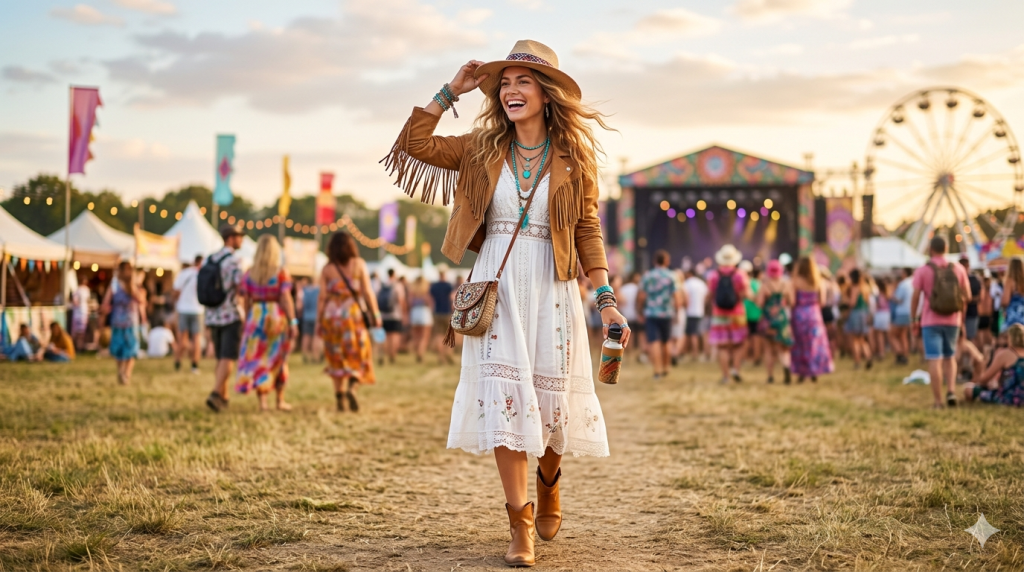
| Distressed Western Boots | 9/10 | 10/10 | Dusty desert terrains and high-energy dancing. |
| Platform “Cloud” Sandals | 7/10 | 8/10 | Grass-based venues and shorter daytime sets. |
| Embellished Combat Boots | 8/10 | 9/10 | Muddy UK-style circuits or late-night tech-boho looks. |
| Sheer Mesh Ballet Flats | 10/10 | 2/10 | VIP lounges or “photo-only” moments. |
The Western Boot: The Uncontested Champion
For 2026, we are moving away from the pristine, polished cowboy boot. The trend now leans toward weathered suede and distressed leather that actually looks better with a layer of grit. I always recommend a cuban heel—specifically between 4cm and 6cm. This provides the necessary lift to keep your floor-length crochet skirts from dragging in the dirt while maintaining a stable center of gravity. Look for interior moisture-wicking linings; synthetic leathers are a recipe for blisters in 30°C heat.
The Rise of “Tech-Boho” Footwear
We are seeing a massive shift toward merging gorpcore utility with bohemian flair. Think Vibram-soled sandals featuring artisanal macramé straps or jacquard-weave ribbons. These pieces solve the “sand in the shoe” dilemma by offering open-air breathability while providing the arch support of a hiking boot. If you’re opting for sandals, the hardware—buckles and rings—should match your jewelry (as we’ll detail in the hardware section) to maintain a cohesive visual thread.
Professional Survival Hacks
I cannot stress this enough: never de-box on day one. Even the highest-quality leather requires a minimum of 20 hours of break-in time. I advise my clients to follow these three non-negotiables:
- The Double-Sock Method: Wear a thin moisture-wicking liner under your decorative socks to eliminate friction.
- Hydrocolloid Shielding: Apply blister pads to the Achilles and pinky toes before you feel the rub. Prevention is the only way to stay in the front row for the headliner.
- The After-Hours Reset: Keep a pair of collapsible, ultra-lightweight EVA slides in your locker. Switching your footwear for the final trek back to camp or your shuttle is a secret weapon for foot longevity over a three-day weekend.
Authentic boho style is rooted in a sense of freedom, and you aren’t free if you can’t move. By prioritizing footwear that treats the terrain as an equal partner to the outfit, you achieve that coveted “effortless” look that is actually backed by rigorous technical planning.
Jewelry and Hardware: Mixing Vintage Gold with Modern Charms
The secret to a high-impact festival look isn’t just about piling on necklaces; it’s about engineering a deliberate clash of eras directly on your skin. I always treat jewelry as the architectural framework that holds a flowy boho silhouette together. For 2026, the strategy revolves around the heavy, grounding weight of vintage gold disrupted by the playful irreverence of contemporary charms.
Vintage gold serves as our foundational layer. When pulling pieces for a client’s festival rotation, I look for oxidized, heavyweight chains—think chunky Byzantine weaves, thick herringbone, or textured rope chains from the ’80s and ’90s. They provide a necessary structural contrast to the sheer, lightweight summer fabrics we’ve already established in your wardrobe. The trick is to avoid anything too pristine; you want metals that look lived-in and slightly tarnished by the sun.
We then interrupt this heavy vintage base with hyper-modern, almost futuristic charms. In current showroom previews, we are seeing a massive shift towards unexpected materials mixing with traditional gold.
- Enamel and Resin: Injecting acid-bright neon enamel drops or clear 3D-printed resin pendants adds an immediate 2026 update to a dusty vintage chain.
- Tech-Inspired Motifs: Swap out the tired feather and arrow pendants for sleek, chrome-finished stars, digital hearts, or upcycled glass spheres.
- Asymmetrical Placement: Rather than centering a single pendant, I clip multiple mismatched charms to the side links of a collarbone-length chain for a staggered, asymmetrical build.
To master the layering geometry, I use a specific formula to prevent the pieces from tangling into a messy, distracting knot during a long day of dancing. Here is the exact proportion matrix we use on set:
| Layer Level | Piece Type | Function in the Look |
|---|---|---|
| 1. The Choker (Base) | Thick, flat vintage gold (e.g., Herringbone or Omega chain). | Catches the light immediately at the collarbone; acts as the solid foundation. |
| 2. The Mid (Storyteller) | Medium-weight link chain loaded with 3 to 5 modern, colorful charms. | Introduces the primary color pops and modern textural contrast. |
| 3. The Plunge (Anchor) | Long, fine chain (24″+) with a single, heavy grounding pendant (e.g., raw crystal or heavy metal hardware). | Elongates the torso and draws the eye down to integrate with waist hardware. |
Hardware extends far beyond traditional neck and wrist placements. Body chains have evolved from the flimsy, breakable threads of the 2010s into structured, architectural harnesses. I integrate hardware-heavy belts featuring oversized brass O-rings, thick grommets, and industrial carabiner clasps to cinch the waist. By hooking modern bag charms, vintage keys, or even functional items like earplug cases directly onto these carabiners, the hardware becomes a utilitarian focal point that gives the ethereal boho aesthetic a sharp, street-smart edge.
Practical Festival Survival Guide: Staying Chic Under the Sun
Surviving a three-day summer festival without looking like a melted candle by day two requires strategic styling, not just good aesthetics. We spend months curating the perfect vintage slips and silver concho belts, but if you cannot comfortably walk miles in the heat or dance through a dust storm, the look fails. Staying chic under a relentless sun is an exercise in functional fashion.
First, let us address the reality of UV exposure. While those crochet dusters and sheer lace overlays we styled earlier provide excellent visual texture, they offer zero protection against sunburn. I always build sun defense directly into the outfit architecture. A wide-brimmed structured felt or woven palm hat is non-negotiable—it anchors the boho silhouette while shielding your face. For exposed skin, rely on a broad-spectrum SPF setting spray. It is the industry’s best-kept secret for festival survival, allowing you to reapply sun protection every two hours without disturbing your carefully applied face jewels or sunset-toned makeup.
Next is heat and sweat management. We rarely see thigh chafe on mood boards, but it ruins more festival weekends than bad audio mixing. Here is the insider protocol for staying pristine:
- Strategic Anti-Chafing: Before you even step into your distressed denim cut-offs or silk maxi skirt, apply a high-performance anti-chafe balm to your inner thighs, shoulders (where bag straps sit), and the back of your neck.
- The Sweat-Proof Base: Layer a moisture-wicking, seamless bralette under your vintage blouses. It catches sweat before it bleeds through delicate fabrics like silk or thin cotton.
- Cooling Touchpoints: Keep a silk bandana tied around your wrist or neck. When the midday heat peaks, dampen it with cold water from your hydration pack and press it to your pulse points. It looks entirely intentional but instantly lowers your core temperature.
The desert temperature drop is notoriously unforgiving, shifting from ninety degrees to shivering within an hour of sunset. Your day-to-night transition needs to be seamless. I never advise carrying heavy outerwear; instead, pack a highly compressible, lightweight layer. A fringed suede vest or a densely patterned vintage kimono can be tightly rolled and strapped to the bottom of your leather crossbody bag during the day. When the sun dips, it adds a final, practical tier to your layered look without requiring a trip back to the campsite.
Finally, your touch-up kit must be ruthlessly edited. You do not have the space for a full cosmetic bag. Carry exactly three items: oil-absorbing blotting papers, a tinted lip balm with SPF, and a travel-sized hydrating mist. The festival dust will naturally act as a dry shampoo, giving your hair that coveted, lived-in texture, so leave the heavy hair products at home. When the wind kicks up, wrap your silk scarf over your nose and mouth—a nod to desert drifters that keeps you breathing easily while looking effortlessly styled.
Sustainable Boho: How to Source Authentic and Ethical Pieces
True bohemian spirit has always been rooted in a deep respect for the earth, meaning a single-use, mass-produced festival outfit is a direct contradiction to the aesthetic we are building. I constantly remind my styling clients that the most authentic boho pieces already exist. Sourcing your festival wardrobe sustainably requires a shift from passive consumption to active curation, prioritizing circularity and ethical labor over fast-fashion convenience.
The Archival Hunt: Navigating Vintage and Second-Hand
Vintage shopping is where you secure those irreplaceable, one-of-a-kind layers that elevate a look from generic to editorial. I bypass the crowded high-street racks and head straight for specialized platforms and curated boutiques.
- Digital Resale Platforms: Apps like Depop and Vinted are goldmines for late 90s and early 2000s festival wear (think original penny lane coats or early Free People deadstock). For higher-end investments, like authentic 1970s suede fringe jackets or vintage turquoise hardware, I rely on Vestiaire Collective and 1stDibs to guarantee authentication.
- Hyper-Local Vintage Fairs: The best worn-in denim cutoffs and authentic global textiles are often sourced at local flea markets. Pieces with a genuine patina and natural sun-fading cannot be authentically replicated by factory distressing.
Vetting Ethical Brands: Beyond Greenwashing
When you must buy new, strict vetting is non-negotiable. “Conscious” tags on fast-fashion websites are often marketing illusions designed to drive guilt-free purchasing. I look for brands operating with radical transparency and verifiable data.
| Certification / Metric | What It Tells Us | Festival Sourcing Application |
|---|---|---|
| B-Corp Certification | The brand meets rigorous standards of verified performance, accountability, and transparency regarding supply chain and employee welfare. | Prioritize these brands for foundational festival pieces like ethically produced organic cotton basics or recycled swimwear bases. |
| Fair Trade Certified | Ensures artisans and garment workers are paid living wages and operate in safe conditions. | Critical when sourcing hand-crafted boho elements like macramé, crochet, or hand-beaded bags, which are notoriously labor-intensive and prone to exploitation. |
| Deadstock Utilization | The brand designs using leftover fabrics from major fashion houses, preventing direct-to-landfill waste. | Excellent for securing limited-edition, low-run festival dresses. It almost guarantees nobody else in the VIP tent will be wearing your exact look. |
The Rental Revolution for Statement Pieces
We all have those high-impact, heavily embellished festival pieces that we realistically will only wear for one sunset set. Instead of letting a heavy mirrored maxi dress or a highly specific, trend-driven cape gather dust in your closet, I heavily integrate rental services into my festival prep. Platforms like Nuuly, Rent the Runway, or peer-to-peer lending apps such as By Rotation allow you to access current-season, luxury boho items without the carbon footprint of permanent ownership. This strategy simultaneously frees up your budget, allowing you to invest permanently in high-quality, durable footwear and versatile vintage jewelry that will actually survive years of festival wear.
FAQ
Q: I love the layered boho look, but how do I avoid overheating during a 90-degree afternoon set?
I always tell my private clients that fabric weave is your best friend here. Skip the heavy synthetic blends entirely. The trick I use is optical layering—incorporating sheer silk chiffon, wide open-weave crochet, or fine cotton netting over your base pieces. You get the visual depth and complex texture of multiple garments without creating a thermal trap on your skin.
Q: Are traditional flower crowns completely dead for 2026?
We have definitively moved past the oversized synthetic blooms of the 2010s. If you still crave a romantic, botanical element in your hair, I recommend shifting to subtle metallic hair vines, fresh baby’s breath woven directly into messy braids, or vintage silk scarves worn as bandanas. The goal is to look effortlessly styled from elements you found on the road, rather than wearing a literal costume piece.
Q: How do I transition my daytime festival outfit to a nighttime look without trekking back to the campsite?
This is where strategic, packable elements save your life. I rely on a rapid swap method I call the “Sunset Shift.” Here is exactly how I manage the transition using only what fits in a standard crossbody utility bag:
| Daytime Element | Nighttime Swap / Addition |
|---|---|
| Lightweight crochet vest | Layer on a packable, distressed leather jacket or an oversized vintage denim shirt for wind protection. |
| Tinted aviator sunglasses | Trade the frames for chunky, light-catching metallic statement earrings to frame your face under stage lights. |
| Bare legs under a sheer skirt | Pull on a pair of patterned or fishnet tights (takes up zero bag space) to trap body heat and add an immediate rock-edge. |
Q: What is the rule on cultural appropriation versus appreciation in modern boho styling?
This is a non-negotiable styling boundary in the industry. True boho chic focuses on free-spirited eclecticism, vintage Americana, and 70s rock-and-roll influences—not borrowing sacred or ceremonial items. I strictly avoid ceremonial headdresses, bindis, or garments specific to closed cultures. Build your look instead around Western fringe, Victorian lace silhouettes, and sustainable artisan crafts where you can verify the maker’s origin.
Q: How do I handle muddy festival grounds without sacrificing my aesthetic?
Do not ruin your favorite vintage suede boots in the mud. I always pack a pair of high-quality, treated leather combat boots or elevated, matte-finish rain boots with heavy hardware detailing. These actually work perfectly to ground a flowy, hyper-feminine prairie dress with a heavy, utilitarian contrast that looks incredibly intentional in photos.