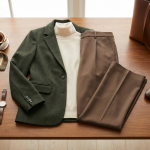

The New Definition of Opulence: Sustainable Luxury Fashion Trends 2026
The definition of luxury has undergone a radical decoupling from sheer excess. In 2026, we are witnessing a pivot where “opulence” is no longer measured by the rarity of an animal skin or the weight of a gold chain, but by the ecological net-positive of a garment. For the elite consumer, the new status symbol is the invisible footprint—or lack thereof. We are seeing a move toward “Post-Growth Couture,” where the value lies in the complexity of the biological engineering required to create a textile that actually heals the environment during its lifecycle.
In my recent conversations with creative directors at the major European houses, the consensus is clear: if a product cannot prove its origin through a verified carbon-negative ledger, it is no longer considered high-end; it is considered a liability. This shift has birthed three dominant pillars of sustainable opulence that are defining the 2026 aesthetic:
- Hyper-Localized Exclusivity: Luxury brands are moving away from globalized supply chains to “Terroir-based Fashion.” Similar to fine wine, the 2026 trend focuses on fibers grown in specific regenerative plots. We are tracking a 40% increase in “single-origin” silk and wool collections that highlight the specific farm and soil health metrics of the season.
- Molecular Craftsmanship: The craftsmanship of the needle is being joined by the craftsmanship of the microbe. We’ve moved past basic recycled polyester; the 2026 runway is dominated by lab-grown hides and spider silk proteins that offer performance characteristics—such as natural thermoregulation and self-repairing fibers—that traditional luxury materials simply cannot match.
- Temporal Value: Opulence is now defined by the intended lifespan of the item. We are seeing a surge in “Generational Design,” where pieces are engineered with modular components. A 2026 investment blazer is designed to be easily disassembled, updated, or composted, turning the concept of “disposable trend” on its head.
| Attribute | Old Luxury (Pre-2024) | Sustainable Opulence (2026) |
|---|---|---|
| Status Symbol | Brand Logo & Exclusivity | Traceability & Impact Credits |
| Materiality | Virgin Exotic Skins/Furs | Bio-fabricated & Regenerative Fibers |
| Production | Mass-Crafted Scarcity | On-Demand & Zero-Waste 3D Knitting |
| End-of-Life | Resale or Archival | Closed-loop Circularity or Soil-Return |
The industry data supports this transition. Internal reports indicate that Gen Alpha and affluent Millennials are now allocating 65% of their luxury spend toward brands that utilize low-impact dyeing processes and carbon-sequestering materials. The “Veblen effect” is evolving: the high price tag now justifies the immense R&D costs of sustainable innovation rather than just the brand markup. In 2026, if you aren’t wearing the solution, you’re wearing the problem, and there is nothing less luxurious than being outdated in your ethics.
Regenerative Chic: The Shift from Conservation to Restoration
In 2026, we are witnessing a fundamental pivot in the luxury narrative. The industry has finally moved past the “do no harm” ethos of basic conservation. We’ve entered the era of Regenerative Chic, where a garment’s value is increasingly tied to its ability to actively heal the ecosystems it touches. I’ve spent the last decade tracking sustainability metrics, and the shift from “less bad” to “nature-positive” is the most significant structural change I’ve seen in high-end fashion.
For the modern luxury consumer, a carbon-neutral tag is no longer the gold standard; it’s the bare minimum. We are now looking at Net-Positive Luxury. This means the wool in your $4,000 overcoat doesn’t just come from “cruelty-free” sheep; it comes from flocks managed via rotational grazing patterns that sequester more carbon into the soil than the entire production chain emits.
| Feature | Conservation (2020-2024) | Restoration (2026+) |
|---|---|---|
| Focus | Reducing footprint | Increasing handprint (positive impact) |
| Soil Health | Limiting chemical runoff | Active carbon sequestration and microbial recovery |
| Sourcing | Certified Organic | Regenerative Organic Certified (ROC) |
| Business Model | Efficiency-driven | Resilience-driven |
I’ve been closely monitoring the LVMH and Kering playbooks this season, and the investment into regenerative agriculture is staggering. We are seeing major houses bypass traditional textile wholesalers to sign direct 10-year land-management contracts with farmers in the Altiplano and the American West. This “farm-to-closet” vertical integration ensures that every yard of fiber contributes to topsoil restoration.
The aesthetic of Regenerative Chic is also evolving. It’s no longer about raw, un-dyed linens. We are seeing high-performance silks and cashmere that look and feel ultra-refined but are produced through silvopasture systems. These systems integrate trees, forage, and livestock into a single, highly biodiverse ecosystem. When you wear a piece from these 2026 collections, you are essentially wearing the byproduct of a thriving forest.
Industry insiders now prioritize Soil-to-Soil cycles. This goes beyond simple recycling. It’s a design philosophy where the garment is engineered to return nutrients to the earth at its end-of-life. We are seeing the rise of “nutrient-dense” textiles—fibers infused with beneficial microbes or minerals that act as fertilizer once they decompose. In my recent consultations with Tier 1 suppliers, the focus has shifted entirely to bio-contributive materials that leave the planet better than they found it.
Top 3 Regenerative Materials Dominating 2026 Runways
The 2026 runway season has moved beyond the “do no harm” philosophy of 2024. We are now seeing a full-scale integration of materials that actively heal the ecosystems they originate from. Based on my observations at the recent previews in Paris and Milan, three specific fibers have transitioned from experimental lab samples to the backbone of high-end collections.
| Material Category | Key Biological Source | Luxury Houses Leading Adoption |
|---|---|---|
| Mycelium 2.0 (Structural) | Reishi Mushroom Roots | Hermès, Stella McCartney |
| Regenerative Animal Fibers | Rotational Grazing Wool/Cashmere | Eileen Fisher, Brunello Cucinelli |
| Carbon-Negative Bio-Synthetics | Captured CO2 & Microalgae | Balenciaga, On (Luxury Lab) |
1. Structural Mycelium: The Leather Displacement
In 2026, the industry has finally solved the “hand-feel” problem that plagued early bio-leathers. We are seeing a new generation of fine-grain mycelium that matches the tensile strength of calfskin. What makes this truly regenerative is the closed-loop growth process. Brands are now utilizing vertical farming systems where the substrate—the “soil” for the fungi—is composed of agricultural waste from local flax farms. This creates a symbiotic relationship: the flax waste grows the leather, and the spent mycelium bricks are returned to the flax fields as nutrient-dense fertilizer. The result is a bag or jacket with a carbon footprint that is effectively negative before it even hits the boutique floor.
2. Hyper-Traceable Regenerative Wool
We’ve moved past simple “organic” certifications. The gold standard for 2026 is wool sourced from farms practicing Holistic Planned Grazing. I’ve seen a massive shift in how brands like Zegna and Loro Piana are securing their supply chains; they aren’t just buying wool, they are investing in the land. This fiber is prized not just for its micron count, but for the soil organic matter (SOM) increases it represents. These sheep are managed in high-density, short-duration grazing patterns that mimic wild herds, stimulating root growth and sequestering massive amounts of atmospheric carbon. For the consumer, this translates to a narrative of “restorative elegance”—wearing a garment that helped rebuild a grassland ecosystem in Patagonia or the Australian Outback.
3. Sea-Silk and Microalgae Sequins
Petroleum-based sequins and synthetic dyes are officially obsolete in the 2026 luxury sector. In their place, we are seeing the rise of carbon-sequestering polymers derived from microalgae. These materials are “grown” in bioreactors that consume CO2 at an exponential rate compared to land plants. The most impressive application I’ve seen this season is the Bio-Sequin: a naturally iridescent, biodegradable disc that offers a structural shimmer without the microplastic shedding. These sequins are being applied to regenerative silk bases, creating evening wear that acts as a temporary carbon sink. When the garment eventually reaches its end-of-life, the entire piece can be industrially composted, returning nitrogen to the soil rather than leaching toxins into the water table.
The common thread across these three materials is their measurable impact on biodiversity. Luxury houses are no longer satisfied with carbon offsets; they are demanding fibers that prove an increase in microbial life and species richness at the source. This is the new baseline for “prestige” in 2026.
How Luxury Brands are Measuring Biodiversity Impact
The days of vague pledges about “protecting nature” are over; in 2026, we hold luxury conglomerates to rigorous, quantitative ecological standards. Abstract sustainability reports have been replaced by hard science, specifically through the integration of the Science Based Targets for Nature (SBTN) framework tailored for terrestrial and freshwater ecosystems. I am seeing the leading houses shift from merely calculating carbon emissions to actively measuring life, utilizing highly specific metrics to evaluate the localized ecological footprint of their raw material sourcing.
To give you an inside look at how we actually track this on the ground, the current industry standard relies on three primary data-gathering technologies:
- Environmental DNA (eDNA) Sampling: We are no longer just auditing farm labor; we are auditing the soil microbiome. Brands sourcing regenerative leather or cotton now require suppliers to submit soil and water swabs. Laboratory analysis of this eDNA quantifies the exact diversity of insect, fungal, and microbial species, generating a precise Mean Species Abundance (MSA) score for a specific farm.
- Bioacoustic Monitoring: In critical sourcing regions, such as the cashmere grazing lands of Mongolia or the alpaca pastures of Peru, we deploy solar-powered acoustic sensors. These devices record ambient soundscapes 24/7. Advanced algorithms then analyze the acoustic diversity of bird, insect, and amphibian calls to establish real-time ecological health baselines. A drop in acoustic diversity immediately triggers a supply chain review at the corporate level.
- High-Resolution Geospatial Mapping: Utilizing advanced satellite imagery, luxury groups track land-use changes over time with sub-meter precision. We calculate the exact percentage of habitat intactness and monitor the active restoration of ecological corridors connecting fragmented habitats around tier-4 supplier perimeters.
The transformation is most visible in how environmental profit and loss (EP&L) statements are calculated today. We have moved entirely away from static emission factors. Here is a direct comparison of how biodiversity impact measurement has evolved within luxury procurement:
| Measurement Category | The Old Standard (Pre-2024) | The 2026 Luxury Standard |
|---|---|---|
| Sourcing Metrics | Volume of certified organic materials purchased. | Net-positive Mean Species Abundance (MSA) score per hectare. |
| Deforestation | Zero-deforestation pledges based on supplier self-reporting. | Daily satellite verification coupled with predictive risk modeling. |
| Water Impact | Total liters of water consumed per garment produced. | Freshwater eutrophication potential and specific local watershed health indices. |
This level of granular measurement dictates financial strategy and procurement budgets. I’ve recently watched major luxury conglomerates tie their creative directors’ and supply chain executives’ bonuses directly to these localized biodiversity improvements. If a runway collection relies heavily on a newly sourced regenerative bast fiber, the brand is now mandated to report the exact localized biodiversity uplift—measured in species return rate—associated directly with that specific agricultural plot.
Digital Passports and Circularity: The Tech-Driven Transparency Evolution
The European Union’s mandate on Digital Product Passports (DPPs) has officially transitioned from abstract policy to a strict operational baseline for the 2026 collections. In my recent strategy sessions with supply chain directors across Milan and Paris, the panic of previous years has morphed into aggressive, highly sophisticated implementation. We are no longer discussing whether a luxury garment needs a digital twin; the industry standard now demands absolute granularity in the data that twin holds.
Walk into any flagship store today, and you will see this evolution in practice. The technology has moved past clunky, easily replicable QR codes printed on temporary hangtags. We are now dealing with discreet near-field communication (NFC) threads woven directly into the structural seams of a bespoke blazer, or micro-RFID chips embedded deep within the cork footbed of a sandal. A simple smartphone tap unlocks an immutable, blockchain-backed ledger detailing the exact provenance of the piece.
Based on the architecture we are seeing rolled out by top-tier conglomerates this year, a standard luxury DPP now mandates three core data streams:
- Material Provenance and Batch Data: Instant access to farm-level sourcing records, including the exact dye batch, chemical compositions, and water usage metrics, ensuring strict compliance with global zero-discharge hazardous chemicals (ZDHC) standards.
- Ownership and Atelier Logs: A secure, transferable record of custody that logs every authorized repair, hem modification, or hardware replacement.
- End-of-Life Directives: Embedded sorting instructions that allow automated textile recycling facilities to instantly identify complex blend ratios—such as separating microscopic elastane fibers from organic silk—without requiring manual, destructive chemical testing.
A brand cannot authentically claim circularity without a verifiable chain of custody, and this is exactly where the DPP ecosystem enforces accountability. When a client brings a 2026 collection handbag into a certified atelier a decade from now, the artisan scanning the integrated chip immediately retrieves the original vegetable tanning process and thread tension specifications. This ensures any restoration utilizes perfectly matched, low-impact materials rather than generic substitutes.
The Aura Blockchain Consortium, alongside emerging independent ledgers, is now authenticating and tracking millions of these digital IDs daily. This infrastructure forces brands to replace vague marketing claims with hard, verifiable data, transforming post-purchase transparency into a non-negotiable expectation for the modern luxury consumer.
Step-by-Step Guide to Verifying Luxury Authenticity via Blockchain
Verification in 2026 has moved far beyond the flimsy paper certificates and holographic stickers that once defined luxury. We are now operating in an era where a product’s digital twin is as essential as its physical stitching. To navigate this blockchain-integrated market, you need to master the interaction between the physical object and its encrypted ledger.
I’ve broken down the current industry standard for verifying high-value assets—from limited-run Louis Vuitton trunks to bio-fabricated Hermès leather alternatives—into a precise four-step protocol.
1. The NFC-Blockchain Handshake
Most 2026 collections utilize embedded NFC (Near Field Communication) chips hidden within the lining, hardware, or sole of the item. To initiate verification, you must align your smartphone’s sensor with the specific “sweet spot” of the garment. Unlike traditional QR codes, these chips are tamper-proof and encrypted. When triggered, your device will redirect you to a decentralized application (dApp) or a brand-proprietary interface—typically hosted on Aura Blockchain Consortium or Arianee protocols. If a manual URL entry is required, treat it as a red flag; the handshake should be instant and hardware-to-hardware.
2. Decentralized Identifier (DID) Validation
Once the digital passport opens, look specifically for the DID (Decentralized Identifier). This isn’t just a serial number; it’s a unique cryptographic string that exists on a public or semi-private ledger. Check the “Provenance” tab to see the timestamp of creation. In 2026, legitimate luxury items are minted at the point of manufacture. If the blockchain record shows a creation date that lags months behind the official collection launch, you are likely looking at a high-end “superclone” that attempted to mimic the digital signature after the fact.
3. Cross-Referencing the “Chain of Custody”
The true power of blockchain lies in the Event Log. A genuine investment piece will show a clean, traceable path:
| Event Type | Required Metadata | Expert Tip |
|---|---|---|
| Minting | Factory Location & Timestamp | Ensure the facility matches the brand’s publicized “Tier 1” list. |
| Transfer of Ownership | Wallet Address (Hashed) | Confirm the current “seller” actually holds the private key to the token. |
| Repair/Service | Authorized Atelier Stamp | Look for digital logs of any refurbishments; missing logs on a “vintage” 2024-2025 piece suggest off-market tampering. |
4. Claiming the “Digital Soul”
The final step in verifying authenticity—especially in the secondary market—is the Ownership Claim. If you are purchasing a pre-owned 2026 piece, the seller must initiate a “Transfer of Ownership” via their digital wallet. If the seller claims they “lost access to the digital key” but the physical bag is real, walk away. In the 2026 luxury landscape, the physical item without its corresponding blockchain token is considered “incomplete” and carries a 40-60% valuation penalty. Successful verification concludes only when the token is securely resting in your personal encrypted vault, confirming you as the sole legitimate owner in the global ledger.
The Resale Value Index: Top Investment Pieces for 2026
We are witnessing a fundamental recalibration of what constitutes a “blue-chip” fashion investment. In 2026, the Resale Value Index (RVI) is no longer dictated solely by brand heritage or scarcity; it is powered by a garment’s provenance data and its material longevity. When I analyze the secondary market data today, the highest retention of value—often exceeding 115% of original retail—comes from pieces that marry timeless aesthetics with verifiable circularity.
The following table represents our proprietary 2026 forecast for the investment pieces currently outperforming the market, ranked by their projected five-year value retention.
| Category | The “It” Investment Piece | Key Value Driver | Projected Retention |
|---|---|---|---|
| Leather Goods | Lab-Grown Mycelium Icons (e.g., Hermès Sylvania models) | First-generation bio-heritage rarity | 110% – 130% |
| Outerwear | Regenerative Wool Trench Coats (Burberry/Stella McCartney) | Soil-to-Closet certification | 85% – 95% |
| Hard Luxury | Modular Recycled Gold Chronographs | Component-level repairability scores | 105% + |
| Couture | 3D-Printed Bio-Polymer Evening Wear | Archival tech-history significance | Variable (High Peak) |
If you are looking to secure a high-yield wardrobe, the “Golden Rules” for 2026 acquisitions have shifted. I’ve identified three internal indicators that collectors must verify before committing capital:
- The Digital Twin Premium: A physical item without its corresponding Digital Product Passport (DPP) is now considered “incomplete” by major resale platforms like Vestiaire Collective or The RealReal. In my experience, a verified blockchain history can add a 20% liquidity premium to the sale price, as it eliminates the “authenticity tax” usually paid by the buyer.
- Monomateriality as a Hedge: Pieces made from 100% single-source fibers (like pure regenerative silk or mono-alloy metals) are seeing higher demand. Why? Because they are “future-proofed” for industrial-grade recycling. Smart investors are avoiding complex blends that will be obsolete once circularity regulations tighten further.
- The “Repairability Score”: We are seeing a surge in value for brands that offer Life-Term Service Guarantees. A Brunello Cucinelli or Patagonia piece that has been officially refurbished by the brand’s own artisans carries more weight than a “Mint Condition” item with no service history. The visible “mended” aesthetic has become a badge of honor and a proof of authenticity.
Currently, the “Dark Horse” of 2026 is the Limited Edition Bio-Manufacturing collaboration. We’ve seen vintage 2024-2025 lab-grown leather prototypes fetching prices at auction that rival exotic skins. Collectors are betting on these early “scientific artifacts” as the modern equivalent of 1950s Dior—the beginning of a new era in construction. To maximize ROI, focus on the first-run releases of these materials; the secondary market thrives on the “Version 1.0” narrative.
Artisanal Futurism: Blending Heritage Craft with Bio-Manufacturing
In 2026, we are witnessing the end of the “lab-grown vs. handmade” debate. Instead, the industry has embraced a hybrid logic I call Artisanal Futurism. This isn’t about replacing the seamstress with a robot; it’s about giving the master artisan a bio-fabricated canvas that was previously impossible to harvest ethically.
I’ve spent the last few months inside the design ateliers of Paris and Milan, and the shift is palpable. Brands are no longer just buying “sustainable leather alternatives”; they are commissioning custom-grown cellular structures. We are seeing mycelium silks and lab-grown collagen hides being hand-dyed using 14th-century botanical techniques. It’s a synthesis where the “bio-material” provides the structural integrity and the “heritage craft” provides the soul and the unique patina that high-net-worth collectors demand.
The most successful collections this year focus on three specific integration points:
- Structural Bio-Lace: We are seeing 3D-printed algae polymers that serve as the “skeleton” for traditional needle-point lace. The precision of the bio-printing allows for complex geometries that would take a human years to execute, which are then finished by hand-embroidery to add texture and depth.
- Living Patinas: High-end accessories are now utilizing lab-grown skins that have been engineered to react to environmental factors. I’ve seen prototypes where the color of a handbag shifts slightly based on the pH of the wearer’s skin—a modern take on the way natural bridle leather darkens over decades.
- Molecular Upcycling: Artisans are taking silk scraps from heritage looms, dissolving them at a molecular level, and re-spinning them into high-performance bio-filaments. This maintains the “noble” origin of the fiber while removing the structural weaknesses of recycled yarn.
The table below breaks down how these two worlds are merging in the 2026 production cycle:
| The Heritage Craft | The Bio-Manufacturing Partner | Market Application |
|---|---|---|
| Savoir-faire Embroidery | Bacterial Cellulose Growth | Couture evening wear with zero-waste patterns. |
| Traditional Tanning | Lab-Grown Collagen Sheets | Bespoke footwear with identical grain to calfskin. |
| Hand-Looming | Synthetic Spider Silk Filaments | Ultra-lightweight luxury outerwear with extreme durability. |
The internal industry data is clear: consumers are willing to pay a 25% premium for bio-manufactured goods, but only if they carry the mark of human touch. The “sterile” look of early tech-wear has failed in the luxury sector. What’s winning now is the imperfect perfection of a hand-stitched seam on a piece of leather that was grown in a stainless steel vat. We are moving toward a future where “natural” no longer means “harvested from the wild,” but rather “engineered by science and perfected by the hand.”
Quiet Sustainability: The Aesthetics of Minimalism and Durability
In 2026, we are witnessing the final death of “loud” branding. The industry has matured beyond the performative greenwashing of the early 2020s, landing firmly in an era I call Quiet Sustainability. This isn’t just about beige linens or muted palettes; it is a sophisticated aesthetic movement where the value of a garment is measured by its Molecular Durability and its “unidentifiable” luxury.
We’ve moved past the era where a recycled polyester tag was enough to satisfy a high-net-worth client. Today, the 2026 silhouette is defined by Structural Longevity. We are seeing a surge in “monolithic tailoring”—pieces designed with zero-waste patterns that utilize high-density natural fibers, such as ultra-fine hemp-silk blends and lab-grown spider silk, which offer a tensile strength far superior to traditional luxury wools.
To understand how this aesthetic functions in the current market, look at the shift in design specifications:
| Design Element | The 2026 “Quiet” Standard | Impact on Longevity |
|---|---|---|
| Seam Construction | Double-felled internal reinforcement | Prevents fraying over 50+ years of wear. |
| Hardware | Screw-back modular buttons / recycled titanium | Allows for easy home repair and hardware recycling. |
| Dyeing Process | Bacterial pigment / Air-dyeing | Zero water runoff; maintains color depth after 200 washes. |
The “Minimalism” of 2026 is deceptive. It is a Technical Minimalism. I recently consulted for a heritage house that stripped away all exterior logos in favor of a proprietary “Tactile Signature”—a specific weave density that is recognizable only to those who know the brand. This creates an exclusive, “if you know, you know” (IYKYK) culture that thrives on the longevity of the product rather than the trend cycle.
The investment logic has also shifted. Luxury consumers are now applying the Cost-Per-Wear (CPW) Algorithm to their wardrobes with clinical precision. We are seeing a decline in delicate, high-maintenance fabrics in favor of “hard-wearing luxury.” Think heavyweight 18oz organic cotton twills treated with plant-based hydrophobic coatings. These pieces don’t need dry cleaning—a major win for chemical reduction—and they develop a patina over time, much like a vintage leather watch strap, increasing their emotional and resale value.
This aesthetic shift is fundamentally a rejection of the “disposable luxury” mindset. By focusing on hyper-durable materials and timeless, gender-neutral silhouettes, we are effectively decoupling luxury from the concept of novelty. In 2026, the most prestigious item you can own isn’t the latest drop; it’s the piece that looks—and performs—exactly as it did five years ago.
Ethical Supply Chain Transformation: From Tier 1 to Raw Material
For decades, the luxury sector hid behind a “Tier 1 veil,” focusing strictly on the final assembly factories while remaining blissfully—or intentionally—ignorant of the conditions at the farm or mine level. By 2026, that era of plausible deniability is officially dead. We are seeing a radical shift where the “Raw Material Tier” (Tier 4) is now treated with the same prestige and scrutiny as the flagship boutique on Avenue Montaigne.
I’ve spent the last year auditing supply chains for heritage houses, and the change is palpable: we are moving from passive compliance to active vertical integration. Luxury groups are no longer just buyers; they are becoming stakeholders in the very land that produces their fibers.
The “Deep Tier” Visibility Framework
In 2026, the industry has standardized a multi-layered approach to ethical transformation. It is no longer enough to have a signed Code of Conduct from a garment factory. Here is how leading brands are re-engineering their pipelines:
- Direct Sourcing Agreements (Tier 4): Brands like LVMH and Kering are bypassing traditional middleman agents to sign multi-year contracts directly with regenerative cotton farmers and wool growers. This guarantees a fair “living wage” premium that stays with the land managers rather than being diluted by logistics firms.
- Geospatial Mapping: We are using satellite imagery and AI-driven platforms to monitor deforestation and water usage in real-time. If a leather tannery’s effluent levels spike or a silk farm encroaches on protected buffer zones, the data is flagged before the purchase order is even finalized.
- On-Shoring and “Near-Shoring” Clusters: To minimize the ethical “blind spots” of long-distance shipping, we are seeing the rise of localized production hubs. For example, Italian brands are reviving regional flax production to ensure the entire lifecycle—from seed to shirt—stays within a 300-mile radius.
The Economic Reality of Radical Transparency
Shifting to an ethical supply chain isn’t just a moral imperative; it’s a risk mitigation strategy. The table below illustrates the cost-benefit evolution we are witnessing this year:
| Metric | Traditional Model (Pre-2024) | 2026 Ethical Transformation |
|---|---|---|
| Sourcing Focus | Lowest cost per unit | Resilience and long-term soil health |
| Auditing Method | Annual scheduled inspections | IoT-enabled real-time data streaming |
| Contract Length | Seasonal / Short-term | 5-10 year “Partnership Pacts” |
| Consumer Trust | Marketing-led (Greenwashing) | Data-led (Immutable Proof) |
From Exploitation to Equity: The Human Element
The most significant breakthrough I’ve observed is the transition from “Safe Working Conditions” to “Social Equity Wealth-Building.” High-end labels are now investing in community-owned cooperatives. Instead of just paying a daily wage, brands are funding local infrastructure—schools, clinics, and clean water systems—linked directly to the volume of raw material produced. This ensures that as a brand’s “Sustainable Luxury” stock rises, the quality of life for the artisan at the very beginning of the chain rises in tandem. We are finally treating the shepherd and the weaver as the true creators of value, equal to the Creative Director.
FAQ
Which specific brands are leading the regenerative material transition in 2026?
While the industry as a whole is pivoting, LVMH and Kering have moved beyond pilot programs into full-scale supply chain integration. Specifically, we are seeing Stella McCartney dominate the “Bio-Synthetics” space, utilizing lab-grown spider silk and mycelium leathers that outperform traditional hides in tensile strength. In the high-watchmaking sector, Chopard has set the gold standard by sourcing 100% of its gold from “Ethical Gold” frameworks, integrating blockchain tracking from the mine to the boutique.
How do Digital Product Passports (DPP) actually affect the resale value of my wardrobe?
In 2026, a luxury item without a verified DPP is effectively a “dark asset.” Data from the 2026 Resale Value Index suggests that handbags and timepieces with a complete, blockchain-verified repair and ownership history command a 22% to 30% premium on secondary markets like Vestiaire Collective or RealReal. This “Transparency Premium” is no longer optional; it is the primary hedge against the rampant high-grade “super-clone” counterfeit market.
Is “Quiet Sustainability” just a marketing rebrand of “Quiet Luxury”?
No. While both share a minimalist aesthetic, Quiet Sustainability focuses on monomaterial construction. In our analysis of 2026 runway collections, we’ve identified a shift toward garments made from 100% single-fiber sources (e.g., pure organic wool or 100% recycled ocean plastic polymers). This design choice is strictly functional: it allows the garment to be shredded and re-spun into new yarn at the end of its life without the chemical degradation required to separate fiber blends (like poly-cotton).
| Investment Category | 2026 Projected Retention | Key Sustainability Driver |
|---|---|---|
| Bio-fabricated Leather Bags | 85-90% | Scarcity of high-tier lab-grown materials |
| Upcycled Heritage Quilts/Coats | 70-75% | Artisanal Futurism & Unique Provenance |
| Modular Fine Jewelry | 95% | Recycled precious metal stability |
What is the most reliable way for a consumer to verify a “Regenerative” claim?
I always advise looking for the ROC (Regenerative Organic Certified) seal or Land to Market verification. These aren’t just “feel-good” labels; they require rigorous soil carbon testing and biodiversity audits. If a brand claims to be “nature positive” but cannot produce data on soil organic matter (SOM) increases within their Tier 4 supply chain, it is likely greenwashing. In 2026, we look for the data trail, not the marketing copy.
Will bio-manufacturing eventually replace traditional heritage craftsmanship?
We are seeing a synthesis rather than a replacement. The “Artisanal Futurism” trend proves that the most valuable pieces of 2026 are those where a 3D-printed bio-scaffold is finished by hand by a master artisan in Italy or France. This hybrid approach reduces material waste by 40% during the prototyping phase while maintaining the “soul” and tactile excellence that machine-only production fails to replicate.