
Decoding the Dark Academia Aesthetic on a Budget
The foundation of Dark Academia isn’t found in a designer price tag; it is rooted in the romanticization of classical education, brooding literature, and a touch of gothic melancholy. When I style clients or pull looks for editorial shoots, I always emphasize that achieving this moody, intellectual aesthetic is entirely about intention, not income.
Many assume the polished, boarding-school-inspired look is inherently expensive because it mimics historical wealth. The reality is that the secret to executing this on a strict budget lies in mastering the art of the silhouette and the illusion of texture. We are aiming for the aura of a 1940s Oxford scholar burning the midnight oil. To decode this aesthetic without draining your bank account, I rely on three foundational styling principles.
- The Silhouette Hierarchy: Cheaply made, unstructured garments instantly break the Dark Academia illusion. Fit is significantly more important than fabric origin when working with limited funds. A budget-friendly, boxy blazer can be instantly transformed by simply moving the buttons a half-inch or adding inexpensive shoulder pads to create a sharp, commanding shoulder line.
- The 70/30 Layering Ratio: When allocating a tight budget, I use a strict formula. Dedicate 70% of your outfit to highly affordable, simple foundations—think basic ribbed cotton turtlenecks and standard thrifted button-downs. Reserve the remaining 30% of your budget for statement pieces that carry the “weight” of the aesthetic, like a structured vest or a vintage-inspired accessory.
- Prioritizing Visual Weight: The aesthetic demands fabrics that look heavy, historic, and lived-in. You do not need pure Scottish wool to achieve this. It is about how the fabric catches the light and drapes across the body.
Here is how I train my eye to swap expensive materials for budget-friendly alternatives that carry the exact same visual weight:
| High-End Material | Budget-Friendly Illusion | Styling Execution |
|---|---|---|
| Pure Cashmere | Dense Cotton-Merino Blends | Look for tight, flat knits that don’t pill easily to mimic cashmere’s smooth drape. |
| Heavy Worsted Wool | Textured Poly-Viscose | Always iron with a damp cloth to remove the cheap “shine” typical of synthetic trousers. |
| Genuine Harris Tweed | Brushed Flannel Blends | Focus on the pattern scale; a micro-herringbone instantly looks more expensive than a large, printed plaid. |
We are essentially creating a visual narrative of late nights in dusty libraries, ink-stained fingers, and well-worn poetry books. By stripping away the pressure to acquire luxury heritage brands and focusing entirely on structural integrity and strategic fabric pairings, the brooding, scholarly vibe becomes immediately accessible.
Essential Dark Academia Wardrobe Staples Under $50
Building a credible dark academia capsule doesn’t require a trust fund or a sudden trip to Savile Row. I’ve spent years scouring racks and analyzing high-low styling, and the secret lies in acquiring specific foundational pieces that punch way above their weight class. To keep your budget strictly under $50 per item, you have to prioritize fabric weight and structural integrity over brand names.
The foundation of this aesthetic relies on strategic layering, meaning your base pieces must be versatile, breathable, and capable of holding a sharp silhouette. I always advise my styling clients to secure these four essential base layers before even looking at heavy outerwear:
- The 100% Cotton Oxford Button-Down: Every dark academia look hinges on the collar. Fast fashion brands often push flimsy polyester blends that lack structure and pill after one wash. Skip those entirely and head straight to the men’s clearance section at traditional retailers or vintage shops. A slightly oversized men’s Oxford provides that rumpled, authentic academic vibe and rarely costs more than $20 to $25.
- The Pleated Wool-Blend Skirt or Pinafore: You need structural bottoms to anchor the heavier pieces. Tartan, houndstooth, or solid charcoal pleated midi skirts are incredibly common in second-hand shops, usually priced around $8 to $15. If buying new, hunt for end-of-season sales to snag heavyweight viscose blends that mimic the drape of real wool for around $35.
- The Tailored Waistcoat: A fitted vest instantly elevates a basic shirt to scholarly status. Retailers mark these down frequently, but the real gems are found in vintage men’s suiting sections. Focus on finding waistcoats with adjustable back cinch straps for a customized, tailored fit. These are easily sourced for $10 to $25.
- The Genuine Leather Satchel or Messenger Bag: While a brand-new Cambridge Satchel will break the bank, the vintage market is flooded with genuine, slightly distressed leather messenger bags. A well-worn leather bag adds a necessary narrative of age and history to the outfit. Set your eBay or Poshmark filters to under $40, and look for thick stitching and solid brass hardware.
To help you track your spending and understand market values, I’ve compiled a quick reference table based on current secondary market averages and retail sale cycles:
| Wardrobe Staple | Typical Retail Price | Our Target Budget Strategy ($) | Best Sourcing Method |
|---|---|---|---|
| Cotton Oxford Shirt | $60 – $90 | $15 – $25 | Men’s Clearance / Thrift |
| Pleated Midi Skirt | $75 – $120 | $10 – $35 | Vintage Boutiques / Poshmark |
| Tailored Waistcoat | $80 – $150 | $10 – $25 | Thrift Suiting Separates |
| Leather Messenger Bag | $150 – $300 | $30 – $45 | eBay / Estate Sales |
By locking down these specific items, you create a modular wardrobe where every piece interacts seamlessly. A simple rotation of these under-$50 staples guarantees that your base outfits remain strictly rooted in the academic aesthetic, setting the perfect stage for the specialized jackets, knits, and footwear we will incorporate next.
Thrifting Tweed Blazers and Tailored Trousers
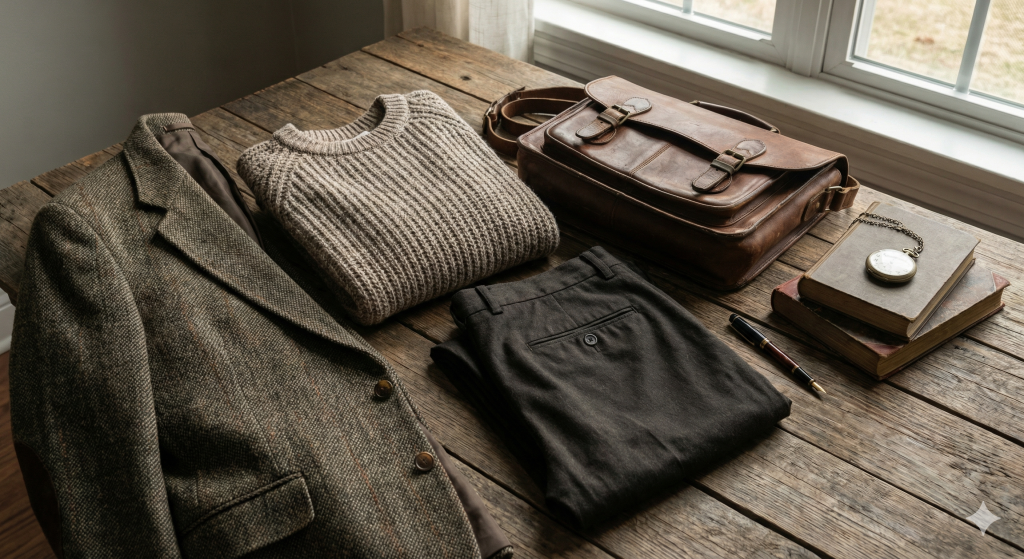
The men’s tailored clothing section of any local thrift store is the absolute goldmine for authentic outerwear. I always bypass the contemporary women’s racks entirely when sourcing these pieces. Vintage men’s jackets were constructed with structured shoulders, robust interlinings, and heavy-weight wools that modern fast fashion simply cannot replicate for under $50. When scanning the racks, I let my hands do the work first—brushing past flimsy synthetics until I feel the distinct, coarse texture of real tweed or the smooth, cold finish of worsted wool.
For blazers, you are hunting for traditional weaves: herringbone, houndstooth, and Donegal. A slightly oversized fit is perfectly acceptable and often desirable for that disheveled intellectual vibe, but pay strict attention to the shoulders. The shoulder seam should still hit relatively close to your natural joint. If the vintage padding droops past your bicep, it will look costume-like rather than curated. I always inspect the interior lining, specifically at the armholes and the back vent, for tears. A minor seam rip is a five-minute DIY fix, but a shredded satin lining means the piece is dead. Check the care label for “100% Wool” or “Harris Tweed”—finding one of the iconic orb labels for $15 is a standard thrifting victory if you are patient.
Finding tailored trousers requires a different tactical approach. The goal is a high-waisted, wide or straight-leg silhouette, preferably with sharp front pleats to add visual weight. Vintage sizing is notoriously inconsistent across decades and brands, so I strongly advise bringing a soft measuring tape with you. Measure the waist flat and double it, then check the rise. I find that anything with a rise under 11 inches will not provide that classic, high-waisted academic drape we are aiming for.
The Thrift Store Inspection Checklist:
- Fabric Composition: Stick to natural fibers. Wool, tweed, and heavy cotton blends hold their shape and drape correctly. Leave the 100% polyester blends on the hanger; they will trap sweat and carry an unnatural sheen.
- Structural Integrity: Gently pull on the buttons (especially leather-knot buttons on tweed jackets) to ensure they aren’t hanging by a single thread. Always test the zippers on trousers to confirm they track smoothly without catching.
- Moth Damage: Hold vintage wool pieces up to the harsh fluorescent store light. Tiny pinholes are clear indicators of moth damage, which is incredibly difficult to repair invisibly on flat weaves and not worth your time.
- Alteration Potential: Do not panic if the trouser hem is dragging on the floor. Hemming trousers is the cheapest and easiest alteration you can get done at a local tailor or dry cleaner, typically costing around $10 to $15. However, avoid buying pants that are too tight in the waist or hips; letting them out is often impossible due to a lack of excess seam allowance.
| Garment | Ideal Thrift Price Range | Non-Negotiable Fit Areas |
|---|---|---|
| Tweed/Wool Blazer | $8 – $25 | Shoulder width, chest closure |
| Pleated Trousers | $5 – $15 | Waistband, hip/seat fit, rise |
Selecting the Perfect Knitwear and Turtlenecks
When building a Dark Academia wardrobe on a strict budget, your knitwear is where you either master the illusion of old-money academia or fall flat into cheap, shiny fast fashion. I always tell my clients that a well-chosen knit serves as the architectural foundation for the entire aesthetic. You are looking for pieces that evoke the feeling of studying in a drafty Oxford library, which means prioritizing texture and fit over a designer label.
The undisputed champion of this look is the ribbed turtleneck. For under $50, you want to avoid anything too chunky if you plan to layer it. I routinely hunt for slim-fit, fine-gauge ribbed turtlenecks or mock necks in charcoal, espresso, or deep forest green. The mock neck is a particularly sharp alternative if a full fold-over collar feels too restrictive. It gives you that elongated, intellectual silhouette and layers seamlessly under structured tailoring without adding unnecessary, bunchy bulk to your neckline.
Beyond the base layers, cable-knit sweaters and argyle sweater vests are your secondary staples. When scanning the racks at accessible retailers or secondhand shops, I immediately check the scale and tension of the knit. A dense, thick cable pattern looks inherently more expensive than a flat, loose, or flimsy machine-knit. For cardigans, you want the classic “grandpa” silhouette—slightly oversized, with a V-neck and tortoiseshell or leather-wrapped buttons. These details instantly add a layer of vintage authenticity.
| Knitwear Staple | Ideal Fit & Structural Details | Budget Sourcing Strategy |
|---|---|---|
| The Base Turtleneck | Slim fit, fine-gauge, ribbed texture. The neck must hold its shape and not sag. | Uniqlo, Target, or basic fast-fashion basics lines. Prioritize cotton/modal blends. |
| The Sweater Vest | Slightly boxy and cropped. Argyle, houndstooth, or solid earthy tones with ribbed hems. | Thrift store men’s section. You can consistently find authentic vintage pieces here for under $10. |
| The Cable-Knit Crewneck | Relaxed fit, dropped shoulders, highly tactile and distinct raised cable patterns. | Vintage surplus stores, eBay, or end-of-season winter clearance racks. |
The real secret to making affordable knitwear look luxurious comes down to reading the fabric tag. Finding 100% merino wool or cashmere for under $50 brand new is rare, but we can easily fake the drape and weight. I rigorously avoid high-percentage acrylic blends; they have a telltale artificial sheen, generate terrible static, and will pill aggressively after one wash. Instead, search for heavy-weight cotton knits, cotton-viscose blends, or garments with at least a 20-30% wool composition. If you are willing to thrift, I highly recommend bypassing the women’s section entirely. The men’s racks are absolute goldmines for 100% lambswool sweaters that have perhaps shrunk slightly over the decades, creating a dense, slightly felted texture that perfectly captures the moody, academic silhouette.
Footwear: Oxfords, Loafers, and Vintage Boots
Footwear anchors the entire dark academia silhouette; get it wrong, and the carefully curated illusion of a brooding literature student immediately shatters. However, acquiring that heritage aesthetic doesn’t require dropping $300 on bench-made English shoemakers. I always tell my styling clients that when building a budget wardrobe, character matters far more than a luxury label. We are hunting for patina, solid structure, and classic silhouettes.
The Non-Negotiable Oxfords
Oxfords and brogues are the undeniable backbone of this look. Prioritize wingtip detailing—those small perforations originally designed for utility now perfectly evoke historic university quadrangles. Stick to rich, moody tones like oxblood, espresso, and burnished black. If you wear women’s sizes, I highly recommend calculating your men’s or youth size equivalent. Thrift stores and resale apps frequently price men’s vintage dress shoes significantly lower than women’s fashion footwear, and the leather quality is often superior for the price point.
Mastering the Loafer
Whether you prefer a classic penny slot or a tassel detail, loafers offer a slightly more relaxed academic vibe. The insider secret to making budget loafers look expensive is the sock pairing. A $20 pair of scuffed, secondhand G.H. Bass Weejuns instantly elevates when styled with ribbed wool or subtle argyle socks. When scouring Poshmark, eBay, or Depop, search for structural terms like “leather sole loafer” or “vintage trad shoe” rather than just “dark academia.” Sellers often mark up items heavily if they attach trending internet aesthetic keywords to them.
Vintage Boots: Lace-ups and Chelseas
For a grungier, romanticized “studying late in a drafty library” look, vintage boots are essential. Focus on Victorian-style lace-ups with speed hooks or sleek leather Chelsea boots. Here is a hard rule I enforce with every client: always prioritize worn, genuine leather over brand-new polyurethane (faux leather). Cheap synthetic boots will plastically peel within a season. Conversely, a $40 pair of badly scuffed vintage leather boots just needs saddle soap, leather conditioner, and a tin of wax polish to achieve a beautiful, lived-in antiquarian finish.
When navigating secondhand markets for these three staple shoes, use my personal inspection matrix to determine if a cheap find is actually a good deal:
| Shoe Condition Issue | Verdict for Budget Shoppers | Estimated DIY / Cobbler Cost |
|---|---|---|
| Surface scuffs and dull leather | Buy it. Easily fixed with polish and conditioner. | $10 (DIY polish kit) |
| Worn down heel caps (clicking sound) | Buy it. A standard, cheap fix at any local cobbler. | $15 – $25 |
| Deep cracks in the vamp (crease area) | Skip it. The leather fibers are broken and cannot be restored. | Irreparable |
| Sole completely detaching from upper | Skip it. Unless it’s a Goodyear welted shoe, the repair cost outweighs the bargain. | $60+ |
Investing five dollars in a basic horsehair brush and dedicating ten minutes a month to buffing the leather will make even your most budget-friendly thrift store footwear look impeccably maintained.
Mastering the Dark Academia Color Palette and Textures
The secret to making an affordable outfit look like it was inherited from a 1920s Oxford literature professor lies entirely in how you manipulate color and texture. We are not just wearing clothes; we are assembling a mood board of late-night study sessions and dusty library archives. If you want to elevate budget pieces without spending a fortune, you have to master this specific visual language.
The Dark Academia color palette is unapologetically moody, grounded in earthy, muted tones that mimic old parchment, oxidized ink, and damp forest floors. I always advise building a foundation strictly from espresso brown, charcoal gray, forest green, deep burgundy, and vintage navy. When shopping on a strict budget, these darker, richer shades are your best friends because they brilliantly disguise fabric imperfections and inexpensive stitching. A $15 thrifted charcoal or deep plum sweater will almost always look significantly more expensive than a brightly colored one. Avoid stark, bright whites entirely, as they read too modern and clinical. Instead, we want to look for off-whites, creams, and ivory to soften the stark contrast against our darker layers.
Color sets the mood, but texture dictates the perceived quality. You can perfectly nail the color palette, but if your fabrics are flat, shiny, and obviously synthetic, the entire aesthetic collapses into a cheap costume. Dark Academia thrives on tactile richness. Because we are working with budget-friendly staples, knowing how to fake that heritage quality through texture is essential.
- Corduroy: This is a budget-friendly lifesaver. The raised ridges (wales) catch the light and add a subtle, velvet-like dimension that flat cotton simply lacks. A thrifted corduroy trouser or blazer offers an instant, slightly worn academic feel that feels highly intentional.
- Structured and Ribbed Knits: Flat, thin acrylic sweaters shout fast fashion. When I pull knitwear for a styling session, I specifically hunt for cable knits, waffle textures, or heavy ribbing. A chunky, textured knit—even if it is a budget wool-synthetic blend—mimics the heavy, durable heritage brands we are emulating.
- Herringbone and Houndstooth Weaves: Visual texture is just as important as physical texture. Patterns woven directly into the fabric, like houndstooth, herringbone, and subtle glen plaids, create an illusion of depth and tailoring, effectively distracting the eye from the garment’s actual price tag.
My foolproof trick for elevating cheap pieces is what I call the Rule of Three Textures. Never wear an outfit that feels entirely smooth or one-dimensional. I always ensure an ensemble features at least three distinct fabric finishes to create intentional friction. Picture a smooth cotton poplin shirt, layered under a rough, fuzzy sweater vest, paired with structured corduroy trousers, and finished with a battered faux-leather satchel. This strategic layering of contrasting materials immediately upgrades an affordable look into high-end, scholarly territory.
Affordable Dark Academia Outfit Formulas for Every Season
I’ve found that the secret to sustaining a niche aesthetic without draining your bank account lies in outfit formulas—plug-and-play combinations that guarantee a cohesive silhouette regardless of the weather. We’ve already secured our affordable staples and established our moody color palette; now we execute the layering math. The goal is maximum visual weight with minimum financial strain through strategic repetition.
The Classic Autumn Campus Look
Autumn is the peak season for this aesthetic, and the foundational formula relies on mastering proportion and contrasting fits. My fail-proof autumn equation is simple: Fitted Base + High-Waisted Bottom + Oversized Outerwear.
- The Base: A lightweight, ribbed black or espresso turtleneck. You can reliably source these for under $15 at basic retail clearance racks.
- The Bottom: Pleated, wide-leg wool trousers. Roll the hem if they run slightly long to show off your footwear.
- The Outerwear: A structured, oversized tweed blazer. Sourcing this from the men’s section of a local charity shop (usually around $8-$15) is my favorite styling trick to achieve that authentic, slightly disheveled professor vibe.
Lightweight Summer Academia Layers
Translating a knit-heavy aesthetic to a humid, 90-degree day trips up most beginners. I keep the dark, muted color story strictly intact but completely overhaul the fabric composition. The summer formula focuses on breathability while retaining sharp tailoring: Collared Linen + Tailored Shorts + Vintage Accessories.
Pair a short-sleeve linen-blend button-down (always tuck it in) with high-waisted cotton pleated shorts. The budget secret here is buying out-of-season; grab linen pieces in late October when retailers slash prices by up to 70%. Anchor the lightweight fabrics with a heavy, distressed leather belt and thrifted penny loafers worn without socks. The contrast between light fabrics and heavy leather accessories grounds the outfit in the academia aesthetic, preventing it from looking like standard resort wear.
Cozy Winter Layering: Coats, Sweater Vests, and Scarves
Winter demands thermal functionality cloaked in vintage academia. This is where we stack our affordable pieces to create expensive-looking depth at the neckline. The winter formula is: Structured Collar + Knit Mid-Layer + Sweeping Wool Outerwear.
| Layering Piece | Styling Execution | Budget Sourcing Strategy |
|---|---|---|
| Base Layer | Crisp white poplin button-up (collar popped, cuffs visible). | Thrifted corporate office wear sections ($4-$7). |
| Mid-Layer | V-neck argyle or cable-knit sweater vest. | Secondhand apps for vintage grandpa knits ($15-$20). |
| Outerwear | Ankle-length, heavyweight wool overcoat. | Military surplus stores or estate sales ($30-$50). |
| Accessories | Tartan or houndstooth scarf tucked under the lapels. | Flea markets or vintage bundle bins ($2-$5). |
By relying on a sweater vest rather than a full, heavy-gauge sweater, you avoid bulky sleeves that bunch up uncomfortably inside tailored wool coats, keeping your silhouette razor-sharp even in freezing temperatures.
The Classic Autumn Campus Look
Autumn is the undisputed “Golden Hour” for dark academia. This is when the aesthetic truly breathes, drawing inspiration from the ivy-clad walls of Oxbridge and the melancholic chill of a New England October. To nail the Classic Autumn Campus Look without draining your bank account, I recommend focusing on a silhouette that balances structural rigidity with cozy textures.
My go-to blueprint for a high-impact, low-cost autumn ensemble revolves around the “Rule of Three” textures: wool (or high-quality synthetic blends), cotton poplin, and leather. Here is how I suggest you piece it together:
- The Base Layer: A crisp, white or cream button-down shirt is non-negotiable. I find that men’s section “slim fit” shirts at thrift stores often provide a better structured collar for layering under knits than contemporary fast-fashion alternatives.
- The “Academic” Mid-Layer: A sweater vest in forest green, burgundy, or charcoal. This is the ultimate budget hack; because vests use less fabric, they are significantly cheaper than full sweaters. Look for a V-neck to frame your tie or shirt collar, creating those sharp, intellectual lines.
- The Hero Piece: An oversized tweed or corduroy blazer. Since we’ve already discussed thrifting these, focus on the styling here. Roll the sleeves slightly to expose the shirt cuffs—it adds an air of “busy scholar” nonchalance that elevates the entire outfit.
- The Bottoms: High-waisted plaid trousers or a wool-blend A-line skirt. To keep costs down, stick to a neutral grey or brown pattern that pairs with multiple tops.
For the finishing touches, I always tell my clients that the “campus” feel lives in the accessories. A faux-leather satchel—which you can often find for under $20 at vintage markets—immediately signals the academic theme. If the weather turns, add a pair of mustard or burnt orange socks. It’s a subtle nod to the changing leaves and costs less than a latte, yet it shows a level of intentionality often seen in high-end editorial styling.
| Item | Budget Source | Pro Styling Tip |
|---|---|---|
| Plaid Trousers | Resale Apps (Depop/Poshmark) | Cuff the hems to show off your oxfords. |
| Sweater Vest | Old Navy / H&M Clearance | Tuck it into your waistband to define your silhouette. |
| Vintage Tie | Estate Sales / Charity Shops | Choose a silk rep stripe for an authentic “prep” vibe. |
The goal isn’t just to wear clothes; it’s to curate a mood. When you step onto campus in these layers, the muted tones and heavy fabrics should make you feel like you’re about to solve a Victorian-era mystery in the library stacks. Keep your colors desaturated—think “dried ink” and “parchment”—to maintain that authentic, somber elegance.
Lightweight Summer Academia Layers
Translating heavy tweeds and chunky knits into July heat is the biggest hurdle I see enthusiasts face, but summer academia simply requires a pivot to breathable textiles and architectural silhouettes. You do not have to abandon the scholarly vibe just because the temperature spikes. I always advise swapping worsted wools for linen, cotton poplin, and tropical weight wools—materials that maintain that essential vintage structural integrity without causing heatstroke.
The secret to achieving the layered look in 90-degree weather is mastering the “faux layer” and utilizing accessories as structural garments. Instead of suffocating under a full collared shirt and a sweater, use these temperature-regulating tricks:
- The Shoulder Drape: Tie a lightweight cotton cable-knit sweater loosely over your shoulders paired with a simple tank. It delivers the visual illusion of academic layering and traditional campus charm while keeping your torso completely ventilated.
- Suspenders as Layers: Clip vintage leather or canvas suspenders onto high-waisted, lightweight trousers. They break up the visual plane of a simple shirt, adding complexity and a distinctly historical academic feel with zero added warmth.
- Cotton Pointelle and Crochet: Swap heavy wool sweater vests for open-knit cotton vests. You can wear these directly against the skin as a standalone top, providing the texture of knitwear with the breathability of a t-shirt.
- The Unbuttoned Overshirt: An oversized, thrifted men’s linen button-down left completely open over a dark brown or black ribbed bralette or camisole serves as a flowy, dramatic outer layer that catches the breeze.
To make this practical for your budget, I have put together three specific, highly affordable summer formulas that I frequently use when styling on a strict budget. By sourcing these from secondhand racks, particularly in the men’s sleepwear and shirting aisles, you can easily build these outfits for under $30.
| Outfit Concept | Core Pieces Needed | Styling Execution |
|---|---|---|
| The Botany Field Trip | Short-sleeve linen camp shirt (cream/olive), high-waisted pleated shorts. | Roll the shirt sleeves up once. Belt the shorts with a skinny vintage leather belt. Keep the collar open to show a simple pendant. |
| The Archival Researcher | Sleeveless cotton mock-neck top (black/espresso), flowy linen midi skirt. | Tuck the fitted top tightly into the skirt to emphasize the waist. The contrast of the dark, structured top against the airy skirt anchors the look. |
| Seminar Casual | Oversized white cotton-poplin button-down, wide-leg tropical wool trousers. | French-tuck the oversized shirt. Leave the bottom three buttons undone for movement. Add structural suspenders. |
When applying our established color palettes to these lightweight pieces, you simply need to invert your standard proportions. Let parchment, taupe, and faded sage dominate your airy base layers, reserving your heavy oxbloods, deep espressos, and charcoals strictly for ground-level accents like your vintage belts, watch straps, and lightweight footwear.
Cozy Winter Layering: Coats, Sweater Vests, and Scarves
When the temperature drops, the Dark Academia aesthetic truly comes into its own. Winter isn’t just a season for us; it’s an opportunity to lean into the “brooding scholar” archetype through strategic, cost-effective layering. To master this without draining your bank account, I recommend focusing on three specific components that offer the highest visual impact for the lowest investment.
The “Statement” Wool-Blend Coat
You don’t need a 100% cashmere overcoat to look like you belong in a secret society. Look for wool-blend maxi or car coats in charcoal, espresso, or forest green. The secret to finding these at a budget price point is hunting for “vintage deadstock” on resale apps or hitting local charity shops in affluent neighborhoods.
- Budget Hack: If the coat feels a bit thin, we often suggest sizing up. This allows you to hide a hidden Uniqlo Heattech layer or a thin puffer vest underneath without ruining the silhouette.
- The Silhouette: Look for structured shoulders and notched lapels. A double-breasted cut adds an instant air of “Oxford professor” that single-breasted options sometimes lack.
The Sweater Vest: Your Secret Mid-Layer
The sweater vest is the MVP of affordable winter styling. It provides that essential pop of texture and pattern at the neck and waist without the bulk (or cost) of a full heavy-knit sweater.
| Pattern/Style | Visual Effect | Styling Tip |
|---|---|---|
| Argyle | Traditional, Preppy | Pair with a crisp white collared shirt to let the pattern pop. |
| Solid Cable-Knit | Textural, Intellectual | Tuck into corduroy trousers for a streamlined look. |
| Houndstooth | Vintage, Sharp | Works best under a solid-colored blazer or overcoat. |
Mastering the Oversized Scarf
I always tell my clients that the scarf is the “curtain” of the outfit. For the Dark Academia look, skip the flimsy infinity scarves. You need substantial length and weight. Seek out acrylic-wool blends in deep burgundy or camel—they mimic the drape of high-end wool but usually retail for under $20.
The “Academic Wrap” is the most effective way to wear this: loop the scarf once around your neck, leaving one end significantly longer than the other, and tuck the ends slightly under your coat’s lapels. This creates a vertical line that elongates the frame while framing the face in a scholarly, slightly disheveled way.
Pro Tip: Don’t overlook the “thrifted oversized cardigan” as an alternative to a coat for milder winter days. A heavy, chunky knit cardigan worn over a turtleneck and finished with a thick scarf provides that cozy, library-dwelling vibe at a fraction of the cost of structured outerwear.
Best Secret Spots to Shop for Budget-Friendly Academia Pieces
Forget the crowded racks at major thrift store chains on a Saturday afternoon. If I am hunting for authentic, high-quality academia pieces on a tight budget, my first stop is always local estate sales in established, older neighborhoods. These sales are absolute goldmines for heavy wool trousers, pristine vintage ties, and tailored tweed blazers that have been preserved in cedar closets for decades. You can routinely walk away with a garment boasting superior 1970s tailoring for under $15. I rely heavily on local estate sale directories to pinpoint houses advertising “vintage menswear” or “mid-century wardrobes.”
When curating my wardrobe through online resale platforms, I completely avoid searching the term “Dark Academia.” Typing that aesthetic into Depop or Poshmark practically guarantees you will pay a trendy markup. Instead, I search for specific heritage brands and raw materials. My search queries look like “Pendleton wool midi skirt,” “vintage Ralph Lauren corduroy,” or “Irish wool cable knit.” Currently, Vinted is my best-kept secret for this; the platform’s lack of seller fees naturally drives prices down. You can easily score structured waistcoats and genuine leather loafers for a fraction of retail if you shop by fabric and brand rather than aesthetic keywords.
Another insider strategy I use to achieve that perfectly slouchy, scholarly silhouette is exclusively shopping the men’s department. This applies to both vintage hunting and browsing clearance racks at retailers like Uniqlo or Mango. Men’s knitwear and shirting are generally constructed with thicker, more durable fabrics and avoid the cropped, trendy cuts often forced upon womenswear. A men’s small merino wool v-neck drapes impeccably over a collared shirt, offering authentic campus style while entirely bypassing the “womenswear tax.”
For the essential accessories that anchor this aesthetic, I look to international vintage sellers and highly specific digital corners. Here is my personal breakdown of where to source specific items to complete your collection:
| Sourcing Spot | Best For | Insider Tip |
|---|---|---|
| Eastern European Etsy Shops | Leather satchels, vintage mechanical watches, silk scarves | Filter your searches by location. They often hold pristine “deadstock” accessories that cost half the price of US vintage boutiques, even with international shipping factored in. |
| Vinted | Tweed blazers, affordable natural-fiber knitwear | Use highly specific material filters (e.g., 100% wool, tweed, houndstooth, cashmere blend) to bypass fast-fashion clutter and zero in on quality garments. |
| University Surplus Stores | Authentic collegiate apparel, ties, lapel pins | Many older universities have physical or online surplus stores selling overstock traditional campus gear and alumni donations for pennies on the dollar. |
| eBay (Auction Mode) | High-quality vintage Oxfords, Brogues, and Mary Janes | Search for common misspellings of heritage shoe brands or set automated alerts for newly listed vintage auctions that are scheduled to end at odd hours. |
FAQ
Can I pull off the Dark Academia look without spending a fortune on high-end brands like Ralph Lauren or Brooks Brothers?
Absolutely. The irony of Dark Academia is that while it romanticizes elite Ivy League aesthetics, the “authentic” look is rooted in the idea of a struggling, obsessed scholar—not a millionaire. I’ve found that 90% of a solid wardrobe can be sourced from buy-sell-trade apps like Depop or Poshmark and local charity shops. Look for “vintage-adjacent” brands like St. Michael or Pendleton. Focus on the fiber content (wool, cotton, linen) rather than the label; a $10 thrifted wool vest always beats a $60 polyester blazer from a fast-fashion giant.
What are the absolute “non-negotiable” items for a budget starter kit?
If you only have $100 to start, I recommend allocating your budget as follows:
- The Anchor ($40): A structured blazer in charcoal, olive, or plaid. If it’s slightly oversized, it adds to the “borrowed from the library” vibe.
- The Base ($20): Two high-neck turtlenecks or mock-necks in cream and black. These are the ultimate layering hacks.
- The Silhouette ($40): A pair of pleated, high-waisted