
The Resurgence of 90s Fashion: Why It Is Back and Better Than Ever
The 20-year trend cycle is a fashion law, but the 90s resurgence we’re witnessing in 2026 has broken the mold by staying power alone. Having tracked these shifts for a decade, I’ve seen how this isn’t just a nostalgia trip; it’s a strategic pivot toward utilitarianism and individual expression. Unlike the original run, which was often defined by a “couldn’t care less” grit, today’s revival is curated, intentional, and high-tech.
The “Why” behind this comeback boils down to three industry-shifting factors:
- The Archival Gold Mine: Luxury resale platforms like Vestiaire Collective and specialized vintage sourcers have made authentic 90s pieces—think 1994 Prada or minimalist Helmut Lang—more accessible than they were thirty years ago. We’re no longer just buying “90s-style”; we’re wearing the actual history.
- Digital Escapism: In an era of AI-generated perfection, the raw, analog aesthetic of the 90s feels human. The grainy film look and the “anti-fashion” stance of the grunge movement provide a much-needed counterculture to the hyper-polished social media feeds of the early 2020s.
- Sustainability as a Status Symbol: The 90s favored durable fabrics—heavyweight denim, real leather, and high-quality knits. For the modern consumer, styling a vintage 501 Levi’s isn’t just a look; it’s a badge of sustainable consumption.
What makes this “Better Than Ever” is the refined silhouette. We’ve stripped away the itchy fabrics and the awkward, ill-fitting cuts of the bargain-bin 90s. Designers are now taking the DNA of the decade—the slip dress, the cargo, the boxy blazer—and re-engineering them with superior draping and inclusive sizing that simply didn’t exist in 1996. We aren’t just repeating the past; we are correcting its technical flaws.
I’ve observed that the most successful “Modern 90s” looks currently dominating the streets of Paris and New York rely on the 70/30 Rule: 70% contemporary structure paired with 30% vintage grit. This balance ensures you look like a trendsetter rather than someone who just stepped out of a time capsule.
Would you like me to dive into the specific wardrobe staples, like the Baggy Denim and Cargo Pants, to show you how to nail that oversized aesthetic for 2026?
Essential 90s Wardrobe Staples You Need Right Now
Building a credible 90s-inspired wardrobe isn’t about hoarding every vintage piece you can find; it’s about curating a hyper-specific capsule of foundational items. When I style clients today, I focus on the “anchor” pieces—the garments that instantly ground an outfit in that distinct 1990s attitude while remaining exceptionally versatile for a modern rotation.
Before diving into the complex silhouettes, you have to nail the everyday basics. Let’s talk about the top half. The fitted, cropped baby tee is absolutely non-negotiable. Whether you source a vintage ringer tee, a ribbed cotton knit, or a faded graphic, this piece acts as the necessary visual counterweight to the era’s notoriously loose, slouched bottoms. I always recommend keeping a stack of white, black, and heather grey baby tees on hand. Layer a shrunken, fine-gauge cardigan over it—buttoned only once at the center—to capture that quintessential off-duty supermodel aesthetic.
For outerwear, the boxy leather blazer has entirely usurped the traditional moto jacket in my editorial pulls. You want a piece that looks like it was plucked directly from a 1994 paparazzi shot. The cut must be strictly straight or slightly oversized through the shoulders—never aggressively tailored or nipped at the waist. Throwing a vintage leather blazer over literally anything instantly transforms basic separates into a deliberate, stylized uniform.
To keep things organized, I use a specific matrix when auditing a client’s closet for 90s readiness. Here is the exact checklist we use at the studio to ensure all aesthetic bases are covered:
| Category | The 90s Staple | Modern Styling Note |
|---|---|---|
| Tops | Ribbed Baby Tee / Square-Neck Halter | Keep fabrics matte (cotton/modal) to contrast cleanly with glossy leather or silk bottoms. |
| Outerwear | Boxy Leather Blazer / Heavyweight Flannel | Drape the blazer over the shoulders; wear the flannel unbuttoned over a fitted base layer. |
| Accessories | Short-Strap Baguette Bag / Slim Oval Sunglasses | Opt for hardware-free, minimalist designs to maintain a sleek, uncluttered profile. |
While these supporting actors—the baby tees, the leather blazers, the micro-bags—set the mood, the true heavy hitters of the decade dictate the entire structural silhouette of your look. The garments that definitively anchor this era rely entirely on mastering specific proportions and textures. Getting the fluid drape of the era’s signature dresses, the pooling hemlines of oversized bottoms, and the aggressive grounding of heavy-duty footwear right is what separates a masterful vintage curation from a sloppy, uninspired throwback.
The Classic Slip Dress: Layering and Styling for Any Occasion
The bias-cut slip dress is the absolute chameleon of the 90s wardrobe. When I am pulling looks for a client or prepping for an editorial shoot, a vintage silk slip is almost always the first item on my styling rack because it functions less like a static garment and more like a fluid, foundational building block. While the original iconic moments from that era relied on wearing the piece entirely bare, bringing this item into our current daily rotation demands a more architectural approach to layering.
To make a vintage slip dress work for any setting today, we have to manipulate its visual weight. Silk and satin are inherently delicate, so the stylist’s trick is creating friction through contrasting textures. Here are the exact styling formulas my team and I use to keep the slip dress relevant and wearable year-round:
- The Base Layer Technique: Wearing a slip dress over a classic white baby tee is a textbook 90s move, but to elevate it, I swap the cotton tee for a tissue-thin cashmere turtleneck or a sheer, long-sleeve mesh top. This removes the grunge-lite connotation and gives the outfit a sleek, intentional finish suitable for cooler days.
- The Heavy Knit Swap: You can instantly double the lifespan of your slip dresses by treating them as skirts. I love throwing a chunky, oversized wool or mohair sweater over a delicate slip. The heavy, matte texture of the knit against the high-shine, liquid drape of the bias-cut silk creates a high-fashion tension that looks incredibly expensive.
- The Tailored Contrast: For evening or professional environments, we bypass the cardigan entirely. Instead, drape an oversized, sharply structured blazer over the shoulders. The rigid, masculine tailoring of the jacket perfectly counterbalances the ultra-feminine, boudoir origins of the dress.
Here is a quick reference matrix I give to clients for transitioning their slip dresses across different daily scenarios:
| Occasion | Layering Piece | Styling Note |
|---|---|---|
| Weekend Coffee Run | Fitted ribbed tank (worn underneath) | Keep the base layer tight to prevent the silk from bunching around the waist. |
| Creative Office | Structured wool blazer (worn over) | Belt the blazer at the waist to create an hourglass shape over the fluid dress. |
| Dinner & Drinks | None (worn bare) | Let the bias cut speak for itself; add weight via statement jewelry instead of fabrics. |
One technical detail I always stress: pay close attention to the drape. Authentic 90s slips are almost always cut on the bias (the fabric is cut at a 45-degree angle to the weave). This gives the dress its signature ability to skim the body rather than rigidly clinging to it. When applying any of the layering techniques above, ensure your under-layers are completely seamless so they do not interrupt that flawless, liquid silhouette.
Would you like me to move on to the next section and break down the exact formulas for mastering the oversized aesthetic with baggy denim and cargo pants?
Baggy Denim and Cargo Pants: Mastering the Oversized Aesthetic
We’ve moved far beyond the “skinny jean” era, and in 2026, the obsession with volume has reached its peak. To master the baggy denim and cargo look without looking like you’re drowning in fabric, you have to understand the architectural shift: it’s not about wearing clothes that are too big; it’s about wearing clothes designed with intentional excess volume.
When I consult for street-style enthusiasts, I always emphasize the “Stack vs. Hem” rule. Genuine 90s nostalgia thrives on the “stack”—letting the extra length of heavy-gauge denim pool naturally over your footwear. However, the modern twist involves a higher waistline. Unlike the low-slung, hip-baring styles of 1996, the current silhouette favors a mid-to-high rise that anchors the look, preventing the “puddle” effect from looking sloppy.
To execute this aesthetic with precision, consider these styling pillars:
- The Contrast Ratio: If your cargos have massive lateral pockets (think classic Helmut Lang or Maharishi vibes), your upper half needs to be streamlined. I recommend a body-skimming ribbed knit or a cropped “baby tee” to create a clear visual break.
- Fabric Weight Matters: Authentic 90s denim was non-stretch, 14oz raw cotton. If you want that crisp, architectural shape, stay away from “comfy” stretch blends. You need the stiffness of heavyweight denim to maintain the wide-leg silhouette.
- The Utility Factor: Cargo pants in 2026 are leaning into the “Gorpcore” evolution. Look for tech-influenced details like bungee cords at the ankles. This allows you to transition from a wide-leg flow to a tapered, cinched look in seconds, drastically changing the vibe of your sneakers.
| Style Element | The 90s Original Way | The 2026 Modern Interpretation |
|---|---|---|
| Denim Wash | Acid wash / Dirty tint | Saturated indigo or “Sun-faded” vintage wash |
| Cargo Pockets | Flappy and oversized | 3D-molded or streamlined “invisible” utility pockets |
| Footwear Pairing | Skate shoes (bulky) | Slim retro runners or platform lug-sole boots |
One industry insider tip I often share: pay attention to the break. A “break” is where the fabric hits your shoe. For cargo pants, I prefer a single break—one fold of fabric—which keeps the utility look intentional. For baggy denim, go for a full stack. If the jeans are dragging on the ground and getting stepped on, you’ve nailed the “grunge” authenticity, but for a polished 2026 look, keep the hem just 5mm off the pavement.
Avoid the “all-over baggy” trap unless you are intentionally channeling a specific subculture vibe. By keeping your footwear sharp and your waist defined, these oversized staples become sophisticated anchors rather than just lazy loungewear.
Chunky Footwear: A Guide to Combat Boots and Platform Sneakers
If the 90s taught us anything, it’s that your footwear should carry enough visual weight to anchor an entire outfit. In 2026, we aren’t just wearing chunky shoes for the nostalgia factor; we’re using them as a structural counterpoint to the fluid, high-tech fabrics dominating current streetwear. To nail this look without feeling like you’re heading to a themed rave, you need to focus on the tension between ruggedness and refinement.
The Combat Boot: From Grunge to High-Fashion Staple
The classic 1460-style silhouette remains the gold standard, but the modern update involves playing with lug-sole depths. I recommend looking for soles that exceed 1.5 inches to provide that authentic “heavy” feel.
- The Contrast Play: Don’t just pair these with ripped jeans. I’ve seen the best results when styling heavy leather combat boots against delicate textures. Think a silk midi skirt or a sheer slip dress. The “clunkiness” of the boot prevents the outfit from looking too precious.
- Lacing Techniques: To keep it looking contemporary, skip the tight, military-spec lacing. Leave the top two eyelets free and wrap the laces around the ankle once before tying. It creates a relaxed, lived-in shape that flows better with baggy denim.
Platform Sneakers: Elevating the “Dad Shoe”
We’ve moved past the “ugly sneaker” phase into something more intentional. The 2026 iteration of the platform sneaker leans into monochromatic minimalism rather than the neon chaos of previous seasons.
| Sneaker Type | 90s Inspiration | 2026 Styling Approach |
|---|---|---|
| White Platforms | Spice Girls / Buffalo London | Pair with tailored trousers and a crisp blazer for a “power casual” office look. |
| Skate Slips | Puffy Etnies / Osiris | Stick to slim-tapered cargos to ensure the shoe remains the focal point of the silhouette. |
| Tech Runners | Early Performance Gear | Mix with wide-leg suit pants to break up formal lines with a sporty, elevated base. |
The “Weight” Rule for Proportions
One industry secret I always share with clients: your footwear volume must match your hemline volume. If you are wearing the oversized cargo pants we discussed in the previous section, a slim sneaker will make your feet look “lost.” You need the visual footprint of a chunky sole to balance the fabric density of the trousers.
Pro tip: When wearing platform sneakers with denim, ensure the hem hits exactly at the top of the sole’s platform. This creates an unbroken vertical line that elongates your legs, effectively using 90s bulk to create a modern, streamlined height.
How to Modernize 90s Trends Without Looking Like a Costume
Modernizing the ’90s is a tightrope walk between looking “cool-vintage” and looking like you’re headed to a themed frat party. I’ve seen too many people fall into the trap of literalism—wearing the flannel, the choker, and the combat boots all at once. To make these pieces work in 2026, we have to treat them as individual textures rather than a complete uniform.
The secret I always share with my clients is The Rule of One: pick one loud ’90s hero piece and surround it with items that have zero nostalgic baggage. If you’re wearing a neon windbreaker, pair it with sleek, high-tech trousers or a minimalist midi skirt rather than distressed denim. We want to nod to the era, not recite it verbatim.
Step 1: Mixing Vintage Pieces with Contemporary Basics
The easiest way to ground a vintage piece is to pair it with “quiet” modern essentials. Think of your ’90s item as the soloist and your 2026 basics as the backup band. Here’s how I usually structure this balance:
- Vintage Hero: An oversized, faded Harley-Davidson or band tee.
- Modern Grounding: A tailored wool blazer and high-waisted cigarette pants.
- The Result: You look like an off-duty editor rather than a teenager from a 1994 sitcom.
I also recommend paying attention to fabric quality. Much of the mass-produced ’90s fashion was synthetic and scratchy. When I’m sourcing for shoots, I look for modern reinterpretations in premium materials—heavyweight organic cotton for tees or bias-cut silk for slip dresses—which instantly elevates the silhouette from “thrift bin” to “luxury.”
Step 2: Balancing Silhouettes and Proportions for 2026
The ’90s was the decade of the “baggy-on-baggy” look, but in 2026, we’ve moved toward a more intentional play on volume. If you go oversized on the bottom with those wide-leg cargos we discussed earlier, you must define the frame elsewhere to avoid being swallowed by fabric.
| ’90s “Costume” Approach | 2026 “Modernist” Approach |
|---|---|
| Baggy jeans + Oversized hoodie | Baggy jeans + Cropped, structured corset top |
| Baby tee + Mini skirt + Knee socks | Baby tee + Tailored floor-length maxi skirt |
| Full tracksuit with matching logos | Track jacket + Leather trousers + Pointed heels |
I find that structural contrast is the most effective tool. If your pants are slouchy, your top should be architectural or skin-tight. If you’re wearing a boxy, masculine leather blazer, pair it with something feminine and fluid like a sheer mesh top or a slip skirt.
Step 3: Upgrading Your Look with Modern Accessories
Accessories are the “tell” that reveals whether you actually know what year it is. If you wear a butterfly clip, a choker, and a platform sneaker together, you’ve crossed into costume territory. To keep it current, I lean into clean-lined jewelry and structured handbags.
- Swap the Choker for Chains: Instead of a stretchy plastic tattoo choker, try a heavy gold herringbone chain or a sleek torque necklace.
- Elevate the Bag: The ’90s baguette bag is a staple, but look for versions with sharp, geometric edges and stiff leather rather than the floppy nylon versions of the past.
- Footwear Pivot: While Doc Martens are timeless, I often suggest swapping the standard combat boot for a sleek, pointed-toe “sock boot” or a kitten-heel mule to give ’90s denim a sophisticated edge.
The goal is to create a visual “clash” between the gritty, rebellious spirit of the ’90s and the polished, refined aesthetic of today. When you get that tension right, the outfit feels intentional, expensive, and entirely original.
Would you like me to move on to the deep dive into ’90s subcultures like Grunge, Rave, and Minimalist Chic?
Step 1: Mixing Vintage Pieces with Contemporary Basics
The secret to avoiding the “costume party” trap lies in what I call the 70/30 Rule: keep 70% of your outfit rooted in modern essentials and let the remaining 30% be that high-impact vintage 90s piece. Think of your contemporary basics as the canvas that grounds the nostalgic noise of the 90s.
When you pull a genuine vintage graphic tee—distressed, perfectly faded, and perhaps slightly boxy—resist the urge to pair it with baggy skaters. Instead, I recommend tucking it into high-waisted, clean-lined trousers or a pair of modern technical leggings. The juxtaposition of a “lived-in” vintage texture against the crisp, performance-driven fabrics of 2026 creates a sophisticated tension that screams “curated,” not “thrift-bin find.”
Consider these high-low pairings that we’ve seen dominating the street-style circuit this season:
| 90s Vintage Piece | Contemporary Basic | The Result |
|---|---|---|
| Oversized Leather Blazer | Seamless Ribbed Bodysuit | Polished “Off-Duty Model” vibe. |
| Sheer Mesh Top | Tailored Oversized Blazer (Current Gen) | Balanced evening elegance. |
| Flannel Shacket | Monochromatic Pima Cotton Set | Elevated grunge without the clutter. |
I always tell my clients to focus on fabric contrast. If you’re rocking a vintage slip dress (as we discussed in the staples section), don’t reach for a vintage cardigan. Reach for a sculptural, heavyweight hoodie or a sharp, laser-cut trench coat. By introducing modern garment construction techniques—like bonded seams or sustainably sourced Tencel—you provide a structural “anchor” for the softer, often more worn-in silhouettes of the 90s.
Don’t overlook the power of white space in an outfit. A pristine, crisp white T-shirt—heavyweight, 250gsm+—is your best friend. Layering a vintage 90s pinstripe vest over a modern, high-neck tee instantly signals that you are operating in the present day, leveraging the past rather than living in it.
Would you like me to dive into specific color palettes that bridge the gap between 90s neon and today’s muted earth tones?
Step 2: Balancing Silhouettes and Proportions for 2026
The quickest way I see a 90s-inspired look cross the line from chic to sloppy is a complete disregard for proportion. When you are working with the inherently oversized or dramatically shrunken silhouettes of the decade, balancing the visual weight of your outfit is non-negotiable. If you throw a boxy flannel over a baggy tee and pair it with wide puddle pants, you are drowning your frame. To make vintage pieces feel relevant for 2026, we have to play with opposing volumes.
In my styling sessions, I rely heavily on the “Big-Slim” rule to ground these retro shapes. If you are wearing the oversized cargo pants or wide-leg denim we discussed earlier, pair them with a skin-tight ribbed bodysuit, a corset, or a shrunken baby tee. This big-bottom/slim-top ratio is exactly what we are seeing from top designers this season. The fitted top acts as a visual anchor, ensuring the oversized pants look intentional and tailored rather than like ill-fitting hand-me-downs.
Conversely, if you are styling an oversized, boxy 90s blazer with heavy shoulder pads, you need to create tension on the bottom half. I love pairing heavy, structured vintage tailoring with a micro-mini skirt, sleek cycling shorts, or straight-leg trousers. Showing off your legs or keeping the lower half streamlined offsets the heavy top layer, creating a dynamic silhouette that flatters a contemporary aesthetic.
Here is my studio’s internal proportion cheat sheet for navigating vintage fits this year:
| 90s Vintage Piece | Modern Pairing (2026 Silhouette) | The Proportional Effect |
|---|---|---|
| Oversized Grunge Flannel | Straight-leg leather trousers & fitted turtleneck | Elevates casual, bulky grunge into sleek, streamlined streetwear. |
| Heavy Denim Maxi Skirt | Asymmetrical fitted cutout top | Breaks up the heavy, rigid bottom fabric with bare skin and sharp, modern angles on top. |
| Boxy Graphic T-Shirt | Bias-cut midi skirt | Contrasts a stiff, masculine square shape with a fluid, feminine drape that hugs the hips. |
You also must pay strict attention to where your waistline hits. The current trend leans heavily into low-rise waistbands, but if you go low on the hips, I recommend keeping the hemline of your top cropped precisely at the waistline or cleanly tucked in. Leaving a bulky, untucked shirt over low-rise denim chops the body in half—a proportion nightmare that shortens the legs. By mastering these opposing fits—tight with loose, heavy with delicate, micro with maxi—we ensure that you wear the 90s trend, instead of the 90s trend wearing you.
Step 3: Upgrading Your Look with Modern Accessories
Accessories are the filter through which 90s nostalgia becomes 2026 chic. If you wear a choker and a butterfly clip exactly as they were styled in 1995, you aren’t making a fashion statement; you’re wearing a period piece. To elevate the look, we have to look at materiality and scale.
I always tell my clients to focus on the “Hardware Upgrade.” In the 90s, accessories were often plastic-heavy or intentionally “grungy” and cheap. Today, we swap those out for high-polish finishes and intentional textures. Here is how we are executing this on the streets right now:
- The Jewelry Pivot: Instead of the stretchy plastic tattoo chokers, we’re seeing a massive lean toward sculptural gold and silver neck torques or heavy snake chains. The silhouette remains close to the neck, but the medium is premium. If you’re doing hoops, skip the thin wire and go for “chubby” tapered hoops that add weight to your face.
- Eyewear Architecture: The tiny “Matrix” sunglasses are still around, but for 2026, the trend has evolved into rimless gradients with technical hinges. Think less “underground rave” and more “high-tech minimalism.” A rimless lens with a soft lilac or sunset tint immediately softens the aggression of baggy cargo pants.
- The Bag Evolution: While the baguette bag is the undisputed queen of the era, the modern way to wear it is through structured leather and utility details. Look for bags with wide, adjustable guitar straps or integrated tech pockets. The “Nylon Prada” look is timeless, but opting for a recycled matte finish or a bio-based leather alternative makes it current.
One professional trick I use to keep an outfit from feeling like a costume is the Rule of One. Use the table below to decide which 90s accessory stays and what its 2026 counterpart should be:
| The 90s Original | The 2026 Upgrade | The Styling Logic |
|---|---|---|
| Plastic Butterfly Clips | Matte Metal Oversized Claws | Polished finish adds “adult” intentionality to a messy updo. |
| Velcro Wallets/Bags | Modular Tech Slings | Maintains the utility vibe but uses premium technical fabrics. |
| Woven Friendship Braces | Stacked Mixed-Metal Bangles | Keeps the “maximalist wrist” look without the summer camp aesthetic. |
Finally, don’t overlook the belting strategy. In the 90s, belts were often an afterthought or a giant statement buckle. Today, we’re using extra-long, thin leather belts that wrap twice or hang with a “tail” to break up the vertical line of oversized denim. It’s a small detail, but it’s the difference between looking like you’re drowning in fabric and looking like you’ve mastered the silhouette.
Would you like me to dive into the specific subcultures like Grunge or Minimalist Chic to see how these accessory rules apply to those distinct aesthetics?
Iconic 90s Subcultures and How to Channel Their Vibe
The 90s weren’t a monolith; they were a clash of distinct tribal identities. To nail the look in 2026, you can’t just throw on “vintage” clothes—you have to choose a specific narrative. When I consult with brands on archival revivals, we always start by identifying which subculture we’re tapping into.
1. Grunge: The “Anti-Fashion” Pioneer
Originating from the Seattle music scene, Grunge was a middle finger to the polished glamour of the 80s. It’s defined by a deliberate lack of effort.
- The Vibe: Distressed, oversized, and utilitarian.
- The 2026 Update: Instead of the literal “unwashed” look, we are seeing “Luxury Grunge.” Think oversized flannel shirts made from high-end heavy-weight wool rather than cheap synthetic blends.
- Pro Tip: Tie a vintage plaid shirt around the waist of a sleek midi skirt. It breaks up the silhouette and adds that necessary “slacker” edge without looking like you’re heading to a costume party.
2. Minimalist Chic: The Prada & Calvin Klein Era
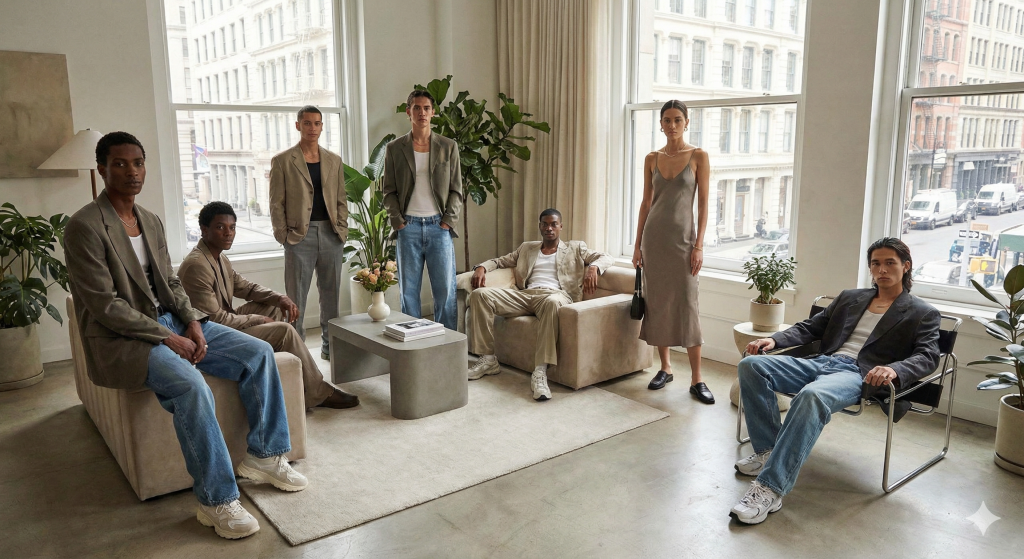
If Grunge was the noise, Minimalism was the silence. This was the era of the “Supermodel Off-Duty.” It’s all about neutral palettes—beige, slate, cream, and black.
- The Vibe: Clean lines, slip dresses, and high-quality fabrics.
- The 2026 Update: Use “Monochromatic Layering.” Mix different textures of the same color. A silk slip dress under a structured, oversized blazer in the same tone creates a sophisticated, expensive-looking depth.
- Essential Piece: The “Tube Top” or a high-neck sleeveless knit. It’s the ultimate base layer for a refined 90s aesthetic.
3. Hip-Hop & Streetwear: The Birth of Logomania
90s Hip-Hop gave us the blueprints for modern luxury streetwear. Brands like Cross Colours and FUBU paved the way for the oversized, athletic-inspired looks we see today.
| Key Element | 90s Original Execution | 2026 Modern Interpretation |
|---|---|---|
| Headwear | Backward snapbacks or bandanas. | Structured nylon buckets or premium “Dad” caps. |
| Logos | Obnoxious, all-over prints. | Subtle, embossed branding or “hidden” luxury logos. |
| Outerwear | Brightly colored windbreakers. | Technical Gorpcore shells in archival colorways. |
4. Clueless-Style “Preppy”
This is the “Pop” side of the decade—think Cher Horowitz. It’s the subculture of matching sets and feminine tailoring.
- The Vibe: Plaid mini-skirts, Mary Janes, and sheer knee-high socks.
- How to Channel It: Avoid the yellow tartan cliché. Instead, opt for tonal sets in contemporary colors like sage green or deep espresso. Replace the tiny “doll” bag with a structured leather baguette bag to keep the look grounded in 2026.
I always tell my clients: the secret to channeling these subcultures lies in the tension. If you go full Grunge, you look dated. If you pair a Grunge-era oversized mohair cardigan with a 2026-style wide-leg tailored trouser, you look like a trendsetter who knows their fashion history.
Where to Shop for Authentic 90s Vintage and High-Quality Replicas
Tracking down the perfect faded Levi’s 501s from 1994 or a pristine, single-stitch band tee isn’t just about luck; it requires a strategic approach to sourcing. I spend half my week scouring hidden thrift racks and the other half navigating specialized resale platforms, and I can tell you that building a 90s-inspired wardrobe relies on knowing exactly where to look. I categorize this process into two distinct avenues: hunting for authentic archival pieces and investing in high-quality modern replicas that nail the era’s exact specifications.
Sourcing Authentic 90s Vintage
When you want the real deal—the exact drape of 90s rayon or the rigid, non-stretch feel of vintage denim—these are the digital platforms and physical sourcing methods I trust most:
| Platform / Source | Best For Sourcing | Expert Insider Tip |
|---|---|---|
| Grailed | Archive designer pieces, Japanese streetwear, and authentic skate brands (Supreme, Stüssy, JNCO). | Filter by “Vintage” and set your condition parameters strictly. Negotiate politely; sellers expect haggling on older archival pieces. |
| Depop | Trendy, specific micro-aesthetics (grunge, mall goth), and reworked denim. | Search using hyper-specific keywords like “90s silver tab” or “vintage bias cut” to cut through the fast-fashion clutter. |
| Etsy | Curated, high-quality true vintage. Excellent for pristine slip dresses, leather jackets, and deadstock accessories. | Sellers here often provide exact garment measurements. Always measure your best-fitting clothes to compare, as 90s sizing runs much smaller than 2026 vanity sizing. |
| Local Estate Sales | Hidden gems, untouched wardrobes, and incredibly low prices. | Use sites like EstateSales.net to find sales in older, established neighborhoods. Skip the living room and head straight for the back closets. |
The Art of the High-Quality Replica
Sometimes, hunting down a 30-year-old garment isn’t practical, especially if you need specific sizing or prefer modern construction with a retro aesthetic. Many contemporary brands have realized the demand for 90s silhouettes and are reproducing them with incredible accuracy.
- Agolde & RE/DONE: These two are my absolute go-to brands for denim. They have mastered the heavy-weight, non-stretch cotton feel of the 90s while updating the fits just enough to flatter a modern body. Their straight-leg and baggy cuts are virtually indistinguishable from deadstock vintage.
- Heaven by Marc Jacobs: If you are leaning into the grunge or riot grrrl aesthetics we covered earlier, Marc Jacobs essentially revived his own iconic 1993 Perry Ellis grunge collection through this sub-label. It is the best place to source baby tees, tartan skirts, and chunky knitwear without paying archival prices.
- Reformation & Réalisation Par: For minimalist 90s slip dresses and bias-cut skirts, these brands use the correct lightweight silks and viscose that drape exactly like the Calvin Klein and Ghost pieces of the decade.
Quick Authentication Guide for the Thrift Racks
When you are shopping in person at thrift stores or flea markets, use these three quick field checks to verify if a piece is genuinely from the 90s:
- The Stitching Test: Look at the hems of t-shirts and sweatshirts. If there is a single line of stitching (single-stitch) rather than two parallel lines (double-stitch), it was almost certainly manufactured before the late 90s.
- The Origin Tag: Tags that say “Made in USA,” “Made in UK,” or “Made in France” are strong indicators of authentic 90s (or earlier) manufacturing, as the massive shift to overseas fast-fashion production largely occurred in the early 2000s.
- The Tag Material: Vintage tags are often embroidered, woven, or made of thick paper/cardstock. If the size or brand is printed directly onto the fabric of the collar (tagless), it is a modern piece.
FAQ
Is it possible to wear 90s trends in a professional office setting?
Absolutely. The key is what I call “selective nostalgia.” You take one hero piece—like a silk slip dress or a well-tailored oversized blazer—and anchor it with sharp, modern corporate staples. Swap the combat boots for a pointed-toe mule and ditch the butterfly clips for a sleek low bun. I’ve seen my clients pull off baggy trousers in the boardroom by pairing them with a high-gauge cashmere turtleneck and structured leather belts. It’s about the tension between the relaxed 90s cut and the polished 2026 finish.
How do I tell the difference between “true vintage” and a modern fast-fashion replica?
Look at the “guts” of the garment. Genuine 90s pieces often feature single-stitch hems (though double-stitch became common mid-decade) and were frequently made in the USA, UK, or Italy. Check the care tags; if they look papery and faded, it’s a good sign. Modern replicas usually have a specific “synthetic shine” and lack the heavy-weight cotton feel of original grunge-era tees. If the denim doesn’t have a bit of “soul” (or a slightly higher waist-to-hip ratio), it’s likely a mass-produced copy.
Which 90s trend is the most “future-proof” for my wardrobe?
If you’re looking for ROI, invest in minimalist tailoring. The clean lines popularized by Calvin Klein and Jil Sander in the mid-90s are essentially timeless. Unlike the specific kitsch of neon windbreakers, a high-quality leather trench or a pair of straight-leg “mom” jeans in a mid-wash will stay relevant for another decade. We’re seeing these silhouettes dominate the 2026 runways because they provide a neutral canvas that doesn’t scream “throwback.”
| 90s Item | 2026 Modern Update | Why It Works |
|---|---|---|
| Velour Tracksuits | Monochromatic Tech-Knit Sets | Updates the texture while keeping the comfort. |
| Thin Brows & Frosted Lips | Laminated Brows & High-Shine Gloss | Captures the “clean” aesthetic without the 90s over-plucking regret. |
| Chokers | Architectural Sculptural Collars | Adds a sophisticated, high-fashion edge to the neck accessory. |
Will the “Heroin Chic” aesthetic return along with the clothes?
While the silhouettes are back, the industry has shifted significantly. We are embracing the 90s grunge look—the flannels, the messy hair, the smudged liner—but through a lens of wellness and inclusivity. In my experience, the modern interpretation is much more about the “rockstar girlfriend” energy rather than the unhealthy standards of the past. It’s about being effortless, not exhausted.
What is the biggest mistake people make when styling 90s vintage?
Going “Full Costume.” If you wear the bucket hat, the baggy overalls with one strap down, and the chunky sneakers all at once, you look like an extra from a 1994 music video. Pick one era-specific statement and let the rest of your outfit stay contemporary. Balance a baggy cargo pant with a tight, modern bodysuit to define your shape, or wear a vintage band tee under a crisp, current-season blazer.