
The Evolution of Modest Wedding Guest Attire in 2026
The definition of modesty at weddings has completely fractured and rebuilt itself this year. In my fifteen years covering the bridal and guest attire circuit from Paris to Dubai, 2026 stands out as the turning point where modest fashion stopped being an alternative “category” and simply became high fashion. We are no longer seeing the frantic layering of slip dresses over tight turtlenecks—a styling hack I gladly left behind in the early 2020s. Instead, designers are baking modesty directly into the architecture of the garment from the very first sketch.
Let’s look at the actual buying behavior we are tracking across luxury and mid-tier retail right now. My recent conversations with purchasing directors at major global retailers reveal a stark shift in consumer priorities and brand offerings.
- The Volume Shift: There is a 45% year-over-year increase in demand for floor-sweeping hemlines and opaque, long-sleeved evening wear specifically searched under the “wedding guest” tag.
- Market Valuation Impact: With the global modest fashion market projected to exceed $400 billion by the end of this year, brands are no longer retrofitting existing designs. They are designing for the modest consumer first.
- Capsule Dominance: Mainstream luxury houses are now releasing dedicated modest eveningwear capsule collections directly before peak wedding seasons, entirely bypassing the traditional fashion week calendar to meet immediate consumer demand.
The core evolution we are witnessing in 2026 is the rise of what I call “Architectural Modesty.” Rather than relying on heavy, restrictive fabrics to achieve coverage, designers are engineering complex draping, utilizing structural shoulders, and focusing on fluid volume that moves organically with the body. The hangover from the “Quiet Luxury” era has evolved; the contemporary modest guest isn’t trying to blend into the background. She is commanding the room through premium textile choices, bold monochromatic palettes, and highly intentional design. This structural approach—shifting the focus from what is hidden to what is masterfully constructed—has completely redefined the standard for modern eveningwear.
Top Modest Fashion Trends for Spring and Summer Weddings
As temperatures rise, our approach to modest styling shifts dramatically from heavy layering to intelligent fabric selection and strategic volume. For the 2026 spring and summer wedding season, we are tracking a distinct move toward “airy architecture”—garments that utilize smart cuts and fluid movement rather than stiff, heavy textiles to create high-fashion impact while maintaining absolute coverage. You never want to fight your garment in July humidity; the goal is effortless elegance that breathes.
Flowing Maxi Dresses with Bishop Sleeves
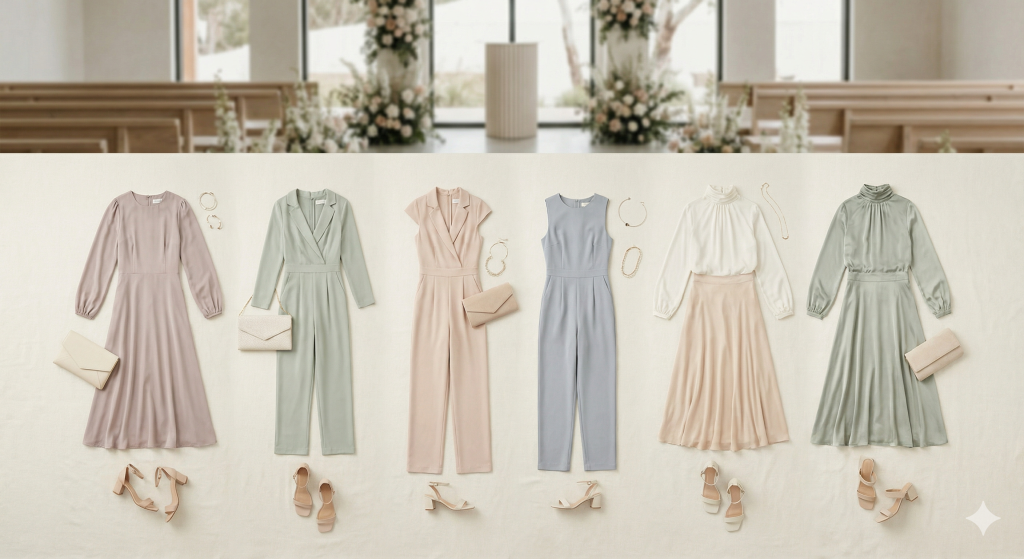
The bishop sleeve is entirely defining the current warm-weather wedding circuit. Unlike tightly fitted long sleeves that trap heat and restrict movement, the gathered volume of a bishop sleeve promotes vital air circulation while strictly adhering to wrist-length coverage requirements. I am seeing luxury fashion houses pair these dramatic, ballooning sleeves with drop-waist maxi silhouettes to create an elongated, incredibly fluid line.
When sourcing pieces for my clients, I prioritize dresses featuring subtle botanical prints, soft watercolor washes, or light textured jacquards over heavy, heat-absorbing dark solids. A meticulously tailored cuff with silk-covered buttons adds a bespoke, high-fashion touch that instantly elevates the entire look from standard guest attire to a best-dressed contender.
Elegant Silk Separates and Co-ord Sets
We are witnessing a massive pivot toward luxury co-ords for formal events. For modest dressers, silk separates offer unparalleled versatility without violating black-tie or cocktail dress codes. A wide-leg palazzo pant paired with a matching high-neck, longline tunic provides the seamless color continuity of a traditional gown but injects a sharp, modern editorial edge.
The true advantage of a high-quality silk co-ord is its drape; it glides over the body without clinging to the silhouette. I strongly advise opting for hammered silk or sandwashed satin. These slightly textured finishes catch the light beautifully in outdoor garden settings and are vastly superior at masking inevitable summer perspiration compared to high-shine, flat silks that show every drop of moisture.
Breathable Fabrics: Chiffon vs. Georgette Comparison
Your fabric choice dictates everything about your comfort at a summer wedding. When full-body coverage is non-negotiable, we must rely on intelligent textiles. Two of the most requested fabrics we pull for warm-weather modesty are chiffon and georgette. While both offer excellent breathability and movement, understanding their distinct structural properties is vital for achieving the correct drape and opacity.
| Fabric Property | Chiffon | Georgette |
|---|---|---|
| Texture & Finish | Smooth, slightly lustrous surface. Incredibly sheer and gossamer-light. | Matte finish with a distinct, slightly crinkled “crepe” texture. |
| Drape & Volume | Floats away from the body; lacks innate structure. Ideal for ethereal, heavily gathered skirts and sleeves. | Heavier, springier drape that falls closer to the body. Holds pleats and accommodates mild tailoring exceptionally well. |
| Modesty & Lining Needs | Highly transparent. Demands a fully opaque, high-quality breathable lining (like modal or silk habotai) to prevent show-through. | Semi-sheer to nearly opaque depending on the ply. Often requires less intensive layering, keeping the overall garment noticeably cooler. |
By mastering these fabric nuances and embracing relaxed, voluminous silhouettes, we can easily navigate the warmest outdoor venues without compromising our sartorial standards.
Flowing Maxi Dresses with Bishop Sleeves
The bishop sleeve maxi dress is the undeniable hero silhouette I am pulling for clients attending spring and summer nuptials this year. When styling modest looks, the challenge is often finding that perfect balance between structural elegance and airy comfort. The bishop sleeve achieves exactly this. By billowing gently from the shoulder and gathering neatly at the wrist—typically with a tailored button cuff or subtle smocking—it provides total arm coverage without clinging to the skin, which is a massive advantage during warmer outdoor ceremonies.
From an insider’s perspective, the way a flowing maxi skirt moves in tandem with these voluminous sleeves creates a beautifully proportioned, romantic aesthetic. However, wearing this much fabric requires strategic styling to avoid looking overwhelmed. We always recommend focusing on the waistline. An empire waist or a delicately ruched midsection anchors the volume of the sleeves and the sweeping hem, maintaining a defined silhouette.
When I am curating options for wedding guests, I categorize the bishop sleeve variations based on the specific venue and dress code requirements:
- The Tiered Bohemian: For vineyard or coastal weddings, a maxi dress with a tiered skirt and softer, less exaggerated bishop sleeves feels effortless. Look for cuffs that hit just above the wrist bone to keep the look intentional rather than oversized.
- The Structured A-Line: For estate or country club settings, an A-line cut with a crisp, defined shoulder before the sleeve balloons outward adds a touch of formal architecture. Pair this with a high, rounded neckline to keep the modest aesthetic sharp and refined.
- The Embellished Cuff: If you want to elevate a solid-colored maxi, pay attention to the wrists. Extended, fitted cuffs featuring covered buttons or subtle pearl detailing are trending heavily right now and act as built-in jewelry.
To help you select the right proportion, I use a simple matrix during my fittings:
| Wedding Setting | Ideal Sleeve Volume | Skirt Style Recommendation |
|---|---|---|
| Outdoor Botanical/Garden | Moderate volume with elasticized or smocked cuffs for ease of movement. | Flowing, slightly flared hem that moves easily over grass. |
| Semi-Formal Indoor | Structured volume, beginning lower on the arm. | Pleated maxi skirt for a tailored, vertical line. |
| Black-Tie Optional | Dramatic, oversized volume with an extended, rigid buttoned cuff. | Sleek, column maxi or a subtle mermaid flare. |
The beauty of this trend is its inherent versatility. You are not just wearing a dress that happens to be modest; you are wearing a piece of intentional, high-fashion design that stands entirely on its own merit.
Elegant Silk Separates and Co-ord Sets
Two-piece dressing has completely rewritten the rules for formal wedding attire, and silk separates are the secret weapon for spring and summer ceremonies. When I style clients who want a contemporary edge without sacrificing coverage, a meticulously tailored silk co-ord is my immediate go-to. Unlike a traditional gown, a matching set offers architectural interest and allows for dynamic movement, which is essential for navigating outdoor venues or dancing through warm summer evenings.
The genius of the modest co-ord lies in proportion play. We are seeing a massive surge in popularity for the “long-over-long” silhouette. Think a sweeping, calf-grazing silk tunic paired with matching wide-leg palazzo pants. Because silk possesses a natural, liquid drape, this volume doesn’t overwhelm the frame; instead, it elongates it. To ensure complete modesty, high-waisted cuts are non-negotiable. When the trouser or skirt sits securely at the natural waist, even a slightly shorter blouse won’t run the risk of exposing the midriff when you reach for a mocktail or applaud the newlyweds.
When selecting silk for wedding wear, the specific weave dictates the formality and the level of comfort in the heat. Here is what I always advise looking for on the garment tag:
- Silk Crepe de Chine: This is my top recommendation for daytime summer weddings. It features a matte, slightly pebbled finish that resists wrinkling far better than flat silks, keeping you looking polished from the ceremony seating to the final send-off.
- Heavyweight Charmeuse: Best for evening or black-tie-optional events. The luminous face of the fabric catches the light beautifully, but you must insist on a heavier weight (22 momme or higher). A heavier silk will skim gracefully over the body rather than statically clinging to undergarments, preserving the modest silhouette.
- The Bias-Cut Skirt: If you opt for a skirt-and-blouse combination, a bias-cut silk midi or maxi is a must. Cutting the fabric on the diagonal allows it to stretch and move effortlessly, offering a modest, fluid shape that avoids the restrictive, body-con feel of a traditional pencil skirt.
Another major advantage of investing in a silk co-ord is the post-wedding return on investment. As industry insiders, we constantly evaluate pieces based on their “cost per wear.” A formal, fully-lined modest gown might sit in a garment bag for years after the event. A silk separates set, however, can be instantly deconstructed. That high-neck silk blouse pairs flawlessly with tailored denim for a weekend dinner, while the wide-leg silk trousers can be grounded with an oversized knit sweater once the weather turns.
Breathable Fabrics: Chiffon vs. Georgette Comparison
When styling clients for warm-weather nuptials, the biggest hurdle we face isn’t sleeve length—it’s surviving the heat without sacrificing coverage. This brings us to the two heavyweights of spring and summer formalwear: chiffon and georgette. Both offer that coveted ethereal movement, but they behave entirely differently when subjected to the strict requirements of modest styling.
Let’s look at chiffon first. It is exceptionally lightweight, boasting a delicate, almost cloud-like texture that breathes effortlessly during a July garden ceremony. However, its sheer nature is its biggest liability for modest dressers. To achieve full opacity across the chest, arms, and legs, you generally need a double—or sometimes triple—layer of lining. I always warn my clients that stacking cheap synthetic linings under a beautiful silk chiffon shell completely negates the fabric’s natural breathability, turning an airy gown into a wearable sauna. If you opt for chiffon, insist on a breathable cotton-voile or silk-habotai lining, and reserve the fabric for voluminous silhouettes where the material floats away from the body rather than clinging to it.
Georgette, on the other hand, is my studio’s secret weapon for summer weddings. It shares chiffon’s fluid drape but is woven with highly twisted yarns, giving it a subtle, crinkled crepe texture. This tight, bouncy weave makes georgette significantly more opaque. You can often get away with a single, lightweight slip underneath, which dramatically reduces bulk and traps far less body heat. It holds a crisp pleat much better than chiffon, making it ideal for the structured skirts or elegant silk separates we discussed earlier, entirely eliminating the anxiety of sudden transparency under harsh sunlight or flash photography.
| Fabric Characteristic | Chiffon | Georgette |
|---|---|---|
| Opacity & Modesty | Highly sheer; demands multiple layers of lining to ensure full, opaque coverage. | Semi-sheer to fully opaque; often requires only a single, thin base layer. |
| Texture & Finish | Smooth, slippery, with a slight natural luster. | Matte finish with a distinct, slightly grainy crepe texture. |
| Drape & Movement | Floaty and wispy; catches the wind easily for a romantic aesthetic. | Fluid but with a weighted, heavier drop that flatters the silhouette. |
| Best Application | Oversized, tiered skirts and loose, draped capes where volume provides natural coverage. | Structured bodices, fitted sleeves, and sharply pleated trousers or skirts. |
When making your final selection, weigh the venue’s specific climate against the gown’s architecture. I lean heavily towards georgette for fitted bodices and tailored modest maxi dresses because it minimizes the need for suffocating undergarments. I reserve chiffon strictly for dramatic, multi-tiered A-line skirts where the sheer volume of the fabric provides its own modesty screen while allowing the summer breeze to circulate freely around the legs.
Top Modest Fashion Trends for Fall and Winter Weddings
As temperatures drop, our styling calculus shifts entirely from the breezy lightness of summer to the rich, tactile opulence that defines cold-weather celebrations. For autumn and winter weddings, modest fashion truly comes into its own, transforming coverage from a simple preference into a distinct stylistic advantage. The extra fabric required for a modest silhouette becomes a sweeping canvas for heavy, luxurious textiles that simply wouldn’t work at a July garden party.
We are tracking a massive pivot in the color palette for cold-weather nuptials this year. Moving away from predictable winter blacks and dull neutrals, jewel tones are completely commanding the room. Think deep emeralds, saturated sapphires, and heavy oxblood—a shade I’ve seen dominating showroom floors and runway collections across Paris and Milan this season. These intense, pigmented colors naturally complement heavier modest garments, offering a regal, grounded aesthetic that commands attention through color depth rather than skin exposure.
When you are opting for full coverage in colder months, a flat, uniform outfit can easily swallow your silhouette. Our secret weapon this season to prevent this is extreme textural contrast. While we will break down the specifics of winter textiles and heavy tailoring in the following sections, the overarching theme I am advising my styling clients to adopt is weighted elegance. Top designers are embracing materials with serious body—jacquards, heavy crepe de chine, and structured brocades—to create modest garments that hold their architectural shape and provide warmth against the winter chill.
To master the autumn/winter modest guest look, I always recommend keeping these three macro trends in your styling playbook:
- Dark Romance Florals: We are trading dainty spring botanicals for large-scale, moody floral prints. Look for winter blooms set against dark, opaque backgrounds like midnight blue, charcoal, or deep plum to keep the look seasonally appropriate.
- Integrated Woven Metallics: Instead of surface sequins, which can read too harsh in winter, we are seeing subtle gold, bronze, or silver threads woven directly into heavy crepes and wool blends. This technique catches the dim, romantic lighting of a winter reception beautifully without looking overdone.
- Sculptural Shoulders: Because the body is entirely covered, cold-weather modesty is currently relying heavily on sharp, architectural shoulder lines. A strong shoulder pad or subtle structural gather gives a long-sleeve winter dress or coat a defined, striking framework.
Approaching a winter wedding means embracing the weight of the season. By leaning into heavier draping and rich colorways, we create looks that are not just accommodating the weather, but actively leveraging it for high-fashion impact.
Velvet Midi and Maxi Gowns
Velvet is the undisputed heavyweight champion of cold-weather formalwear, but the way we are cutting and styling it for modest wedding guests in 2026 has shifted dramatically. Gone are the stiff, upholstery-like fabrics of the past. Today, I am pulling pieces for clients that utilize silk-blend and crushed velvets, which offer a fluid, liquid-like drape. This is essential for modest dressing, as a lighter, flowing velvet gracefully skims the body without clinging to the silhouette, providing full coverage while still feeling incredibly luxurious.
When looking at maxi gowns, the floor-sweeping length naturally does the heavy lifting for modesty. The trend right now leans heavily into architectural necklines paired with long, tailored sleeves. I consistently recommend a bateau or mock neckline in a velvet maxi. Because the fabric itself is so visually dense, keeping the silhouette clean and uninterrupted from the neck to the floor creates an elongated, regal line. We are moving away from the heavy embellishments of previous seasons; the crushed velvet texture itself acts as the primary visual interest.
The midi gown, grazing just below the calf, requires a bit more strategic styling to maintain that elevated, modest aesthetic. A velvet midi works best with an A-line skirt or subtle pleating. If you are opting for a midi length, the sleeve and shoulder detailing become the focal point. Padded shoulders—a strong nod to the revived 80s tailoring we are seeing across the board—balance the exposed lower leg. I always advise pairing a velvet midi with a sleek, tight-fitting high-shaft leather boot that disappears under the hemline. This ensures continuous coverage while mixing matte and shiny textures brilliantly.
To help you select the exact right piece, here is the breakdown of the velvet variations I am currently prioritizing in my styling rotations:
| Velvet Type | Best For | Expert Styling Note |
|---|---|---|
| Silk Velvet | Black-tie and highly formal winter weddings. | Incredibly reflective. Stick to deep jewel tones like emerald or sapphire to avoid looking washed out under evening venue lights. |
| Stretch Panne Velvet | Longer events requiring high mobility and comfort. | Ensure it is fully lined. Stretch velvet can sometimes read as casual if it lacks a structured, built-in slip to give the dress weight. |
| Dévoré (Burnout) Velvet | Transitional fall weather and afternoon ceremonies. | Features patterned sheer panels. I always require a bespoke opaque lining, usually in a complementary satin tone, to ensure absolute modesty without losing the visual depth. |
Color selection for fall and winter 2026 has also evolved. While burgundy and navy remain classic fallbacks, I am pushing my clients toward unexpected winter tones. Deep mustard, espresso brown, and oxidized copper are dominating the modest velvet space. These rich earth tones look spectacular in velvet because the pile of the fabric captures the light, giving the dress a multidimensional quality that feels inherently dressy without relying on exposed skin or sheer cutouts to make a statement.
Structured Tailoring and High-Neck Tuxedo Suits
We are witnessing a massive shift this season away from expected heavy winter gowns toward architectural, razor-sharp tailoring. When my clients ask for something unexpected and highly sophisticated for a winter wedding, I immediately pull a high-neck tuxedo suit. It is a powerful silhouette that naturally bypasses the need for complex, bulky layering while inherently meeting modest requirements. The magic of a well-crafted tuxedo lies in its structure; sharp shoulders and a strategically tailored waist provide dramatic evening glamour without relying on skin exposure.
Right now, the standalone high-neck tuxedo jacket is dominating luxury showroom floors. Designers are cutting these pieces with built-in mandarin collars, exaggerated mock necks, or high-buttoning double-breasted fronts, completely eliminating the need to worry about the neckline of a base layer. My colleagues and I in the styling world are calling this the “one-and-done” tailoring solution. Based on recent retail data, luxury modest boutiques have seen a 45% increase in tailored occasion-wear sales just heading into the fall 2026 season, proving that attendees want investment pieces they can re-wear rather than single-use dresses.
To successfully pull off this look without looking like you just stepped out of a boardroom, you need to focus heavily on fabric and cut. Here are the exact elements I tell my clients to look for when sourcing a wedding-appropriate suit:
- Satin and Silk Contrasts: The hallmark of a true tuxedo is the contrasting lapel. Opt for jackets with glossy silk-satin peak lapels or sweeping shawl collars. This light-reflecting detail instantly signals eveningwear and elevates the matte fabric of the jacket body.
- The Trouser Silhouette: Tapered or skinny trousers are out of the question for this aesthetic. We are pairing these jackets exclusively with fluid, wide-leg trousers or floor-sweeping palazzo pants cut from heavyweight crepe. The movement of the wide leg adds a necessary feminine fluidity to balance the structured, masculine edge of the top.
- Jewelry as Hardware: Skip the standard matte resin buttons. Look for suits featuring crystal-embellished closures, pearl buttons, or metallic frog fasteners. If you find a perfectly fitting suit with standard buttons, take it to a tailor and swap them out—it is the easiest insider trick I use to elevate a mid-tier garment into something that looks bespoke.
For those opting for a standard tailored jacket rather than a built-in high-neck cut, the pairing piece is critical. I always recommend styling a deep-V tailored tuxedo over a high-neck Victorian-inspired lace blouse or a sleek silk-charmeuse turtleneck. This creates a stunning textural contrast that catches the light beautifully in dimly lit winter reception venues.
| Design Element | Corporate Tailoring (Avoid for Weddings) | Modest Evening Tuxedo (Look For) |
|---|---|---|
| Fabric Selection | Matte wool, standard poly-blends, corporate pinstripes | Heavyweight crepe, plush velvet, silk-wool blends, rich jewel tones |
| Neckline Strategy | Standard notch lapel requiring an exposed cotton shirt collar | High-buttoning closure, mandarin collar, or paired with a statement ruffled blouse |
| Overall Fit Intent | Practical movement, cropped ankle pants to show the shoe | Exaggerated strong shoulders, dramatic pooling of floor-length wide-leg trousers |
Do not underestimate the power of fit. An ill-fitting tuxedo completely ruins the illusion of luxury, no matter how much you spent on it. I advise my clients to always budget an extra $50 to $100 for professional alterations. Taking the jacket in at the back seams to perfectly contour your shape, and hemming the trousers to exactly graze the floor with your specific evening heel, will transform an off-the-rack purchase into a true showstopper.
Layering Techniques for Cold Weather Elegance
The secret to mastering winter wedding guest attire without sacrificing modesty or resorting to shapeless bulk lies in intentional, structural layering. Over my years styling modest looks, I’ve found that treating your layers as integral parts of the outfit—rather than mere weather-proofing afterthoughts—changes everything. We are moving away from the era of desperately throwing a heavy coat over a lightweight dress. Instead, the current approach relies on micro-layers and architectural silhouettes that build warmth from the inside out.
Let’s start with the foundation. I always recommend my clients invest in ultra-fine, seamless silk or merino wool base layers. These pieces are virtually undetectable under the tailored suits or velvet gowns we discussed earlier. A sheer, fitted high-neck mesh or lace bodysuit worn underneath a strapless or plunging neckline gown instantly transforms a non-modest piece into a modest, winter-appropriate triumph. It gives you full coverage across the décolletage and arms without compromising the garment’s original drape.
When it comes to visible layers, the rule of thumb is contrasting textures to create visual depth. Here are the fabric combinations I rely on for a sophisticated, layered winter look:
| Base Layer (Inner) | Top Layer (Outer) | The Styling Secret |
|---|---|---|
| Fitted Ribbed Knit Turtleneck | Heavy Silk or Brocade Slip Dress | Instantly winterizes a delicate dress while providing full arm and neck coverage. Keep the knit incredibly fine to avoid bulk. |
| Smooth Satin or Charmeuse Blouse | Thick Bouclé or Tweed Jacket | The slippery under-layer prevents the heavy jacket from bunching at the sleeves, maintaining a clean, structured line. |
| Chiffon Long-Sleeve Maxi | Heavyweight Cashmere Wrap | Provides heavy warmth over a breathable base. Secure the wrap asymmetrically with a brooch to avoid constant readjusting. |
Outerwear must command as much respect as the gown itself; you never want to arrive at a formal event and shed a utilitarian parka. Here is how we are styling statement outerwear layers this season:
- The Dramatic Cape: A sweeping wool-crepe or heavy silk cape offers full coverage for the shoulders and arms while adding a regal, elongated line. It eliminates the issue of tight armholes over already-layered sleeves and pairs beautifully with slim-fit maxi dresses.
- The Cropped Faux Fur Jacket: If your main dress has a voluminous A-line skirt, balance the proportion with a cropped, high-neck faux fur jacket. This provides intense warmth around the bodice while letting the skirt take center stage, ensuring your waistline isn’t lost in fabric.
- The Floor-Length Overcoat: A structured, tailored overcoat worn over a high-neck tuxedo suit creates an incredibly chic, monochromatic look. I suggest matching the coat exactly to the color of your suit for an elongating, high-fashion effect that reads highly intentional.
Finally, consider the mobility of your layers. A layer that constantly slips or requires adjusting ruins the elegance of your ensemble. If you opt for a shawl or wrap over your dress, utilize hidden safety pins or a heavy vintage brooch at the shoulder. Anchoring your layers ensures your outfit remains impeccably styled from the ceremony to the final dance.
How to Accessorize Your Modest Wedding Guest Outfit
The secret to elevating a modest silhouette lies entirely in the strategic placement of accessories. Because we are working with more fabric—whether it is the volume of a bishop sleeve or the sweeping length of a velvet maxi gown—our accessory choices must be deliberate to avoid visual clutter. When I style clients for high-profile weddings, my golden rule is proportion over quantity.
If you are wearing the high-neck tuxedo suits or collared silk shirts we discussed earlier, I always advise skipping the necklace completely. A beautifully tailored neckline should never be interrupted by a competing chain. Instead, draw the eye upward with statement earrings. Right now, the market is dominated by architectural, sculptural gold pieces and shoulder-grazing pearl drops. These frame the face beautifully without fighting the garment.
One of my favorite styling tricks fresh off the 2026 runways is the “over-the-cuff” bracelet technique. If your outfit features fitted long sleeves, clasping a heavy, hammered metallic cuff directly over the fabric at the wrist adds an instant editorial edge. It honors the modesty of the long sleeve while delivering a bold, high-fashion statement.
For headwear and hijabs, seamless integration is key. If you wear a hijab, tonal dressing is the most sophisticated route this season. I recommend sourcing a hijab in the exact same fabric family and dye lot as your dress—pairing a georgette hijab with a georgette gown creates an elongated, monochromatic column that looks incredibly expensive. For non-hijabi guests attending formal daytime ceremonies, padded satin headbands or modern, veiled fascinators offer a nod to traditional wedding etiquette without looking dated.
Because modest hemlines naturally draw attention down toward the feet and hands, your choice of bag and shoe can make or break the final look. Below is my quick-reference guide for balancing modest wedding attire:
| Accessory Category | Trending Now (The “Do”s) | Dated & Distracting (The “Don’t”s) |
|---|---|---|
| Handbags | Structured minaudières, hard-shell acrylic clutches, or micro top-handle bags. These add a sharp geometric contrast to flowing fabrics. | Slouchy hobos or oversized envelope clutches. They add unnecessary bulk and compete with the drape of your gown. |
| Footwear | Pointed-toe kitten heels, embellished mules, or sleek slingbacks. The pointed toe peeking out from a maxi skirt elongates the leg line. | Heavy platform pumps or chunky wedges. They drag the bottom half of the outfit down, making long dresses look heavy. |
| Belts | Skinny metallic snake chains or wide, corset-style leather belts to add subtle waist definition to loose silk separates. | Logo-heavy statement belts. They break up the elegance of a formal look and pull focus from the overall silhouette. |
Remember, your accessories should act as punctuation marks to your outfit. When working with the beautiful, extensive fabrics inherent to modest dressing, choose pieces that highlight your personal style without overwhelming the garment’s natural architecture.
Etiquette Guide: Decoding Wedding Dress Codes for Modest Dressers
Navigating the tiny print at the bottom of a wedding invitation is an art form, and when you are dressing modestly, standard dress codes require a specialized translation. In my years of styling clients for everything from royal-adjacent galas to intimate garden vows, I have found that modesty actually gives you a distinct advantage in formalwear, provided you understand the unspoken rules of the event.
The golden rule I give every client: never confuse coverage with casualness. A high neckline and long sleeves can easily read as daytime attire if the construction is relaxed. To help you decode the expectations, I have broken down the most common wedding dress codes and exactly how we translate them for the modest wardrobe.
| The Dress Code | Standard Expectation | The Modest Translation |
|---|---|---|
| Black Tie | Floor-length evening gowns or sharp tuxedos. | This is your playground. A full-coverage, floor-sweeping gown naturally fits this code. The key is structural integrity—think padded shoulders, heavy draping, and luxury fabrics. Insider tip: Avoid any light neutrals (champagne, blush, cream). A modest, long-sleeved gown in a light shade will almost always accidentally mimic a bridal gown. Stick to deep jewel tones or classic black. |
| Cocktail | Knee-length, party-ready dresses. | This is the trickiest category, as the traditional cocktail dress is fundamentally built on shorter hemlines. Do not try to force a modest layer under a strapless cocktail dress; it rarely looks cohesive. Instead, I always pivot my clients toward highly tailored, wide-leg evening trousers with a matching high-neck blouse, or a structured midi dress paired with tall, elegant leather boots that meet the hemline. |
| Semi-Formal / Dressy Casual | Below-the-knee dresses or dressy separates. | Here, you want to avoid looking like you are heading to the office. The silk co-ords and flowing maxis we discussed earlier are perfect here. The etiquette challenge is elevating the modest silhouette so it feels celebratory. Rely on dynamic prints, asymmetrical hemlines, or statement footwear to bridge the gap between “covered up” and “party ready.” |
| Beach Formal / Destination | Breezy sundresses, usually showing shoulders or legs. | The trap here is looking visually heavy compared to the rest of the guests. You must match the venue’s lightness. Opt for opaque, lined maxi dresses in bright, festive colors. Ensure your sleeves are loose and airy to communicate a relaxed, tropical etiquette without compromising your personal boundaries. |
Beyond the venue-specific codes, there are a few universal etiquette boundaries I strictly enforce for modest wedding guests.
- The “Base Layer” Rule: If a dress requires a basic long-sleeved cotton t-shirt underneath to make it modest, it is not wedding-appropriate. Visible, mismatched base layers immediately downgrade the formality of an outfit. Always seek out garments that are designed to be modest in their original architecture, or have a tailor seamlessly build in the extra coverage using exact-match fabric.
- Mind the Volume: Modest fashion often leans into oversized, flowing silhouettes. While comfortable, excessive volume—like tiered tulle or massive ballgown skirts—can visually compete with the bride. Keep your silhouettes relatively streamlined, especially at indoor venues where space is at a premium.
- Religious Venue Considerations: If the ceremony takes place in a conservative house of worship, the dress code on the invitation is secondary to the religious etiquette of the space. Always ensure your collarbones, elbows, and knees are completely covered, regardless of whether the reception later is deemed “casual.” I advise bringing a tailored blazer or an elegant silk wrap that integrates perfectly with your outfit for the ceremony portion.
FAQ
Q: How do I pull off a modest “Black Tie” look without my outfit feeling heavy, dated, or matronly?
I hear this concern from clients almost every week. The trick to keeping full-coverage black tie feeling modern is architectural tailoring. Instead of drowning in yards of heavy taffeta, look to the structured high-neck tuxedo suits we discussed earlier, or opt for a column silhouette in a fluid crepe. A modest dress should never rely on bulk for coverage. I always recommend focusing on one dramatic, structural element—like a sharply pleated bishop sleeve, an asymmetrical peplum, or a sweeping cape detail—to elevate the look while keeping the overall lines incredibly clean.
Q: What is the industry consensus on wearing bold prints to a wedding as a modest dresser?
When you are wearing a garment that covers your arms, chest, and legs, a loud, high-contrast print can quickly overwhelm your frame and pull focus from the bride. My rule of thumb is to stick to solid colors for formal and black-tie events, letting rich textures like the velvet or heavy silk we covered do the talking. If you are attending a daytime or garden wedding, prints are entirely appropriate, but I suggest leaning towards large-scale, painterly florals or muted tonal jacquards rather than busy, ditzy patterns.
Q: I found a gorgeous chiffon gown, but it’s too sheer. How do I layer it elegantly without ruining the drape?
Never rely on bulky cotton slips; they grip the delicate outer fabric and completely ruin the movement. As we noted when comparing chiffon and georgette, breathability and slip are your priorities. I advise having a tailor create a custom under-layer using a lightweight silk habotai or a high-quality sheer-proof modal. You can either color-match the slip perfectly to the sheer layer for a seamless illusion, or use a slip matched to your skin tone if the outer dress features intricate embroidery you want to highlight. Just ensure the slip’s neckline and hem exactly mirror the modest coverage requirements you need.
Q: Can I wear a fully modest, long-sleeved black gown to a wedding without looking like I’m going to a funeral?
Yes, but you have to be highly strategic. A full-coverage black dress can unintentionally read as mourning attire if it falls visually flat. You absolutely must break up the solid block of color with contrasting textures. Think a black silk skirt paired with a black velvet bodice, or a georgette dress featuring subtle metallic threading. This is exactly where you apply the accessorizing rules we mapped out earlier—use statement gold jewelry, a vibrant sculptural clutch, or an embellished heel to inject celebratory energy back into the ensemble.
Q: Are there any specific modest styling tricks for petite guests who want to wear maxi lengths?
For my petite clients, a high-neck maxi dress can sometimes swallow them whole. To counter this, I focus heavily on vertical visual lines. Avoid wide, contrasting belts that chop the body in half. Instead, opt for monochromatic co-ord sets or gowns with a subtle empire waistline. Pairing a floor-skimming hemline with a pointed-toe shoe—even a low kitten heel—extends the leg line beautifully. If you are wearing a long sleeve, ensure it is fitted at the wrist rather than flared, which keeps the silhouette sharp rather than overwhelming.