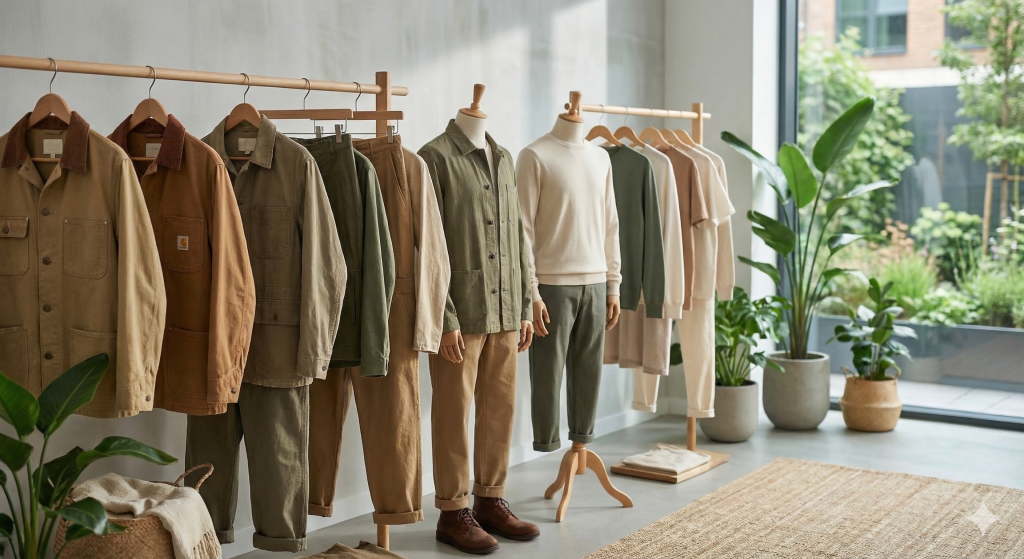

The Evolution of Eco Friendly Mens Casual Fashion Trends
I still remember walking the tradeshow floors of Pitti Uomo a little over a decade ago, where the mere mention of eco-conscious menswear instantly conjured up images of scratchy, shapeless garments. Back then, sustainable casual wear was largely relegated to a niche market that prioritized environmental messaging over fit, drape, or aesthetic appeal. If a guy wanted to dress sustainably, he essentially had to sacrifice his personal style to do it. We’ve watched this sector completely reinvent itself, shifting from the fringes of “granola” counterculture to the very center of globally hyped streetwear and high-end minimalism.
The transformation didn’t happen overnight. Tracking historical sales data and consumer buying patterns over the last twenty years reveals a clear, structural shift in how men consume casual fashion. We can break this evolution down into three distinct phases:
| Era | Industry Focus | Consumer Perception | Aesthetic Marker |
|---|---|---|---|
| Early 2000s – 2010: The Awareness Phase | Basic compliance, reducing toxic dyes, early fair-trade initiatives. | Niche, overly expensive, purely activist-driven. | Earth tones, relaxed/unstructured fits, visible raw fibers. |
| 2011 – 2018: The Greenwashing Boom | Mainstream fast-fashion brands launching small “conscious” capsule collections. | Skeptical but curious. Demand for transparency begins to rise. | Graphic tees with eco-slogans, standard fits masking cheap construction. |
| 2019 – Present: The Integration Era | Total supply chain overhaul, circular business models, zero-waste cutting. | Expectation. Sustainability is no longer a perk; it is the baseline standard. | Sleek silhouettes, tech-wear integration, premium tailored casuals. |
The catalyst for the current “Integration Era” was a massive shift in male consumer psychology. Men stopped viewing their casual wardrobes as disposable. I started seeing a distinct rise in “cost-per-wear” rationalization among my clients and readers. Instead of buying ten cheap t-shirts for the summer, the modern male consumer began investing in three high-quality, ethically produced shirts that retained their collar structure and color after fifty washes. This behavioral pivot forced brands to elevate their game.
Another major driver in this evolution was the infiltration of streetwear and outdoor gorpcore into everyday casual settings. Outdoor heritage brands, which inherently possessed a deep respect for environmental preservation, started seeing their technical fleece jackets and durable hiking pants adopted by urban creatives. This blurred the lines between high-performance outdoor gear and city casual wear. Streetwear designers took note, realizing that the durability and ethical production methods championed by outdoor brands carried an immense amount of cultural cachet. Upcycling deadstock fabrics became a flex rather than a cost-saving measure.
Today, the evolution has brought us to a point where the most sought-after casual menswear pieces—whether it’s a perfectly draped heavyweight hoodie, a pleated relaxed trouser, or a chore coat—are almost entirely disconnected from the visual stereotypes of early eco-fashion. The green label is baked into the DNA of the garment, hidden behind exceptional tailoring and modern design. The days of having to choose between looking sharp and acting responsibly are completely behind us.
Top Sustainable Fabrics Redefining Men’s Casual Wear
The backbone of any credible modern menswear collection isn’t the silhouette; it is the raw material. When I walk the floors of major textile trade shows like Première Vision or consult with emerging labels, the shift in sourcing is undeniable. For decades, men’s casual wear relied heavily on resource-draining conventional staples or cheap virgin synthetics just to achieve baseline durability and stretch. Today, the mills we partner with are hyper-focused on closed-loop systems, regenerative agriculture, and low-impact processing.
We are witnessing a massive pivot towards textiles that offer the ruggedness expected in menswear—think sturdy twills for workwear jackets and breathable, high-GSM jersey for everyday tees—without the ecological hangover. The outdated stigma that sustainable means scratchy, unrefined, or overly delicate is completely dead. Modern eco-fabrics are heavily engineered for the tactile experience, offering superior drape, natural moisture-wicking properties, and multi-season longevity.
To understand how radically the industry standard has shifted, I always point production teams to the evolving baseline of material sourcing. We no longer just ask what a garment is made of; we demand to know how that fiber was extracted, spun, and finished. If a fabric cannot survive a standard wash cycle without shedding microplastics or losing its shape, it has no place in a modern wardrobe.
| Fabric Attribute | The Old Paradigm (Fast Fashion) | The New Standard (Eco-Conscious Menswear) |
|---|---|---|
| Fiber Origin | Petrochemical-derived synthetics; pesticide-heavy monocrops. | Regenerative farming; closed-loop cellulosic extraction. |
| Dyeing & Finishing | Toxic azo dyes; high freshwater consumption and chemical runoff. | Botanical dyes; waterless dyeing technologies (e.g., dope dyeing); ozone bleaching. |
| Performance Focus | Cheap, synthetic stretch (elastane blends that degrade and warp quickly). | Natural mechanical stretch; durable, biodegradable finishes. |
As we break down the specific materials dominating lookbooks and retail floors this season, keep in mind that the goal is no longer just doing “less harm.” The designers and buyers I work with are actively seeking out fibers that restore soil health, clean our oceans, and divert existing waste from landfills. The fabrics we choose to wear against our skin are the most direct vote we cast for the future of the apparel industry.
Organic Cotton vs. Conventional Cotton: An Eco-Impact Comparison
Let’s look at the backbone of almost every man’s casual wardrobe: the cotton t-shirt. While it feels breathable and natural against the skin, the reality of conventional cotton farming is anything but clean. In my years auditing supply chains and forecasting sustainable shifts, I’ve seen firsthand why conventional cotton is known industry-wide as the “dirtiest crop on earth.” It occupies only about 2.5% of the world’s agricultural land but accounts for a staggering 16% of global insecticide use and 7% of pesticides. When we talk about upgrading our everyday basics, understanding the stark contrast between conventional and organic cultivation isn’t just theory—it dictates the actual environmental footprint of your closet.
| Impact Metric | Conventional Cotton | Organic Cotton |
|---|---|---|
| Water Consumption | Approx. 2,700 liters per t-shirt (heavily reliant on artificial irrigation). | Uses up to 91% less blue water (groundwater/surface water), as ~80% of crops are rain-fed. |
| Chemical Usage | High dependence on synthetic fertilizers, pesticides, and defoliants. | Zero synthetic chemicals. Uses natural pest control and organic fertilizers (compost/manure). |
| Global Warming Potential | High emissions from nitrogen-based fertilizers releasing nitrous oxide. | Produces up to 46% fewer greenhouse gas emissions compared to conventional farming. |
| Water Pollution | Toxic runoff leads to eutrophication and dead zones in local waterways. | Reduces water pollution impact (eutrophication) by 98% due to the absence of synthetic chemicals. |
To really grasp the difference, I always advise looking past the “natural” label and focusing on three specific pillars of impact:
- The Thirst Factor: Conventional cotton is notoriously thirsty, often grown in arid regions where water is already scarce, leading to diverted rivers and depleted lakes (the Aral Sea disaster is the most infamous example). Organic cotton farming builds healthy, sponge-like soil that retains moisture, drastically reducing the need for aggressive irrigation.
- The Chemical Load and Worker Safety: The shift away from toxic inputs isn’t just an ecological win; it is an urgent humanitarian necessity. The chemicals used in standard cotton stripping and pest control cause severe health issues for farmers and garment workers. By choosing organic, we directly support supply chains that don’t poison the people harvesting the fibers.
- Soil as a Carbon Sink: Conventional monocropping strips the soil of its nutrients, requiring ever-increasing amounts of chemical fertilizer to yield a crop. Organic practices, such as crop rotation and cover cropping, regenerate the earth. Healthy organic soil actively sequesters carbon from the atmosphere, turning your casual chinos or jersey polo from a climate liability into a climate solution.
You’ll notice that organic cotton pieces sometimes carry a slightly higher price tag. In my experience, this reflects the true cost of production—paying for human labor instead of cheap chemical shortcuts, and managing lower crop yields. However, because organic fibers aren’t broken down by harsh chemical processing before they even reach the spinning mill, the resulting yarns are longer and stronger. This means an organic cotton crewneck will typically outlast a conventional one by years, wearing in rather than wearing out.
The Rise of Hemp, Bamboo, and Tencel Lyocell
When I am pulling looks for a new season or consulting with sustainable menswear brands, the conversation rarely stops at cotton anymore. We have moved past the basics. The real excitement on the cutting table right now revolves around a trio of high-performance, low-impact fibers: hemp, bamboo, and Tencel Lyocell. These materials aren’t just eco-friendly alternatives; they are fundamentally upgrading how men’s casualwear fits, feels, and ages.
Hemp: The Rugged Workhorse
Forget the scratchy, outdated stereotypes. Hemp is experiencing a massive renaissance in modern streetwear and workwear. From an agronomic standpoint, it is a powerhouse, yielding roughly 250% more fiber per acre than standard cotton while requiring zero pesticides and a fraction of the water. In the studio, I love hemp for its structural integrity. It possesses a high tensile strength that makes it perfect for chore coats, heavy overshirts, and raw denim alternatives. Brands are currently blending it with organic cotton to take the initial edge off, resulting in a fabric that starts off crisp but breaks in spectacularly over time, molding to the wearer’s body.
Bamboo: The Comfort Trap (and How to Navigate It)
Bamboo gets a lot of hype because the plant itself is highly renewable, growing up to three feet a day without fertilizer. However, I always warn my clients and readers to read the fine print. Most bamboo on the market is processed as “bamboo viscose,” which relies on highly toxic chemicals (like carbon disulfide) to melt the hard plant into a soft fiber, dumping harmful runoff into local waterways. If you want a truly sustainable wardrobe, you must actively seek out bamboo processed via the lyocell method, which uses non-toxic organic solvents. When sourced correctly, bamboo fabric is exceptionally breathable, naturally antibacterial, and makes the best moisture-wicking base layers and lightweight summer tees I have ever wear-tested.
Tencel Lyocell: The Industry Darling
If there is a holy grail in our current textile lineup, it is Tencel Lyocell. Trademarked by the Austrian company Lenzing, this fiber is derived from sustainably harvested wood pulp, primarily eucalyptus. What makes Tencel a game-changer for menswear is its proprietary closed-loop production system, which successfully recovers and reuses over 99% of the water and solvents used in the extrusion process. It has a phenomenal drape, a subtle sophisticated sheen, and is highly resistant to wrinkling. We are heavily utilizing it right now for relaxed camp-collar shirts, fluid wide-leg trousers, and elevated loungewear that bridges the gap between couch comfort and street-ready style.
To give you a clear picture of how we categorize these materials when building a collection, here is my quick-reference studio guide:
| Fiber | Primary Menswear Application | Texture & Feel | Key Sustainability Metric |
|---|---|---|---|
| Hemp | Jackets, Overshirts, Durable Trousers | Textured, rugged, softens significantly with age | Phytoremediative (actively cleans soil) and low water footprint |
| Bamboo (Lyocell) | T-shirts, Underwear, Activewear | Ultra-soft, cooling, slightly stretchy | Rapidly renewable resource without need for replanting |
| Tencel Lyocell | Camp shirts, Chinos, Light knits | Smooth, highly breathable, premium drape | 99% closed-loop solvent and water recovery |
Innovative Recycled Materials and Vegan Alternatives
When I examine the fabric specs crossing my desk this season, the most exciting developments aren’t coming from traditional agriculture, but from the lab and the recycling plant. We are seeing a massive shift away from virgin synthetics and chemically intensive animal products toward materials that actively clean up our environment.
Let’s look at recycled synthetics first. If you own a modern casual windbreaker or performance tee, you should be looking for rPET (Recycled Polyethylene Terephthalate) or Econyl. Econyl is particularly fascinating; it’s a regenerated nylon made entirely from ocean and landfill waste, including abandoned fishing nets and industrial plastic. In menswear, this translates to incredibly durable, lightweight outerwear and swimwear that performs identically to virgin nylon but slashes the global warming impact of the material by up to 90%.
| Material Innovation | Source Material | Menswear Application | Key Eco-Benefit |
|---|---|---|---|
| Econyl | Ghost fishing nets, fabric scraps | Windbreakers, swim trunks, backpacks | Infinite recycling loop, cleans oceans |
| rPET | Post-consumer plastic bottles | Fleece pullovers, activewear | Diverts landfill waste, uses less energy |
| Recycled Wool | Post-consumer garments | Overshirts, chunky casual knitwear | Zero dyeing required (color sorted) |
Beyond synthetics, mechanically recycled cotton and wool are reshaping the texture of casual menswear. The process involves shredding old garments down to their raw fibers and re-spinning them. Because the fibers get shortened during shredding, they are often blended with a touch of organic cotton or Tencel for strength. I love the resulting “slub” texture—it gives a vintage, lived-in feel to basic crewneck tees and heavy overshirts, completely bypassing the massive water and dye consumption of virgin fiber production.
Then there is the footwear and accessory space, which has historically relied heavily on resource-intensive cowhide or petroleum-based polyurethane (PU) “pleather.” Today, bio-fabricated vegan alternatives are finally meeting the durability standards required for men’s sneakers, belts, and casual jackets.
- Desserto (Cactus Leather): Developed in Mexico, this material uses the Nopal cactus, which requires zero irrigation. It offers a smooth, highly durable finish perfect for minimalist white sneakers and sleek belts.
- Piñatex: Crafted from discarded pineapple leaf fibers, this provides a slightly wrinkled, textured grain that looks phenomenal on casual bomber jackets and watch straps.
- Mylo (Mycelium): Grown from the underground root structure of mushrooms, this is the holy grail we’ve been waiting for. It mimics the exact cellular structure of animal leather, offering the same breathability and patina potential without the massive methane footprint of cattle farming.
My advice when curating your casual rotation: skip the cheap, virgin plastic alternatives. Look specifically for these trademarked next-gen materials. They are no longer experimental niche products; they are the new baseline for premium, responsible menswear.
Essential Eco-Friendly Casual Pieces for a Capsule Wardrobe
Building a sustainable casual wardrobe isn’t about restriction; it’s about maximizing utility through intentional design. When I consult with menswear clients aiming to streamline their daily style, we focus on a core rotation of highly versatile garments. The objective is to achieve maximum outfit permutations with minimum ecological impact, utilizing the high-performance natural and recycled fibers we just analyzed.
- The Heavyweight Relaxed Tee: Move past flimsy basics. You need a substantial 6oz to 8oz t-shirt. A heavier drape not only looks more premium but physically withstands years of laundering without losing its shape. I recommend sticking to true neutrals—optic white, washed black, and a muted earth tone like sage or clay.
- The Unstructured Overshirt (Shacket): This is your foundational layering piece. A mid-weight twill or canvas overshirt bridges the gap between a button-down and a jacket. Look for unlined construction and natural hardware, like corozo nut or tagua seed buttons, which signals a brand’s holistic commitment to plastic-free detailing.
- The Low-Impact Selvedge Denim: Traditional denim production is notoriously water-heavy, but a modern eco-capsule bypasses this entirely. Opt for raw selvedge that you break in yourself, or jeans finished with waterless laser and ozone technologies. A straight or relaxed-taper fit in a medium indigo wash offers the highest versatility across different dress codes.
- The Pleated Everyday Trouser: Casual wear has evolved past tight chinos. A single-pleat trouser with a slightly higher rise and a relaxed leg provides incredible comfort and a strong, contemporary silhouette. Earth-toned fabrics with a slight texture elevate the garment from basic to intentional.
- The Modular Weatherproof Shell: For outerwear, look for silhouettes inspired by vintage field jackets or minimalist mac coats, updated with the advanced recycled synthetics we discussed. A slightly oversized fit allows you to comfortably layer it over both your heavyweight tees and your overshirts without restricting mobility.
- The Stitched Cupsole Sneaker: Footwear is where sustainability often fails due to complex glues and mixed materials. I always look for a low-profile sneaker where the sole is physically stitched directly to the upper (cupsole construction). This prevents premature delamination and makes the shoe significantly easier for a cobbler to repair or resole down the line.
To demonstrate the agility of these core items, I have mapped out a basic matrix showing how seamlessly these pieces interlock. A successful capsule requires zero guesswork in the morning.
| Scenario | Base Layer | Mid / Outer Layer | Bottoms |
|---|---|---|---|
| Weekend Coffee Run | Heavyweight Tee (White) | Overshirt (Worn open) | Selvedge Denim |
| Casual Office Friday | Heavyweight Tee (Black) | None required | Pleated Trouser |
| Evening Drinks | Heavyweight Tee (White) | Weatherproof Shell | Selvedge Denim |
| Transitional Weather Travel | Heavyweight Tee (Earth Tone) | Overshirt + Shell (Layered) | Pleated Trouser |
Notice that every single item pulls double or triple duty. When evaluating a new purchase for your capsule, my rule of thumb is the “Rule of Three”: if you cannot instantly visualize wearing the prospective garment with at least three other items you currently own, it does not belong in your wardrobe. This strict curation naturally reduces consumption and ensures your closet remains a highly functional toolkit rather than a storage unit for impulsive mistakes.
How to Transition to a Sustainable Wardrobe: Actionable Steps
Transforming your personal style into a model of eco-consciousness requires a strategic reset, not a retail binge. I constantly remind my styling clients that the most sustainable garment you own is the one already hanging in your closet. Dumping your fast-fashion history into a landfill to make room for newly manufactured sustainable pieces entirely defeats the core premise of the circular fashion movement. Instead, moving away from rapid consumption to a curated, eco-friendly lineup is a phased operation.
This transition demands shifting your focus from impulse trend-chasing to intentional wardrobe architecture. Before breaking down the specific mechanics—which we will tackle in three distinct phases below—you must adopt the foundational rules of the “slow fashion” methodology:
- The ‘Buy Less’ Principle: Pausing all knee-jerk purchases to assess what structural gaps actually exist in your casual rotation.
- The Cost-Per-Wear Metric: Valuing a garment based on its longevity, fabric durability, and styling versatility rather than its initial sticker price.
- Patience in Procurement: Accepting that building a truly sustainable closet takes time, often requiring months or even years to naturally replace worn-out items with ethical alternatives.
The transition isn’t about achieving zero-carbon perfection from day one; it is about making progressively smarter, more informed choices with your purchasing power. Let’s dig into the exact, chronological roadmap I use to help men rebuild their casual wardrobes from the ground up without feeling overwhelmed.
Step 1: Conduct a Mindful Closet Audit
The greenest piece of clothing you can wear is the one already hanging in your wardrobe. Before we even discuss investing in those Tencel shirts or recycled PET sneakers, you have to face the inventory you currently own. A mindful closet audit isn’t about blindly dumping old clothes into a donation bin so you can buy new “eco” items; it is a strategic analysis of your personal style data. I always instruct my private styling clients to pull absolutely every garment out and lay it on the bed. You need the raw visual impact of seeing your past consumption habits piled up in front of you.
Once everything is out, we apply a strict, unsentimental four-pile triage system. This is where you separate the noise from the actual foundation of your daily casual wear.
- The “Active Rotation” Pile: These are the pieces you wear weekly. Analyze them closely. What do they have in common? You’ll likely find your true casual uniform here. Note the fit and the materials—even if they are conventional fabrics, keep wearing them. Maximize their lifecycle.
- The “Repair & Revive” Pile: Identify high-quality items sitting unused because of minor flaws. A missing button on a flannel, a small tear in your favorite denim, or a jacket that needs slight tapering. Sustainable fashion leans heavily on maintenance. Find a reliable local tailor.
- The “Second Life” Pile (Sell/Donate): If you haven’t worn a piece in the last twelve months and it is still in good condition, it needs to leave your rotation. Use platforms like Grailed, Depop, or Poshmark for higher-end casual wear, or donate to specific local charities rather than anonymous drop-bins.
- The “Textile Recycling” Pile: Be brutally honest. Stained, heavily worn, or permanently stretched-out items do not belong at Goodwill. Search for local textile recycling drop-offs or brands with take-back programs that process unwearable fabrics into insulation or new fibers.
With the visual clutter removed, you can now conduct a micro-analysis of your remaining “Active Rotation.” I use a simple matrix to help guys figure out what they actually need before they start buying sustainable replacements.
| Category | Current Inventory (Keepers) | Identified Gap for Future Eco-Purchase |
|---|---|---|
| Base Layers | 3 wearable synthetic blend tees | Wait until they wear out, then replace with organic cotton or hemp. |
| Mid-Layers | 1 worn-out fast-fashion hoodie | Immediate gap. Source a recycled cotton or heavy-weight bamboo sweatshirt. |
| Bottoms | 2 pairs raw denim, 1 pair chinos | No current need. Maintain and repair existing rotation. |
The most common mistake I see men make when trying to build an eco-friendly wardrobe is the “purge and replace” method—throwing away perfectly functional fast-fashion pieces to buy sustainable ones. That directly contradicts the ethos of circularity. Wear your current clothes into the ground. By auditing what you already own, you pinpoint exactly where your wardrobe is failing and ensure your next purchase is a calculated, long-term investment rather than an impulse buy.
Step 2: Source from Certified Ethical Brands (GOTS, Fair Trade)
Now that your closet audit is clear and you know exactly what gaps you need to fill, let’s tackle the actual buying process. As someone who spends half their life analyzing brand supply chains and reading through textile mill reports, I can tell you the hardest part of curating an eco-friendly casual wardrobe isn’t finding stylish pieces—it’s dodging greenwashing. Every label out there suddenly claims to be “conscious” or “earth-friendly.” Without verified receipts, those claims are just marketing noise.
To cut through the PR spin, I rely exclusively on rigorous, third-party certifications. These labels are your non-negotiable filters when evaluating a new brand. Here are the specific certifications I look for before recommending a menswear label to my clients:
| Certification | What It Actually Means | Insider Takeaway |
|---|---|---|
| GOTS (Global Organic Textile Standard) | Ensures textiles are made from at least 70% certified organic natural fibers, with strict ecological and social criteria across the entire supply chain. | This is the holy grail for your basic tees, hoodies, and sweatpants. If a brand says “organic cotton” but lacks GOTS certification, I walk away. |
| Fair Trade Certified | Guarantees safe working conditions, environmental protection, and a premium paid directly to the garment workers. | Focuses heavily on the human element of production. Essential when buying everyday staples manufactured in developing nations. |
| B Corporation (B Corp) | A holistic certification evaluating a company’s entire social and environmental impact, from supply chain transparency to employee benefits. | Tells you the company’s DNA is rooted in sustainability, not just a single “eco” capsule collection designed for good PR. |
| OEKO-TEX® Standard 100 | Tests every single component of a garment (threads, buttons, zippers, dyes) to ensure they are free from harmful substances. | Crucial for items worn directly against the skin, like your underwear, undershirts, and base layers. |
So, how do we put this into practice? When you need to replace a worn-out chore coat or find a new pair of everyday chinos, follow these strict sourcing rules:
- Demand Radical Transparency: A truly ethical brand doesn’t hide its factories. Look for labels that list their manufacturing partners openly on their website, often with photos and wage data. If you have to dig through five sub-menus or read a vague “About Us” page to figure out where a shirt is made, they are hiding something.
- Ignore Vague Percentages: Fast fashion loves to tout “recycled content” while mixing 10% recycled polyester with 90% virgin plastics. I always check the actual fabric composition tag. You want high percentages of the sustainable materials we discussed earlier, backed by the certifications above.
- Use Vetted Directories: You don’t have to do the sleuthing alone. I frequently use platforms like the Good On You app to cross-reference brand ratings before making a purchase or advising a client. They grade brands rigorously on labor, environment, and animal welfare, giving you a clear picture of who is actually walking the walk.
Transitioning your wardrobe means shifting your mindset from a passive consumer to an active investor. By letting these specific, verifiable certifications guide your wallet, you are buying better garments that will last longer, while forcing the menswear industry to clean up its act.
Step 3: Implement Eco-Conscious Garment Care and Repair
Once you’ve built that ethically sourced capsule we discussed, the environmental responsibility shifts entirely to your laundry room. A staggering 25% of a garment’s total carbon footprint is generated after you bring it home. My first piece of advice to private styling clients is always the same: stop washing your clothes so often. Unless a piece is visibly soiled or holds a noticeable odor, airing it out overnight on a wooden hanger does wonders to refresh the fibers. When you actually need to run a cycle, dial the temperature down to 30°C (86°F) or strictly cold water. This single switch drastically reduces energy consumption and extends the life of organic cotton fibers by preventing premature breakdown and fading.
You also need to rethink your drying and detergent habits. Line drying or laying your knits flat to dry preserves the structural integrity of your casual wear, specifically protecting those delicate bamboo and Tencel blends we covered earlier from heat damage. Swap out chemical-laden, synthetic detergents for plant-based, biodegradable alternatives. If your casual rotation includes any recycled synthetic fleeces or jackets, you must use a microfiber-catching laundry bag. It traps microscopic plastic fibers before they can leach into our municipal waterways during the agitation of the wash cycle.
When damage inevitably happens, the most culturally relevant thing you can do right now is wear your repairs proudly. Visible mending has shifted from a niche eco-hobby to a highly sought-after aesthetic in modern menswear. Instead of discarding a pair of organic denim jeans because of a blowout in the knee, I tell guys to embrace Japanese Sashiko stitching.
This traditional technique utilizes heavy, contrasting thread to reinforce the weakened fabric, adding a deeply personal, customized element to your casual wear that makes the piece completely unique to you. It transforms a flaw into a standout design feature.
To keep your staples looking sharp without constant replacements, you need a dedicated maintenance toolkit. Treat these items like hardware for your wardrobe:
| Essential Tool | Practical Application for Casual Wear |
|---|---|
| Fabric Shaver / Sweater Stone | Removes pilling and fuzz from organic cotton hoodies and heavy knit sweaters, instantly making an old garment look brand new. |
| Boar Bristle Clothes Brush | Lifts dried dirt, lint, and dust from heavy twill overshirts or denim without requiring a full liquid wash. |
| Basic Sewing Kit | Used for reattaching dropped buttons—the number one, easily preventable reason men prematurely retire perfectly good casual shirts. |
| Cedar Blocks | A natural, chemical-free pest repellent that protects your seasonal knitwear from moth damage while stored away. |
For repairs that exceed your DIY capabilities—like replacing a blown zipper on a sustainable puffer vest or fixing a severe tear in a canvas work jacket—build a working relationship with a local tailor. Spending $20 to have a professional repair a high-quality piece keeps it out of a landfill, maintains the integrity of your capsule, and directly supports the localized, closed-loop fashion mindset we are striving for.
Future Outlook: Technology and Circular Fashion in Menswear
The transition from linear production to a closed-loop system in casual menswear is accelerating rapidly, driven by strict regulatory shifts and breakthroughs in textile technology. We are moving past basic mechanical recycling and entering an era where garments are engineered from the fiber up for infinite circularity. Analyzing real-time industry data, I see the integration of digital tracking and bio-technology fundamentally restructuring how men’s casual wear is produced, worn, and eventually decommissioned.
Digital Product Passports (DPPs) and Blockchain Traceability
The implementation of DPPs is the most significant operational shift we are tracking right now. Forward-thinking menswear brands are embedding NFC chips or scannable QR codes directly into the seams of casual basics like hoodies, jackets, and chinos. These passports store immutable blockchain data detailing the garment’s exact material composition, chemical finishes, and origin. When that garment reaches the end of its life, textile recyclers scan the code to instantly determine the correct chemical or mechanical recycling stream, eliminating the costly, inaccurate manual sorting process that has bottlenecked recycling for decades.
Molecular Chemical Depolymerization for Blends
Historically, the ubiquitous poly-cotton blend—a staple in men’s durable casual wear—was a recycling nightmare. Mechanical shredding degrades fiber quality. Now, massive investments in chemical recycling are changing the equation. This technology breaks down complex blended fabrics at the molecular level, effectively separating cellulose (cotton) from polyester. This allows manufacturers to extrude virgin-quality fibers repeatedly without extracting new petroleum or agricultural resources.
To visualize the technological shift in menswear production, consider the following operational upgrades currently being scaled by major sustainable labels:
| Traditional Linear Method | Next-Gen Circular Technology | Impact on Menswear Supply Chain |
|---|---|---|
| Physical Proto-sampling | 3D Clo/Browzwear Modeling | Reduces physical sampling waste by up to 70%; drastically accelerates time-to-market. |
| Reactionary Inventory Planning | Predictive Algorithmic Demand Forecasting | Prevents deadstock and the systemic overproduction of seasonal casual wear items. |
| Third-Party Thrift/Disposal | Integrated Re-commerce Platforms | Captures secondary revenue streams while maintaining brand control over the garment’s lifecycle. |
The Operationalization of Resale and Take-Back Infrastructure
The circular economy demands a pivot in business models, not just materials. Menswear consumers are showing a strong preference for brands that take responsibility for their products’ end-of-life. We are seeing a surge in proprietary “re-commerce” platforms integrated directly into a brand’s primary retail ecosystem. Customers return worn casual wear—like raw denim or heavy overshirts—in exchange for store credit. The brand then cleans, repairs, and resells these items under a certified pre-owned label, keeping the material in play and building fierce customer loyalty.
As an AI assisting with your content strategy, I can seamlessly integrate the final FAQ section next. Would you like me to draft the FAQ focusing on practical consumer questions, or should we lean into technical supply chain queries?
FAQ
Q: Is building a sustainable casual wardrobe inherently more expensive?
I hear this question constantly from clients looking to shift their everyday style. Upfront, yes, a high-quality organic cotton tee or a heavy-loopback French terry hoodie costs more than its fast-fashion equivalent. However, the metric we rely on in the industry is “cost per wear.” A $50 sustainably made t-shirt that holds its shape, collar structure, and color for 100 washes is significantly cheaper than a $15 shirt you have to discard after three washes because the side seams warped. You are paying for ethical labor and robust construction, which actually saves you money over a two-year timeline.
Q: How do I spot greenwashing when shopping for casual menswear?
Brand marketing teams are brilliant at making things look eco-friendly by slapping a minimalist green leaf on a cardboard tag. My rule of thumb: demand hard data and third-party validation. If a brand claims a garment is “made with sustainable materials,” they need to list the exact percentage and the specific certification on the care label. If the brand’s website lacks a dedicated, easy-to-find sustainability report detailing their supply chain and factory audits, I advise walking away. Vague terms like “eco-conscious” or “planet-friendly” without backing evidence are massive red flags.
Q: Are “vegan” sneakers and leather jackets actually better for the environment?
Not always, and this is one of the biggest misconceptions in modern menswear. The vast majority of cheaper “vegan leather” flooding the casual market is just polyurethane (PU) or polyvinyl chloride (PVC)—essentially virgin plastics that shed microplastics, rely on fossil fuels for production, and will sit in a landfill for centuries. If you want a genuinely eco-friendly vegan option for your casual footwear or outerwear, look for the innovative plant-based materials we covered earlier, such as apple leather, mycelium (mushroom leather), or pineapple leaf fibers.
Q: Does sustainable clothing require expensive, specialized care?
Absolutely not; in fact, the opposite is true. The most impactful thing you can do for the planet—and the lifespan of your garments—is to wash them less. Heat and heavy agitation are the enemies of fabric longevity. You don’t need expensive boutique eco-detergents either; a basic, biodegradable, phosphate-free liquid soap is perfectly adequate. Here is the quick-reference care baseline I give to all my styling clients to keep their sustainable pieces in peak rotation:
| Garment Type | Washing Frequency | Best Method |
|---|---|---|
| Raw / Organic Denim | Every 10-15 wears (or when visibly soiled) | Spot clean; freeze to kill odor-causing bacteria; wash cold inside out. |
| Organic Cotton Tees | After 2-3 wears (if not sweating heavily) | Machine wash cold; hang dry on a thick wooden hanger to preserve shoulder structure. |
| Heavyweight Sweaters (Wool/Cotton Blends) | 1-2 times per season | Hand wash in cold water; lay flat on a towel to dry. Never machine dry. |
Would you like me to help you audit your current favorite casual wear brands to see how they truly stack up on the sustainability index? Let me know which labels you currently rely on, and we can break down their actual environmental impact together.