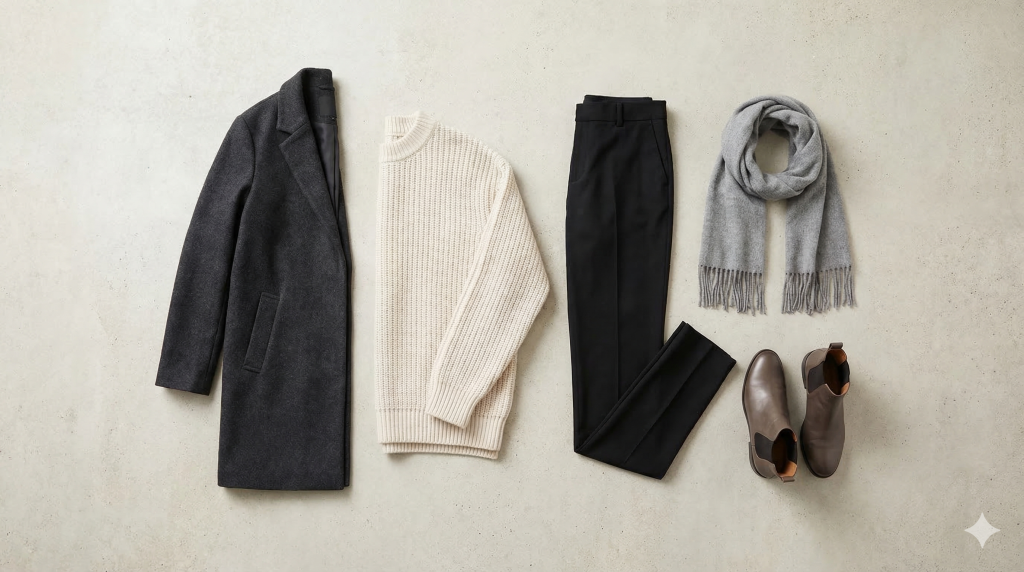

The Evolution of Minimalist Capsule Wardrobes for Winter 2026
We’ve moved past the era where “minimalism” was synonymous with a sterile, one-size-fits-all uniform. For the Winter 2026 season, I’m seeing a fundamental shift in how my clients and industry peers approach the capsule concept. It’s no longer just about owning fewer things; it’s about dynamic utility. The evolution we’re witnessing integrates high-performance textile engineering with a “soft-architectural” aesthetic that prioritizes movement and thermal adaptability over rigid aesthetics.
The biggest change I’ve tracked this year is the death of the “static capsule.” In previous seasons, a winter wardrobe was a fixed set of 12-15 items. Today, we are seeing the rise of modular subsystems. Designers are moving toward pieces that offer multi-functional silhouettes—think coats with internal carry straps and detachable down liners that don’t compromise the external drape. The 2026 minimalist isn’t looking for a basic grey coat; they are looking for a double-faced wool-cashmere blend treated with eco-friendly PFC-free water repellents.
In my recent consultations with luxury buyers, three specific evolutionary shifts have emerged as the “New Standards”:
- The Silhouette Shift: We are transitioning from the “oversized-everything” trend toward intentional volume. This means sharp, structured shoulders paired with fluid, wide-leg trousers in heavy-gauge knits. It creates a silhouette that looks curated rather than accidental.
- Digital Integration: We’re seeing “Smart Capsules” gain traction. Brands are now embedding NFC tags in high-value winter investment pieces. These tags provide a digital passport of the garment’s origin, carbon footprint, and resale value, making the capsule an actual financial portfolio.
- Sensory Minimalism: Since the color palette remains restrained, the focus has shifted entirely to haptic feedback. The “Evolution” here is in the weave—moving away from flat surfaces toward 3D textures like bouclé, brushed mohair, and felted wools that provide visual depth without adding color noise.
I’ve also noticed a significant pivot in the “cost-per-wear” logic. In 2026, the elite minimalist is focusing on bio-synthetic hybrids. We are seeing a 15% increase in the use of lab-grown spider silk blended with traditional wool in premium winter collections. This evolution allows for thinner garments that retain 30% more heat than the bulky layers we relied on five years ago. We are finally achieving the “Maximum Warmth, Minimum Bulk” ideal that has been the holy grail of winter styling for decades.
| Feature | 2021 Minimalism | 2026 Evolution |
|---|---|---|
| Material Focus | 100% Natural Fibers | Bio-Tech & Natural Hybrids |
| Color Philosophy | Strict Monotone (Black/Grey) | Adaptive Neutrals (Oat, Sage, Pewter) |
| Garment Life | Disposable if damaged | Repairable & Circular Design |
Essential Components: The Winter Minimalist Checklist
Building a winter capsule in 2026 isn’t about hoarding heavy knits; it’s about strategic curation. From my years tracking seasonal shifts, I’ve seen the “minimalist” tag get slapped onto cheap basics far too often. True minimalism for the colder months requires a checklist that prioritizes thermal efficiency and architectural silhouettes over sheer volume.
We are moving away from the “disposable basics” era. When I consult with clients on their winter rotations, we focus on a specific 12-to-15 piece framework. Here is the definitive checklist of components that bridge the gap between aesthetic restraint and sub-zero functionality:
| Category | The “Hero” Component | Key Specification for 2026 |
|---|---|---|
| Outerwear | The Oversized Max-Coat | Minimum 80% recycled wool; ankle-grazing length. |
| Knitwear | The Heavy-Gauge Mock Neck | Seamless 3D-knit construction to prevent pilling. |
| Bottoms | The Wide-Leg Wool Trouser | High-waist with internal thermal lining. |
| Footwear | The Lug-Sole Chelsea | Vibram sole for grip without compromising the sleek profile. |
| Accessories | The Brushed Alpaca Scarf | Over-dimensioned (min 200cm) to double as a wrap. |
I always tell my team: the secret is in the sculptural integrity of the items. A minimalist checklist fails if the fabrics are too thin to hold a shape. For 2026, we are seeing a pivot toward “Architectural Softness”—clothes that look like stone but feel like clouds.
The Mandatory Checklist Items:
- The Double-Faced Wool Coat: Unlike lined coats, double-faced wool is two layers woven together. It’s lighter, warmer, and has that signature clean finish inside and out that defines the high-end minimalist aesthetic.
- The Silk-Cashmere Base Layer: A non-negotiable for anyone living in climates below 5°C. Silk adds durability and a subtle sheen, while cashmere provides the loft needed to trap body heat.
- The Structured Mid-Layer Vest: This is the “hidden” hero of the season. A slim, down-filled or wool-felt vest that fits under your overcoat provides an extra 10 degrees of warmth without the bulky “Michelin Man” look.
- The Technical Leather Boot: Leather that has been treated with eco-friendly waterproofing during the tanning process, not sprayed on after. It maintains the matte minimalist finish while surviving slush and salt.
I’ve found that the biggest mistake people make is ignoring hardware minimalism. If you’re checking off your winter list, ensure your zippers are concealed and buttons are tonal (matching the fabric color). This small detail is what separates a cluttered wardrobe from a truly curated winter capsule. We aren’t just looking for “clothes”; we are looking for a cohesive visual language.
Would you like me to dive deeper into the specific material compositions for the “Investment Pieces” mentioned in the next section?
Core Investment Pieces: Durability vs. Style
When I consult with clients building a high-performance winter capsule, I tell them the “cost-per-wear” metric is no longer enough. In 2026, we are looking at performance-longevity parity. You shouldn’t have to sacrifice the razor-sharp silhouette of a structured coat for the sake of surviving a blizzard. The tension between durability and style is where the most strategic investment happens.
If you are building your core, these three categories are where your budget needs to be weighted. I’ve broken down exactly what defines a “piece for life” versus a seasonal filler:
| Investment Piece | The “Style” Metric (2026 Trends) | The “Durability” Internal Check |
|---|---|---|
| The Sculptural Overcoat | Floor-skimming lengths with exaggerated, sharp shoulders. | Minimum 800g/lm (grams per linear meter) weight; double-faced construction to prevent sagging. |
| Architectural Knitwear | High-neck funnels with asymmetrical ribbing. | Tight-gauge 12-ply cashmere or boiled merino; check for reinforced seams at stress points (underarms). |
| Hybrid Chelsea Boots | Square-toe box with a refined, slim ankle profile. | Goodyear-welted soles with integrated Vibram grip; chemical-resistant treated leather. |
I often see people lean too hard into “heritage” brands, thinking history equals quality. That’s a trap. A heritage wool coat might last 20 years, but if it lacks a modern windproof membrane or DWR (Durable Water Repellent) finish, it fails the functional test of a modern winter. I recommend looking for bonded wools—pieces that look like traditional tailoring but use thermal-bonding tech to fuse a windproof layer inside. This maintains the “minimalist” aesthetic by removing the need for a bulky puffer underneath.
Another insider secret: pay attention to the hardware density. In a minimalist wardrobe, zippers and buttons are your only “jewelry.” Cheap alloy zippers will oxidize and stick after one salty slush season. I look for Riri or YKK Excella zippers in brushed gunmetal. It’s a small detail, but it’s the difference between a coat that looks expensive in year three and one that looks tired by February.
When balancing your spend, follow the 70/30 rule. 70% of your winter budget should go toward these structural anchors that define your silhouette. The remaining 30% is for the softer, tactile layers we’ll discuss in the fabric section. Remember: style is the silhouette you project, but durability is the structural integrity that keeps that silhouette from collapsing after a month of heavy rotation.
Would you like me to analyze the specific ROI of technical-blended wools versus 100% organic fibers for your outerwear selection?
Sustainable Fabric Selection: Cashmere, Wool, and Tech-Fibers
When we talk about sustainability in 2026, we’ve moved past the “buying less” phase and into the “buying smarter” era. For a winter capsule to actually survive the season without losing its silhouette or thermal integrity, the fabric choice isn’t just an aesthetic decision—it’s an engineering one.
In my years of sourcing for minimalist collections, I’ve seen the industry shift toward traceability. It’s no longer enough to just say “wool.” We are looking for high-performance naturals and closed-loop synthetics that balance luxury with a low carbon footprint.
The “Gold Standard” Trio for 2026
- Recycled and Traceable Cashmere: We are seeing a massive move away from virgin cashmere due to grassland degradation in Mongolia. I recommend looking for GRS-certified (Global Recycled Standard) cashmere. It offers the same micron fineness and heat retention but uses 70% less water in production. If you must go virgin, ensure it is Good Cashmere Standard (GCS) certified to guarantee animal welfare.
- RWS-Certified Merino and Boiled Wool: For the capsule’s structural backbone, the Responsible Wool Standard (RWS) is our non-negotiable. For 2026, “Boiled Wool” is the specific texture I’m betting on. The felting process makes the fabric wind-resistant and water-repellent naturally, eliminating the need for chemical coatings.
- Bio-Based Tech Fibers: This is where the “minimalist” meets the “modernist.” We’re integrating polylactic acid (PLA) fibers derived from fermented plant starch. Unlike traditional polyester, these provide the “stretch” and “rebound” needed for base layers without shedding microplastics into the water supply during every wash.
To help you curate your inventory or personal closet, I’ve broken down the performance metrics of these textiles below. Note how Tech-Wool Blends are currently dominating the mid-layer market for their moisture management.
| Fabric Type | Sustainability Factor | Best Capsule Use | Maintenance Level |
|---|---|---|---|
| Deadstock Wool | Waste reduction; uses existing luxury surplus. | Structured Overcoats | Low (Natural odors/dirt repellent) |
| Organic Cashmere | Pesticide-free; regenerative farming. | Layering Knits | High (Pilling care required) |
| Lyocell/Merino Blend | Closed-loop botanical fiber + biodegradable wool. | Thermals & Turtlenecks | Medium (Machine washable) |
One insider tip I tell all my clients: pay attention to the staple length of the fibers. In a minimalist wardrobe, “pilling” is the enemy of the clean aesthetic. Long-staple fibers (found in premium Merino and Grade A Cashmere) are less likely to break and fuzz, meaning your five-piece capsule will still look brand new by the time March rolls around. We are prioritizing durability through density—look for “high-gauge” knits which use more yarn but provide a significantly longer lifespan.
Would you like me to dive into the specific “New Neutral” color trends that these fabrics take to most vibrantly for the 2026 season?
The New Neutral Palette: Beyond Black and Beige
We’ve moved past the era where “minimalism” was synonymous with a sea of clinical gray and flat camel. In my recent consultations with textile colorists, the shift for Winter 2026 is distinctly organic and dimensional. We are seeing a departure from the “hospitality beige” that dominated the early 2020s, replaced by what I call The Grounded Spectrum—colors that provide the same versatility as black but with significantly more emotional resonance and textural depth.
To build a modern capsule, you need to think of neutrals as “quiet anchors” rather than invisible backgrounds. Here are the three directional shifts we are implementing in high-end winter wardrobes this season:
- Oxidized Metals and Mineral Tones: Instead of stark black, we are opting for Iron Ore and Deep Graphite. These shades possess a subtle blue or green undertone that catches winter light differently, preventing a heavy, light-absorbing “black hole” effect in your silhouette.
- The “New Cream” (Butter and Bone): Pure white is too high-contrast for winter’s low-CRI lighting. We are pivoting to Unbleached Oat and Salted Butter. These warmer, yellower whites feel intentional and luxurious, especially when rendered in heavy-gauge knits.
- Desaturated Earth: Replacing standard tan with Dried Sage and Espresso Bean. These function as neutrals because they pair seamlessly with every other color in the capsule, yet they offer a sophisticated “editorial” edge that beige simply can’t match.
To help you visualize how these colors interact, I’ve mapped out the 2026 Neutral Synergy matrix. This isn’t about matching; it’s about tonal friction—pairing colors that are close in value but different in “temperature.”
| Base Anchor | Modern Alternative | Pairing Strategy (The “Elevator” Effect) |
|---|---|---|
| Jet Black | Midnight Navy / Ink | Pair with dark brown for a high-fashion, rule-breaking depth. |
| Classic Camel | Burned Terracotta | Adds warmth to the face during “grey sky” months without losing neutrality. |
| Stark White | Alabaster / Birch | Softens the transition between heavy wools and silk base layers. |
I always tell my clients: the secret to a minimalist wardrobe that doesn’t look “boring” lies in value contrast. If you choose a palette of Ink, Graphite, and Alabaster, you maintain the ease of a “grab-and-go” closet while ensuring your outfits have the visual weight required for a professional winter presence. We are leaning into monochromatic gradients—wearing three different shades of the same cool grey—to create height and slim the profile without the harshness of a total black-out look.
Would you like me to analyze how these specific color palettes perform under different synthetic vs. natural lighting conditions to ensure your investment pieces don’t “shift” color unexpectedly?
Layering Mastery: A Step-by-Step Guide to Maximum Warmth with Minimum Bulk
Mastering the winter silhouette is less about adding layers and more about calculating thermal efficiency. In my years styling for high-exposure editorial shoots, the biggest mistake I see is “piling on”—stacking heavy fabrics until the wearer loses all range of motion. For 2026, we are pivoting toward a high-performance minimalist aesthetic where three thin, strategically chosen layers outperform a single chunky knit every time.
The goal is to maintain a streamlined profile while creating a microclimate around your body. We achieve this by focusing on trapped air—the ultimate insulator. By selecting specific weights and weave densities, you can move through a -10°C urban environment without looking like you’re headed for a polar expedition.
| Layer Type | Primary Function | Recommended Material | The “Bulk” Factor |
|---|---|---|---|
| Base | Moisture Regulation | Silk-Wool Blends / Fine Merino | < 150 GSM (Ultralight) |
| Mid | Heat Retention | Recycled Cashmere / Boiled Wool | 200-300 GSM (Medium) |
| Outer | Weather Shield | Double-Faced Wool / Tech-Membrane | Structured / Oversized |
I always advise my clients to look at the GSM (Grams per Square Meter) of their knits. To keep that “minimum bulk” promise, your combined inner layers should rarely exceed a total thickness of 5mm before the coat is applied. This creates a sharp, architectural line from the shoulder down—a hallmark of the modern minimalist trend.
We are also seeing a shift in armhole construction. To layer successfully without the dreaded “stuffed sleeve” effect, ensure your base and mid-layers have high-cut armholes, while your statement outerwear features a dropped shoulder or a wider sleeve circumference. This discrepancy is what allows for effortless movement and that sought-after slouchy-yet-tailored drape.
Consider the “Neckline Stack” as your final stylistic touch. I prefer a seamless transition: a silk turtleneck base, followed by a V-neck cashmere sweater, topped with a collarless coat. This avoids the bulk of three overlapping collars, keeping the throat area clean and the overall look intentional rather than accidental.
Step 1: The Moisture-Wicking Base Layer
I always tell my clients that a winter capsule is only as strong as its invisible foundation. If you get the moisture-wicking base layer wrong, even a $5,000 Loro Piana overcoat won’t save you from that damp, bone-chilling shiver once you step from the freezing street into a heated subway or office. For 2026, we are seeing a definitive shift away from basic “thermals” toward high-performance biometric knits.
When selecting your base, we look for materials that manage the “micro-climate” directly against your skin. You need to prioritize fibers that move vapor before it turns into liquid sweat. Here is how I categorize the elite options for this season:
- Ultrafine Merino (15.5–17.5 micron): This remains our gold standard. Unlike traditional wool, these fibers are so thin they don’t itch. Merino can absorb up to 30% of its weight in moisture while still feeling dry to the touch, making it the perfect bridge between outdoor commutes and indoor meetings.
- Lab-Grown Lyocell Blends: A rising trend in minimalist circles. We’re seeing a surge in Tencel-merino hybrids that offer a silkier hand-feel and superior odor resistance compared to 100% synthetics.
- Graphene-Infused Synthetics: For those in extreme climates (sub-zero Fahrenheit), these tech-fibers provide unparalleled thermal conductivity, distributing heat from your core to your extremities while drying almost instantly.
In terms of the minimalist silhouette, the 2026 aesthetic demands a “second-skin” fit with zero bunching at the armpits or waist. I recommend looking for seamless 3D-knit construction. This technique eliminates bulky side seams, allowing your mid-layers to glide over the top without creating those unsightly ridges that ruin a clean, minimalist profile.
| Activity Level | Recommended Weight | Best Fiber Choice |
|---|---|---|
| Low (Office/Commute) | 120-150 g/m² (Lightweight) | Merino/Silk Blend |
| Moderate (Walking/Travel) | 180-200 g/m² (Midweight) | 100% Ultrafine Merino |
| High (Outdoor/Active) | 200+ g/m² (Heavyweight) | Graphene-Polyester Hybrid |
Pro tip from the showroom floor: Always opt for a mock-neck or a deep scoop-neck depending on your outerwear. A mock-neck base layer in charcoal or bone can often double as a standalone top when you shed your layers indoors, effectively giving your 10-piece capsule more “styling mileage” without adding physical bulk to your closet.
Step 2: Insulating Mid-Layers for Variable Temperatures
The mid-layer is where most “minimalists” fail. They often mistake bulk for warmth, ending up with a silhouette that looks more like a survivalist than a curated professional. In 2026, we are moving away from the chunky, oversized “it-sweaters” of the past and toward intelligent thermal regulation. The goal here is to trap heat without sacrificing the sharp, clean lines of your capsule.
I recommend focusing on three specific profiles that handle variable indoor-to-outdoor temperatures without forcing you to shed layers like an onion:
- The Ultra-Fine Gauge Knit: We’ve seen a massive shift toward 18-gauge merino wool. It’s thin enough to tuck into a high-waisted trouser but offers a higher heat-to-weight ratio than standard cotton blends. Look for “boiled” finishes which provide natural wind resistance.
- The Modular Down Vest (The “Hidden” Layer): For those of you dealing with 5°C mornings and 22°C offices, a slim-line, collarless down vest is your best friend. It fits discreetly under a tailored overcoat, providing core warmth while remaining invisible once the coat is removed.
- The Tech-Fleece Hybrid: We are seeing luxury brands integrate recycled polyester micro-fleeces with silk linings. This provides a soft internal texture against the skin while maintaining a structured, matte exterior that aligns with a minimalist aesthetic.
When selecting these pieces, the “Zero-G” fit is the industry standard we now aim for. This means the armholes of your mid-layer must be cut higher than your outerwear to prevent the dreaded bunching at the bicep. If you feel resistance when you lift your arms, the mid-layer is too thick.
| Material Type | Best For | Minimalist Profile |
|---|---|---|
| Recycled Cashmere | Dry Cold / Formal | High-neck or Mock-turtleneck |
| Padded Technical Nylon | Damp / Variable | Slim-fit Gilet |
| Heavyweight Silk-Wool | Indoor/Outdoor Transition | Ribbed Cardigan |
I always tell my clients to ignore the “one-size-fits-all” approach to sweaters. Instead, prioritize zonal insulation. A mid-layer with a denser knit at the chest and a more breathable, open weave under the arms allows you to walk through a heated subway station without breaking a sweat, yet keeps your core protected against a North wind. This is the “hidden” engineering that separates a high-end capsule from a basic wardrobe.
Step 3: The Structured Statement Outerwear
The final layer of your winter capsule is the most decisive. While your base and mid-layers handle the thermodynamics, the Structured Statement Outerwear defines your visual identity for the season. In my experience working with high-end minimalist labels, we’ve moved away from the “oversized-everything” trend toward what we call Architectural Precision. For Winter 2026, the statement isn’t made through loud patterns, but through the tension between sharp tailoring and substantial, protective materials.
I recommend focusing on three specific silhouettes that provide the necessary structural integrity to anchor a minimalist wardrobe:
- The Double-Breasted Sculptural Maxi: Look for a coat with reinforced internal canvassing. This isn’t just a long coat; it’s a piece of engineering. The shoulders should be crisp and slightly extended to allow for the mid-layers we discussed previously, without collapsing under the weight of the fabric.
- The Technical Car Coat: A fusion of heritage aesthetics and 2026 utility. We are seeing a surge in bonded wools—where traditional fibers are fused with a windproof membrane. It offers a clean, stiff drape that hides the “bulk” of your insulation layers entirely.
- The Boxy Cropped Shearling: For those high-waisted silhouettes, a cropped but rigid shearling jacket provides a counter-balance. The structure here comes from the hide’s natural thickness, creating a geometric frame that prevents the outfit from looking “soggy” in wet conditions.
To help you evaluate the “Statement” potential of a piece without it becoming a fast-fashion relic, I’ve developed this Outerwear Integrity Matrix:
| Feature | The Minimalist Standard | The “Hidden” Value |
|---|---|---|
| Seam Construction | Welt or Flat-felled seams | Provides the rigidity that keeps the coat’s shape over years of wear. |
| Button Utility | Horn or Corozo (no plastic) | Subtle tactile quality that signals high-level curation. |
| Vent Geometry | Deep single or double back vents | Ensures the structured fabric moves with you rather than bunching. |
One industry insider tip: pay attention to the “Break Point”—the spot where the lapel folds. In 2026, we are seeing a shift toward a higher break point. This creates a longer, more streamlined vertical line that complements the minimalist ethos while providing better chest protection against the wind.
When you step into the cold, this piece is your “armor.” It shouldn’t just be something you wear; it should be the definitive boundary between your curated internal climate and the external world. If the coat doesn’t hold its shape when unbuttoned, it lacks the structural integrity required for a true capsule investment.
Would you like me to analyze how to choose the specific weights (GSM) for these outerwear pieces to ensure they don’t overwhelm your frame?
Textural Contrast: Adding Depth to Monochromatic Silhouettes
When you strip away the distraction of a busy color palette, your silhouette risks looking flat or, frankly, clinical. I’ve seen many capsule curators fall into the trap of the “monotone wall”—where a charcoal sweater meets charcoal trousers and the individual pieces simply vanish. In the 2026 winter landscape, the secret to a high-end aesthetic isn’t adding more clothes; it’s tactile friction.
I approach monochromatic styling through the lens of light refraction. Different surfaces absorb or reflect light differently. By pairing a high-sheen material with a matte, light-absorbing one, you create visual “shadows” that define your shape even when the color is identical.
The Rule of Opposites: Materials to Pair
To master this, you need to think in extremes. We are moving away from the uniform “smooth wool” look and toward aggressive contrasts. Here is how I recommend layering your textures this season:
| Base Texture (Matte/Soft) | Counter-Texture (Structured/Reflective) | The Visual Result |
|---|---|---|
| Brushed Mohair | Vegan Patent Leather | The “fuzzy” softness of the knit softens the aggressive edge of the gloss. |
| Heavyweight Silk | Coarse-Grained Tweed | Fluidity meets rigidity; perfect for transitioning from office to evening. |
| Fine-Ribbed Jersey | Exaggerated Shearling | Vertical lines in the jersey elongate the body against the bulk of the fur. |
Implementing the “Rough-to-Smooth” Ratio
I always advise my clients to follow a 70/30 distribution. If 70% of your outfit is a “flat” texture (like a matte wool overcoat and trousers), the remaining 30%—your accessories or your inner layer—must be high-intervention. This could be a hammered satin camisole peeking out from under a chunky knit, or croc-embossed leather boots grounding a soft cashmere ensemble.
One industry insider trick I’ve been utilizing lately is “Shadow Layering.” This involves using a sheer technical mesh underneath a heavy knit. While the mesh is barely visible, the slight peek of a synthetic, honeycomb texture against a natural fiber creates a depth that makes the outfit look curated rather than just “thrown on.”
Remember, in a minimalist winter wardrobe, texture is your substitute for print. If your outfit feels “boring” in the mirror, it’s rarely because of the color—it’s because the fabrics are too similar in weight and finish. Break the monotony by introducing a element that begs to be touched.
Would you like me to detail the specific 5-day styling matrix to show how these textures play out across a work week?
Curating Your Winter Capsule: A 5-Day Transitional Styling Matrix
I’ve designed this 5-day matrix to prove that “minimalist” doesn’t mean “repetitive.” By manipulating just 10 core items—including your structured wool coat, a heavy-gauge turtleneck, and those tech-fiber base layers we discussed earlier—you can navigate a full business week without a single “outfit fatigue” moment.
The secret lies in tonal shifts and structural layering. We aren’t just changing clothes; we are reconfiguring the silhouette to suit the day’s specific thermal and social demands.
| Day | Focus / Occasion | The Look Configuration | Styling Pro-Tip |
|---|---|---|---|
| Monday | High-Stakes Professional | Monochromatic charcoal wool trousers + Mock-neck silk base + Structured Statement Overcoat. | Keep the coat draped over the shoulders during indoor meetings to maintain the silhouette’s authority. |
| Tuesday | Creative Collaboration | Mid-layer cashmere crewneck worn over a crisp poplin shirt + Wide-leg corduroys + Chelsea boots. | Let the shirt cuffs peek out 2cm from the sweater to break up the solid color block. |
| Wednesday | The Mid-Week “Deep Work” | Oversized heavy-gauge turtleneck + Slim-fit thermal leggings (hidden) + Tailored wool joggers. | This is about “hidden tech.” You look polished, but the moisture-wicking base layer is doing the heavy lifting. |
| Thursday | Networking & Cocktails | The Statement Overcoat (belted as a dress) OR Satin slip skirt layered under a chunky knit. | Contrast the textures. The friction between the rough wool and the smooth satin creates visual depth without needing accessories. |
| Friday | Casual Friday to Weekend | Straight-leg raw denim + Merino hoodie + The Structured Overcoat + Leather sneakers. | Mixing “high” (the coat) and “low” (the hoodie) is the definitive 2026 minimalist signature. |
To make this matrix work for your specific climate, I recommend the “Internal Swap” method. If the temperature drops unexpectedly, you don’t add a bulky jacket; you simply swap the silk base layer for a 200g Merino wool version. The external aesthetic remains identical, but the thermal rating increases by nearly 30%.
When I consult with clients on these transitions, I focus heavily on the Footwear Pivot. Notice in the matrix how we transition from Chelsea boots to sneakers. In a capsule of this size, your shoes act as the “anchor.” Changing from a structured boot to a streamlined sneaker instantly communicates a shift in intent, even if you’re wearing the exact same trousers and coat from Monday.
Would you like me to create a specific packing list based on these 10 core items to help you visualize the inventory?轴
FAQ
Q: How do I handle the transition from indoor heating to freezing outdoor temperatures without looking like I’m wearing a sleeping bag?
The secret lies in the “breathable seal.” Most people make the mistake of choosing a heavy sweater that traps heat too efficiently, leading to perspiration indoors which then freezes when you step outside. I always recommend ultra-fine Merino wool as your primary mid-layer. It regulates body temperature far better than synthetics. When you pair this with a structured, heavy-gauge wool overcoat (as we discussed in the “Statement Outerwear” section), you create an air pocket that acts as natural insulation without the puffer-jacket bulk.
Q: Are high-tech “heat-tech” fabrics actually better than traditional cashmere?
It’s not an “either-or” situation; it’s about application. High-tech fibers are superior for moisture management—essential if your winter commute involves a lot of walking. However, Grade A Cashmere remains the gold standard for weight-to-warmth ratio. In my experience, a 2-ply cashmere knit is roughly 3x warmer than a wool knit of the same weight. If you’re building a 2026 capsule, use tech-fibers for your base layer and save the investment for a high-quality cashmere knit as your hero piece.
Q: How many items should a “true” winter minimalist capsule actually contain?
While “minimalism” is subjective, a functional 2026 winter matrix usually stabilizes at 12 to 15 items (excluding basics and accessories). This typically breaks down into:
- 3 Outerwear pieces: One heavy overcoat, one weather-resistant parka, and one transitional blazer/shacket.
- 5 Tops: A mix of turtlenecks, crewnecks, and one crisp button-down for layering.
- 4 Bottoms: Tailored wool trousers, heavy-denim jeans, and perhaps a knitted midi skirt.
- 3 Pairs of Shoes: Combat boots, refined Chelsea boots, and one weather-proofed sneaker.
Q: How do I maintain “The New Neutral” palette without my wardrobe looking washed out?
The “washed out” look happens when you lack specular contrast. If you are wearing a palette of oat, stone, and slate, you must vary the finishes. Pair a matte wool trouser with a satin-finish silk base layer or a high-shine leather boot. These subtle reflections of light prevent a monochromatic outfit from looking like a flat uniform.
Q: What is the most common mistake people make when curating a winter capsule?
Ignoring the “Footwear-to-Hemline” ratio. A capsule fails when your boots don’t work with your trouser lengths. In 2026, we’re seeing a shift toward wider leg openings, which require a boot with a slim shaft (the part that covers the ankle). If your boots are too chunky at the top, they’ll ruin the silhouette of your minimalist trousers. Always test your capsule combinations from the ground up.
Q: Is the “sustainable” label on winter gear often just greenwashing?
Often, yes. To cut through the noise, I tell my clients to look for GRS (Global Recycled Standard) or RWS (Responsible Wool Standard) certifications. Avoid “recycled polyester” blends that are less than 50% recycled, as they are often used just for marketing. True sustainability in a winter capsule is defined by longevity; a $500 coat that lasts 10 years is infinitely more eco-friendly than a $100 “recycled” jacket that loses its shape after one season.